
Upstream is served by three different kinds of company, and they are not interchangeable.
Oilfield services means wells: drilling, completion, intervention, and the fluids, tools and pumping that go with them. Engineering and power services means everything on surface that generates, distributes, controls and maintains. Equipment manufacturers make the hardware that both install.
An operator with a surface power problem who issues an enquiry to an oilfield services major will get a polite decline or an expensive subcontract. One who asks a power engineering firm to run a wireline job will get the same.
This guide covers what each category actually does, where the boundary between them is moving, how to qualify a provider in either, and what separates a partner that works on a remote site from one that does not.
What Oilfield Services Actually Means
Oilfield services, commonly abbreviated OFS, is the sector that provides technical services to exploration and production companies across the well lifecycle, from locating hydrocarbons through drilling, well construction, completion, intervention and production systems.
E&P stands for exploration and production, and it describes the upstream segment of the oil and gas industry: finding reserves, drilling wells and producing hydrocarbons. An E&P operator is the company that holds the licence, owns the wells and carries the production. It buys services rather than performing most of them in house.
The sector is dominated by a small number of integrated majors. SLB operates through four segments, Digital & Integration, Reservoir Performance, Well Construction and Production Systems, with revenue of approximately $35.7 billion. Baker Hughes reports approximately $27.7 billion and Halliburton approximately $22.2 billion, and the three together exceed $87 billion in combined revenue.
What an OFS company actually sells
Everything in that table happens in or at the wellbore. That is the defining boundary of the category.
The Three Provider Categories
Three distinct types of company serve upstream operations, and each is built around a different core competence.
The distinction is not about size or sophistication. It is about what the organisation is built to do, which determines its engineering disciplines, its field workforce, its equipment base and its contract models.
NOV illustrates the manufacturer position clearly. It designs, manufactures and sells oilfield equipment through Wellbore Technologies, Completion & Production Solutions and Rig Technologies, and it operates 101 service centres providing inspection and equipment rental. That is a product business with a service wrapper, which is a different thing from a service business.
Why the distinction matters commercially
An enquiry sent to the wrong category produces one of three outcomes: a decline, a quote that is uncompetitive because the work is outside the provider's core, or a subcontract that adds a margin layer and removes your direct relationship with whoever actually performs the work.
All three cost time, and on a schedule-driven project time is the expensive thing.
Where the Boundary Is Moving
The line between oilfield services and power infrastructure is no longer fixed, because the OFS majors are deliberately crossing it.
Baker Hughes has diversified into power systems, data centres and gas infrastructure, a move described in market analysis as reducing its dependence on upstream drilling cycles. Industry commentary also notes OFS companies extending beyond hydrocarbon fields to win contracts for equipment used in LNG facilities.
The direction of travel is one way. OFS firms are moving into power and industrial infrastructure. Power engineering firms are not moving into wireline and cementing, because the capital base, the field workforce and the regulatory exposure are entirely different.
What that means for a buyer
You may now receive a credible power infrastructure proposal from an OFS major. Evaluate it on the same criteria you would apply to any power provider: delivered projects of comparable type, the engineering disciplines in house rather than subcontracted, and who will actually be on site.
A diversifying provider's first project in a new category is still their first project in that category, whatever their revenue.
Demand conditions
OFS demand is tied directly to E&P spending, which is tied to commodity prices, so the sector is structurally volatile. Capital discipline among upstream operators has periodically dampened demand for oilfield services, and providers in the sector are explicit that navigating the energy transition affects their cash flow. Current market conditions should be checked against EIA's Short-Term Energy Outlook rather than against any published summary, including this one.
Which Category Does Your Problem Need
Match the enquiry to the category by asking one question: does the work happen in the wellbore, on surface, or in a factory.
Integrated provider or specialists
An integrated major offers a single contract, one interface and commercial leverage across scopes. A specialist offers deeper capability in its discipline and usually faster decision-making.
The practical test is whether your scope spans categories. A drilling campaign is one category and suits an integrated OFS relationship. A pad electrification programme is another and suits a power engineering firm. A field development that includes both is two enquiries, not one, unless you are deliberately buying an integrating layer and paying for it.
What to put in the enquiry
State the scope boundary explicitly. Name what is included and what is not, name the interfaces with other contractors, and state who holds the integration risk. The most common cause of a failed upstream services procurement is a scope gap between two providers, each of whom reasonably assumed the other had it.
Surface Facility and Power Scope
Surface scope covers everything between the wellhead and the sales point that is not inside the wellbore: power generation and distribution, electrical systems, instrumentation and controls, rotating equipment and the facility that houses them.
This is the category most frequently misattributed to oilfield services, because it happens on an oilfield.
Artificial lift sits on the boundary. The pump itself, whether an electric submersible pump, rod pump or progressing cavity pump, is wellbore equipment usually supplied by an OFS company or a manufacturer. The power supply, variable speed drive, switchgear and control system that run it are surface electrical scope. Operators regularly discover this distinction when a lift installation stalls waiting for power.
Hazardous area classification governs what can be installed
Any electrical equipment at an oil and gas facility sits in or adjacent to a classified hazardous area, and the classification determines what may be installed and where.
In the United States, NFPA 70, the National Electrical Code, provides the Class and Division system under Article 500 and the Zone system under Article 505. API RP 500 and API RP 505 give recommended practice for classifying locations at petroleum facilities under each system respectively. Internationally, the IEC 60079 series governs, with IECEx certification for equipment.
A provider without hazardous area experience will propose equipment that cannot be installed, and the problem surfaces at commissioning when the schedule has no room.
For the power infrastructure decision itself, including field electrification drivers, grid versus self-generation and the site power assessment, see our guide to oil and gas in the age of renewable energy. For maintenance of the rotating equipment involved, see our rotating equipment field guide.
Remote Operations: What Actually Separates Providers
On a remote site, the difference between providers is not technical capability. It is whether they can get people, parts and equipment there, repeatedly, at the pace the operation requires.
Six things determine that, and none of them appear on a capability slide.
In-country entity. A registered local entity means the provider can employ locally, import equipment, clear customs and invoice in-country. A fly-in model without one depends on visas and temporary import permissions for every mobilisation.
Mobilisation time. The elapsed time from instruction to crew and equipment on site. Ask for the figure, then ask for a previous mobilisation that achieved it, with the site named.
Customs and logistics capability. Whether the provider handles import clearance themselves or relies on the operator. On oversize equipment this determines weeks.
Spares positioning. Whether critical spares sit in-country, in-region or at a factory. Resupply time from each differs by an order of magnitude, and it is the single largest determinant of downtime on a remote asset.
Response commitment. A stated hours-to-site figure for an unplanned event, with evidence of having met it. A response commitment with no precedent is an aspiration.
Crew rotation and retention. Resident crews on remote sites require rotation schedules, accommodation and a recruitment pipeline. Provider turnover on your site is your operational risk, not theirs.
What to specify
Require the six items above as evidence rather than assertion, and write the response commitment and the spares position into the contract with a remedy attached. Where a bridging capability is needed for equipment outages, temporary and mobile options are covered in our guide to temporary and mobile power.
Qualifying a Services Partner
Qualify oilfield and field services providers against sector-specific quality and safety standards, not general certification, because the sector has its own and they are verifiable.
API Spec Q2 exists specifically for service supply organisations in this sector and is the correct certification to require of a field services provider. Specifying ISO 9001 alone accepts a general certification where a sector-specific one exists.
Verify rather than accept
API maintains the API Composite List, an online directory of Monogram and Repair and Remanufacture licensees and management system registered organisations. It is searchable by company name, certificate number, product type, registration scope keywords and status, and it shows live status.
Check three things: that the registration is active, that the scope covers the service you are buying, and that the certificate number on the offer matches the directory entry. Across the Monogram, APIQR and Repair and Remanufacture programmes, API recognises more than 4,300 organisations in 75 countries.
Safety performance
Require three years of TRIR, the OSHA total recordable incident rate, and EMR, the experience modification rate used by workers compensation insurers where 1.0 is industry average. Both are verifiable and both are what site prequalification actually turns on.
Assess trend rather than a single year, and severity distribution rather than count alone. A provider with a serious incident and a documented, audited response is frequently a better risk than one with a clean sheet and no system behind it.
Where process safety management applies
At facilities handling threshold quantities of highly hazardous chemicals, OSHA's Process Safety Management standard at 29 CFR 1910.119 contains a specific contractors element requiring the host employer to evaluate contractor safety performance and to inform contractors of hazards. That duty stays with you regardless of what the contract says.
Subcontracting and liability
Require critical scope subcontractors to be named and subject to approval. Undisclosed subcontracting defeats the qualification you just performed. Establish also that operator liability for a contractor incident is rarely extinguished by contract, which is why prequalification is a risk control rather than a procurement formality.
For sector material and equipment compliance including NACE MR0175 sour service requirements and API specifications, see our guide to oil and gas procurement. For selecting an installation and commissioning partner specifically, see our I&C partner guide, and for structuring an ongoing maintenance arrangement, our guide to choosing an O&M provider.
Contract Models and What Each Transfers
Four contract models dominate upstream services, and they differ in who carries the risk of the work taking longer or costing more than expected.
Day rate is the traditional OFS model and it transfers almost no risk to the provider, which is why it is cheap per day and expensive per outcome. Lump sum transfers schedule and cost risk and carries a premium for it.
Outcome-based models are emerging in the sector, with analysts anticipating a rise in models where operators pay for a result rather than a day rate. They only work where the provider genuinely controls the variables that determine the outcome, which is frequently not the case on a well.
What to establish in any model
Scope boundary by system or activity. Mobilisation and demobilisation as separate priced items. Standby and waiting-on-operator rates. Response commitment with a remedy. Data and records ownership in an exportable format. And where reliability data is collected, ISO 14224, Collection and exchange of reliability and maintenance data for equipment, provides the taxonomy that makes records comparable between sites and providers.
For procurement of the equipment that services contracts install, see our guide to the industrial procurement process.
Sector and Region Variation
The three categories hold everywhere. What changes is which providers are present and what they are permitted to do.
Onshore versus offshore
Offshore adds marine logistics, vessel availability, helicopter transport and far higher mobilisation cost, which concentrates the market on fewer providers. Onshore, particularly in developed basins, has a deep local supply base and materially lower switching cost.
Conventional versus unconventional
Unconventional development is high-intensity and repeatable, favouring providers who can scale a standard operation across many wells. North American shale activity drives approximately 40 percent of global fracturing demand, which concentrates pressure pumping capability in that market. Conventional development favours engineering depth over throughput.
Middle East
The Middle East, particularly Saudi Arabia and the UAE, is a key growth region driven by large-scale upstream investment by national oil companies including Saudi Aramco and ADNOC. Global majors dominate technology and integrated services, while national and regional players lead in drilling and local operations.
North America
The deepest and most competitive supply base, with the widest choice of specialists. Also the most exposed to activity cycles, since capital discipline among operators directly dampens service demand.
Frontier and remote markets
Provider presence, not provider capability, is the binding constraint. The six remote operations criteria above matter more here than anywhere, and in-country entity is frequently the deciding factor.
NOC versus IOC requirements
National oil companies commonly impose local content requirements, national staffing quotas and their own approved vendor lists that sit above published standards. Confirm which operator specifications apply before shortlisting, because they can eliminate a technically qualified provider after evaluation.
Small operators
Full prequalification on every scope is uneconomic below a certain spend. Apply it selectively: full qualification for anything safety-critical, in a classified area, or where failure stops production, and a simplified process for the rest.
What Prismecs Does, and Does Not Do
Prismecs is an engineering and power services company. It is not an oilfield services company.
Prismecs does not drill, complete, log, cement, frac or intervene in wells. Those are wellbore operations delivered by the OFS sector, and an operator needing them should approach that sector.
What Prismecs delivers upstream is surface scope: power generation and distribution, electrical infrastructure, instrumentation and controls through I&C services, project delivery through EPCM services, ongoing maintenance through O&M services, and equipment supply and procurement through supply chain solutions. Sector context sits on the oil and gas page.
Stating the boundary is deliberate. A provider who will not tell you what they do not do has not told you what they do.
Apply this article's criteria to any provider, including us. Ask which category the work sits in. Ask for API Spec Q2 registration and verify it on the API Composite List. Ask for three years of TRIR and EMR with source documentation. Ask for a previous mobilisation to a comparable site with the site named and the elapsed time stated.
To scope an upstream surface or power requirement, send your site location, the scope boundary as you understand it, your required dates and any operator specifications that apply to sales@prismecs.com or call +1 (888) 774-7632. We return a scope definition, a category assessment telling you plainly if the work belongs elsewhere, and an indicative approach.
Frequently Asked Questions
What are oilfield services?
Oilfield services, abbreviated OFS, is the sector providing technical services to exploration and production companies across the well lifecycle. It covers reservoir evaluation, directional drilling, drilling fluids, cementing, wireline logging, well completion, pressure pumping, well intervention and production systems. The defining boundary is that the work happens in or at the wellbore. Surface facilities, power and electrical infrastructure are a different provider category.
Who are the largest oilfield services companies?
SLB is the largest, operating through Digital & Integration, Reservoir Performance, Well Construction and Production Systems, with revenue of approximately $35.7 billion. Baker Hughes reports approximately $27.7 billion and Halliburton approximately $22.2 billion, and the three together exceed $87 billion combined. Weatherford, NOV, Superior Energy Services and China Oilfield Services are also significant, with COSL particularly strong offshore.
What is the difference between an oilfield services company and an engineering services company?
Core competence and where the work happens. An OFS company is built around wellbore operations: drilling, completion, intervention and production systems, with the engineering disciplines, field workforce and equipment base that requires. An engineering and power services company is built around surface infrastructure: generation, electrical distribution, instrumentation, controls and maintenance. Neither performs the other's core work competitively.
Which provider should I approach for a surface power problem?
An engineering and power services firm, not an oilfield services company. Power generation, electrical distribution, electrification, instrumentation and controls, and maintenance of rotating and electrical assets are surface scope. Sending that enquiry to an OFS major typically produces a decline, an uncompetitive quote, or a subcontract that adds a margin layer and removes your direct relationship with whoever performs the work.
Are oilfield services companies moving into power?
Yes, in one direction. Baker Hughes has diversified into power systems, data centres and gas infrastructure, described in market analysis as reducing its dependence on upstream drilling cycles, and OFS firms have won contracts for LNG facility equipment. Power engineering firms are not moving into wireline or cementing, because the capital base, field workforce and regulatory exposure differ entirely. Evaluate a diversifying provider on delivered projects in the new category.
What certification should I require from an oilfield services provider?
API Spec Q2, Specification for Quality Management System Requirements for Service Supply Organizations for the Petroleum and Natural Gas Industry, which exists specifically for service providers in this sector. API Spec Q1 applies to manufacturers. ISO 29001 provides a sector-specific quality management system for product and service supply. ISO 9001:2015 is the floor rather than the qualification, and accepting it alone ignores the sector-specific standards available.
How do I verify a provider's API registration?
Search the API Composite List, API's online directory of Monogram and Repair and Remanufacture licensees and management system registered organisations. It is searchable by company name, certificate number, product type, registration scope keywords and status. Check three things: that the registration is active, that the scope covers the service you are buying, and that the certificate number on the offer matches the directory entry.
What safety evidence should I request?
Three years of TRIR, the OSHA total recordable incident rate, and EMR, the experience modification rate used by workers compensation insurers where 1.0 represents industry average. Request source documentation rather than a summary. Assess trend rather than a single year and severity distribution rather than count alone, because a provider with a documented and audited response to a serious incident is often a better risk than one with no system.
What determines whether a provider can work on a remote site?
Six things, none of which appear on a capability slide: a registered in-country entity, a stated mobilisation time with a previous example, customs and import clearance capability, where critical spares are positioned, a response commitment with evidence of having met it, and a crew rotation and retention model. Technical capability is rarely the constraint on a remote site. Logistics and presence are.
What contract model should I use for field services?
Day rate suits uncertain or operator-directed scope and transfers almost no risk to the provider. Lump sum suits well-defined stable scope and transfers schedule and cost risk at a premium. Call-off or framework agreements suit recurring work of variable timing. Integrated outcome-based contracts only work where the provider genuinely controls the variables determining the outcome, which is frequently not the case on a well.
What hazardous area standards apply to equipment at an oilfield?
In the United States, NFPA 70 provides the Class and Division system under Article 500 and the Zone system under Article 505, with API RP 500 and API RP 505 giving recommended practice for classifying petroleum facility locations under each. Internationally the IEC 60079 series applies with IECEx certification. A provider without hazardous area experience will propose equipment that cannot legally be installed.
Is artificial lift an oilfield service or a surface scope?
Both, split at the wellhead. The pump itself, whether an electric submersible pump, rod pump or progressing cavity pump, is wellbore equipment usually supplied by an OFS company or a manufacturer. The power supply, variable speed drive, switchgear and control system that run it are surface electrical scope. Operators frequently discover this distinction when a lift installation stalls waiting for power that nobody scoped.
What is the most common failure in upstream services procurement?
A scope gap between two providers, each of whom reasonably assumed the other held it. State the scope boundary explicitly in the enquiry, name what is included and excluded, name the interfaces with other contractors, and state who holds the integration risk. The gap usually appears at commissioning, when the schedule has no room to absorb it.
Does using a contractor transfer my safety liability?
Rarely, and not in the way operators assume. At facilities handling threshold quantities of highly hazardous chemicals, OSHA's Process Safety Management standard at 29 CFR 1910.119 contains a contractors element requiring the host employer to evaluate contractor safety performance and inform contractors of hazards. That duty stays with you. Prequalification is a risk control, not a procurement formality.
Tags: Oilfield Services Upstream Provider Selection API Spec Q2 Remote Operations Support Field Services Contracting
recent posts

Power Utilities
18 minutes read
Temporary and Bridge Power for Industrial Facilities: When and How to Use It
Planning bridge power past 12 months? Under EPA rules your generators may be stationary from day one. Check Tier 4, NSPS KKKKa and SPCC triggers befor...
Gas Turbines
16 minutes read
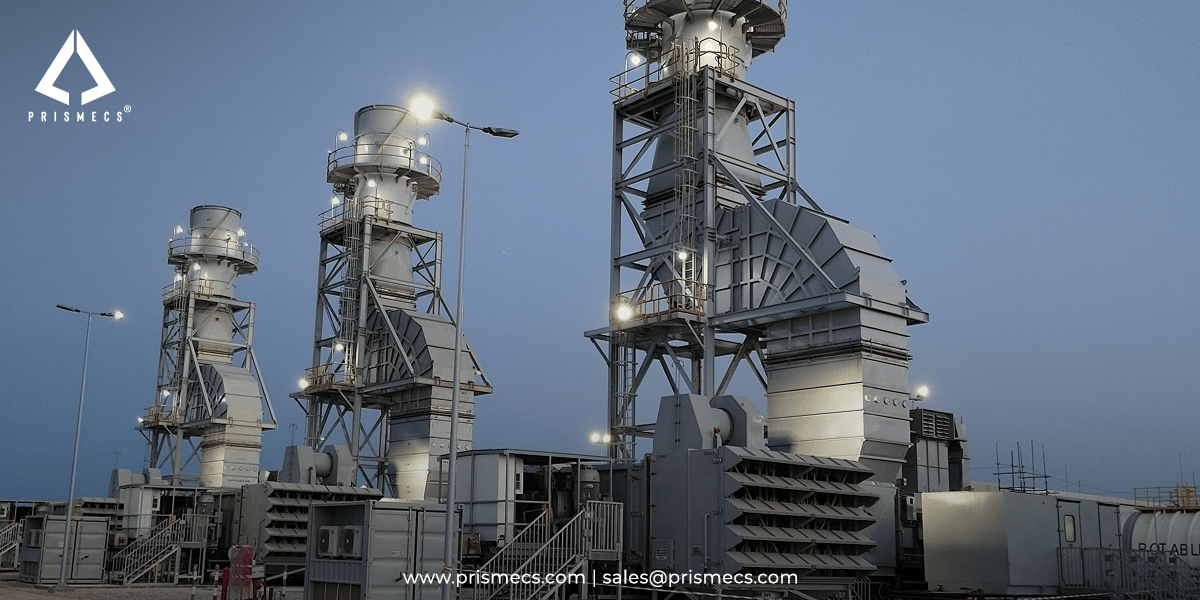
What Is a Mobile Gas Turbine Power Plant? TM2500-Class Units Explained
A mobile gas turbine power plant is a transportable power generation system designed to add electrical capacity faster than a conventional permanent p...
Power Utilities
20 minutes read
Fast-Track Power Plants Deployment: How to Reach Speed to Power in Under 12 Months
Fast-track power plant deployment can hit first power in weeks. See real TM2500 timelines from permitting to COD, proven in Oman and Taiwan. Plan your...

Gas Turbines
11 minutes read
Gas Turbine Outage Planning: Schedule, Scope Rules, and Checklist
Gas turbine outage planning starts 18 months out. Get the T-minus schedule, scope freeze rules, parts readiness gates and checklist. Talk to a Prismec...