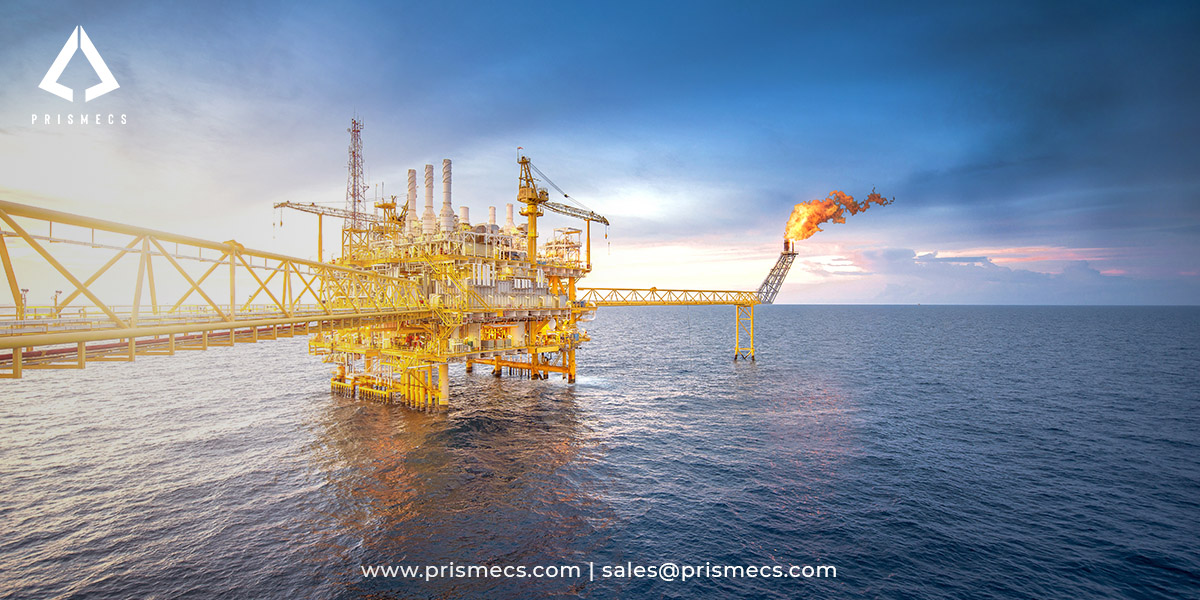
Offshore platform power generation is the self-contained supply of electrical power to fixed platforms and FPSOs operating far beyond any grid, engineered for hazardous-area safety, marine corrosion, and zero-tolerance reliability. It matters because a power blackout offshore is a safety emergency, not just a production loss, and outside help is hours or days away.
This guide covers how offshore facilities are powered, why gas turbines dominate, how redundancy and sizing work, the standards that govern offshore electrical systems, the emissions picture, and how a turnkey partner delivers and maintains offshore power. It is written for offshore facilities engineers, platform and FPSO operators, and the procurement and reliability leaders who own uptime in the harshest operating environment in energy.
How Offshore Oil and Gas Facilities Are Powered
Offshore oil and gas facilities generate all their own power on-site using gas-turbine and diesel generator sets, because platforms and FPSOs are electrically isolated islands with no grid connection. The power system runs continuously and carries every critical load, from drilling and production to safety, accommodation, and control systems.
Power demand varies enormously by facility. Offshore platforms range from roughly 10 MW to several hundred MW depending on field conditions and processing load, while a large FPSO (floating production, storage, and offloading vessel) typically requires 80 to 150 MW of installed generation. Generated power is usually distributed at medium voltage, commonly 6.6 kV, 11 kV, or 13.8 kV, to large motors and step-down transformers.
The defining feature is isolation. Because the facility cannot draw from a grid or receive quick outside support, its power system must be self-sufficient, redundant, and maintainable in place. Every design decision is shaped by that isolation and by the marine environment around it.
Why Gas Turbines Are the Offshore Standard
Gas turbines are the accepted standard for offshore power generation because their reliability, high power density, low weight, compactness, and multi-fuel flexibility suit the space and weight constraints of a platform or FPSO. On an offshore facility where deck space and weight are at a premium, a compact high-output prime mover is a decisive advantage. The efficiency and footprint trade-offs that separate turbines from reciprocating engines apply onshore too, but offshore the weight penalty is what makes them decisive.
Natural gas is the most common offshore fuel, because it is usually available from the produced field gas, turning a byproduct into prime power. Diesel generators typically provide auxiliary power and emergency backup, including the black-start capability to recover the facility after a blackout. This gas-turbine-main, diesel-backup architecture is the offshore norm.
On FPSOs, gas turbine generators also serve double duty. Waste heat from the gas turbine generators (GTGs) is frequently recovered to supply process heat, improving overall energy efficiency. This combined power-and-heat role is part of why GTGs are central to FPSO design and to its emissions profile.
Redundancy: Why Offshore Power Cannot Fail
Offshore power systems are built with N+1 or N+2 redundancy because the loss of power on a platform or FPSO is a safety event that can halt production and endanger personnel. Redundancy is not a design preference offshore; it is a regulatory requirement on most installations.
The redundancy principle is simple: always have more generation available than the load requires, so a single unit can fail or be taken offline for maintenance without interrupting supply. A typical platform runs two or more primary generator sets with at least one additional unit standing ready to pick up load automatically.
Automated power management ties it together. A power management system (PMS) monitors demand in real time, bringing generators online or offline as load fluctuates and shedding non-essential load to protect critical systems during a disturbance. This is what prevents a single fault from cascading into a full facility blackout.
Gas Turbine vs Diesel vs Hybrid Offshore Power
Offshore facilities increasingly combine gas turbines, diesel generators, and battery energy storage, because each addresses a different need across power density, backup, and emissions. The traditional gas-turbine-plus-diesel architecture is now being supplemented by hybrid systems with energy storage.
The direction of travel is hybridization. Adding a lithium-ion energy storage system allows a facility to run fewer gas turbines at higher, more efficient load, provide instant reserve, and cut both fuel and emissions. Hybrid diesel or gas-electric systems with batteries are already proven on offshore drilling rigs and support vessels.
Standards Governing Offshore Petroleum Power Systems
Offshore petroleum electrical and power systems are governed by a specific standards family led by API RP 14F, not by general onshore power codes. Citing the correct designations is how operators, EPC partners, and regulators confirm an offshore power system is compliant and safe in a hazardous marine environment.
The standards that apply to offshore platform and FPSO power:
API RP 14F carries legal weight, not just guidance. It is incorporated by reference into US federal regulation under 30 CFR 250.114(c), which makes compliance a regulatory obligation, not a best-practice option. Offshore generation and switchgear must also carry classification-society approval from bodies such as ABS, DNV, Lloyd's Register, or Bureau Veritas.
The Harsh-Environment Challenge
Offshore power equipment must survive a marine environment that attacks it continuously through salt corrosion, humidity, vibration, and confined hazardous-area installation. These conditions make offshore power specification fundamentally different from onshore, and they drive cost, maintenance, and design.
The core environmental constraints:
- Salt corrosion: enclosures, cabling, and cooling systems must resist a constantly corrosive salt atmosphere, often using seawater cooling.
- Hazardous-area installation: equipment sits in or near Class I, Division 1 and 2 areas where flammable gas may be present, requiring explosion-protected design.
- Space and weight limits: platform deck space and weight budgets constrain equipment size, favoring compact high-density generation.
- In-place maintainability: because outside support is distant, equipment must be serviceable on-site with condition monitoring to catch failures early.
The consequence is that offshore power is an engineering discipline of its own. A generator that performs well onshore may be unsuitable offshore without marinization, hazardous-area certification, and classification-society approval. Specification, not just capacity, decides whether an asset is fit for offshore service.
Emissions and the Push to Electrify Offshore
Offshore emissions are dominated by the gas turbine generators that power the facility, which has made power efficiency the central lever in offshore decarbonization. Because GTGs produce the majority of an FPSO's emissions, small efficiency gains translate into large absolute reductions.
The numbers show why efficiency matters. According to Siemens Energy analysis reported in offshore industry press, a 1% fuel-efficiency improvement on an FPSO power plant using four 30 MW aeroderivative gas turbines to meet an 80 MW load can avoid roughly 6,500 metric tons of CO2 per year. Running gas turbines more efficiently and diesel generators less is the first decarbonization step.
Electrification is the longer-term direction. Some operators are pursuing externally powered FPSOs and hybrid systems with battery storage, which reduce running turbines and emissions but add complexity in electrical design, redundancy, and layout. Whether retrofit or new-build, this is an integration challenge that reshapes the whole power system.
How Prismecs Delivers Offshore Power Solutions
Prismecs delivers offshore oil and gas power as a turnkey, OEM-agnostic partner across engineering, equipment supply, and lifecycle operations and maintenance, so operators get compliant, reliable offshore power as an outcome rather than a set of separate contracts. The focus is the power system that platforms and FPSOs depend on for both safety and production.
The Prismecs capability set for offshore power:
- Offshore power engineering and supply: gas turbine and diesel generation, switchgear, and transformers specified for marine and hazardous-area service.
- Standards-aligned design and compliance: systems engineered to API RP 14F, API RP 500 area classification, and classification-society requirements.
- Redundancy and power management: N+1 and N+2 architectures with power management systems for uninterrupted, load-following supply.
- OEM-agnostic O&M: operations and maintenance across mixed-vendor offshore power fleets, with condition monitoring for in-place reliability.
- Ready-to-ship equipment and 24/7 response: rapid mobilization of generation and electrical equipment when an offshore facility is at risk.
The differentiator is integration across the whole offshore power problem, from compliant engineering and equipment supply through commissioning and long-term O&M. That is what converts isolated offshore generation into sustained, safe uptime, and it is the layer that equipment-only suppliers do not provide.
Frequently Asked Questions
How much power does an offshore platform or FPSO need?
Offshore platforms range from roughly 10 MW to several hundred MW depending on field and processing load, while a large FPSO typically requires 80 to 150 MW of installed generation. Power is usually distributed at medium voltage, commonly 6.6 kV, 11 kV, or 13.8 kV. Redundancy is mandatory, because a loss of power offshore is a safety emergency, not just a production interruption.
Why do offshore platforms use gas turbines?
Gas turbines are the offshore standard because their reliability, high power density, low weight, and compactness suit the space and weight limits of a platform or FPSO, and they run on the natural gas usually available from the produced field. Diesel generators typically provide auxiliary and emergency backup, including black-start capability to recover the facility after a blackout.
What standards govern offshore oil and gas power systems?
Offshore petroleum power systems follow API RP 14F for electrical design and installation in Class I, Division 1 and 2 locations, and API 14FZ for Zone-classified areas, with API RP 500 governing area classification. They are built to the NEC (NFPA 70) and IEC 61892, use ATEX or IECEx certified equipment, and carry classification-society approval. API RP 14F is legally binding under 30 CFR 250.114(c).
What is N+1 redundancy on an offshore facility?
N+1 redundancy means an offshore facility always has at least one more generator available than the load requires, so a single unit can fail or be taken offline for maintenance without interrupting power. Critical installations may use N+2. A power management system automatically brings units online or sheds non-essential load to prevent a single fault from cascading into a blackout.
How are offshore facilities reducing power emissions?
Because gas turbine generators produce most offshore emissions, efficiency is the main lever. A 1% efficiency gain on an 80 MW FPSO power plant can avoid roughly 6,500 metric tons of CO2 per year. Operators run gas turbines more efficiently, reduce diesel use, and increasingly add battery energy storage or pursue FPSO electrification to cut running units and emissions.
How is offshore power different from onshore rig power?
Offshore power must handle constraints onshore systems do not: salt corrosion, hazardous-area installation near flammable gas, strict space and weight limits, and the impossibility of quick outside support. It is governed by offshore-specific standards like API RP 14F and requires classification-society approval. Equipment must be marinized and explosion-protected, making specification, not just capacity, the deciding factor.
Why Offshore Power Is a Partner Decision
Reliable offshore power is ultimately an engineering and execution decision, not an equipment purchase, because a platform or FPSO cannot tolerate a blackout and cannot wait for outside help. The standards are established and legally binding, the reliability bar is absolute, and the marine environment is unforgiving.
Operators powering offshore platforms or FPSOs need a partner who can engineer the system to API RP 14F, supply marine and hazardous-area rated equipment, build in redundancy, and maintain it in place for the life of the facility. That is the Prismecs model: turnkey, OEM-agnostic, and built around uptime as the deliverable.
To discuss an offshore platform or FPSO power solution, call +1 (888) 774-7632 or email sales@prismecs.com.
Tags: offshore platform power generation FPSO power systems API RP 14F electrical offshore gas turbine generators hazardous area power systems
recent posts
Gas Turbines
19 minutes read
Dual-Fuel Gas Turbines: How Gas-and-Liquid Fuel Flexibility Works
A dual-fuel gas turbine switches from natural gas to diesel at load, but most failures start in idle oil lines. Get transfer steps and coking fixes be...
Power Utilities
18 minutes read
Temporary and Bridge Power for Industrial Facilities: When and How to Use It
Planning bridge power past 12 months? Under EPA rules your generators may be stationary from day one. Check Tier 4, NSPS KKKKa and SPCC triggers befor...
Gas Turbines
16 minutes read
What Is a Mobile Gas Turbine Power Plant? TM2500-Class Units Explained
A mobile gas turbine power plant is a transportable power generation system designed to add electrical capacity faster than a conventional permanent p...
Power Utilities
20 minutes read
Fast-Track Power Plants Deployment: How to Reach Speed to Power in Under 12 Months
Fast-track power plant deployment can hit first power in weeks. See real TM2500 timelines from permitting to COD, proven in Oman and Taiwan. Plan your...