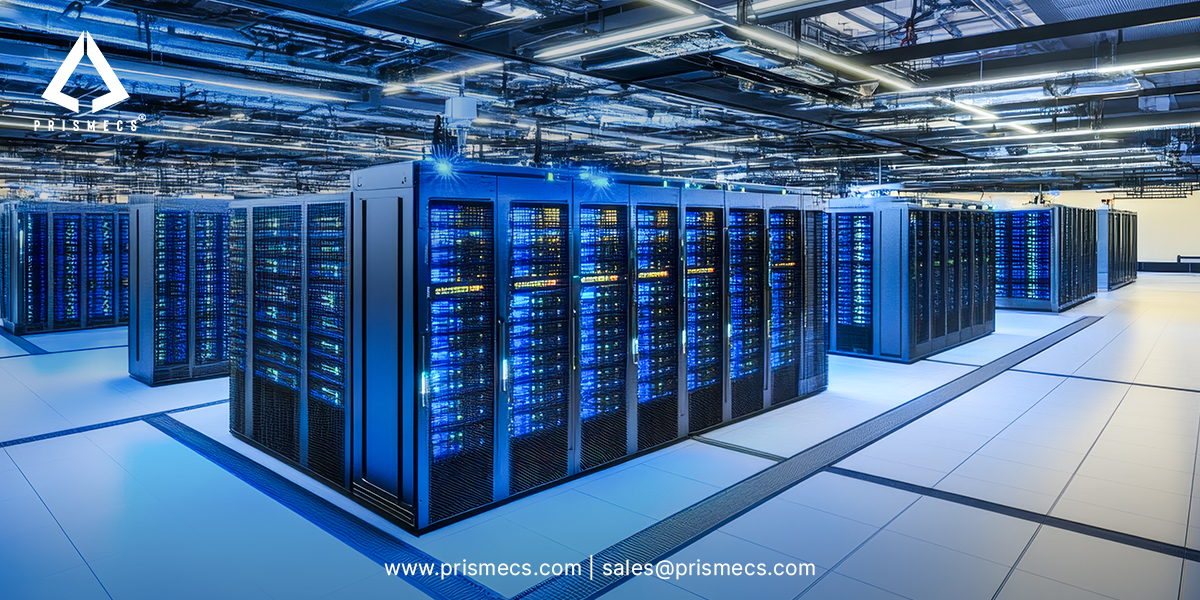
Data center energy efficiency and uptime are not opposing goals. The facilities that achieve the lowest energy cost per unit of compute are the same ones engineered for resilience, because both outcomes come from the same discipline: treating power, cooling, and monitoring as one system instead of separate projects.
The pressure to get this right is escalating fast. According to Gartner, global data center electricity consumption is forecast to reach 565 terawatt hours in 2026, up from 447 TWh in 2025, with worldwide data center power demand expected to hit 132 gigawatts this year on its way to roughly 290 GW by 2030. Boards want that growth delivered at lower cost per megawatt. Regulators want transparency. And operations teams are still judged on one number above all: availability.
The fear that efficiency work creates outage risk is understandable, but it points at the wrong culprit. Poorly planned changes cause outages. Well-engineered efficiency programs reduce them. This guide covers how to improve data center power efficiency at the architecture level, where the gains are largest and the risk, when managed properly, is lowest.
Why Power Is Still the Number One Outage Threat
Power failures remain the leading cause of serious data center outages, which is exactly why efficiency work on power systems must be engineered, not improvised. The risk is real, but it comes from aging equipment and poor change management, not from efficiency itself.
The Uptime Institute's Annual Outage Analysis 2025 confirms that power remains the leading cause of impactful outages, and the financial stakes are severe: more than half of operators surveyed said their most recent significant outage cost over $100,000, and one in five reported costs above $1 million. The same research found that the share of human error outages caused by staff failing to follow procedures rose ten percentage points year over year.
Read those findings together and the lesson is clear. The biggest outage risks are old power infrastructure and undisciplined operational change. An efficiency program that replaces aging UPS capacity, adds fast-responding storage, and instruments the power train with real-time monitoring attacks both risks at once. Efficiency done right is a reliability upgrade wearing a cost-savings badge.
PUE Is Not the Whole Story: How to Improve PUE Safely
PUE measures how much of your facility's power actually reaches IT equipment, but it says nothing about resilience. A data center can post an impressive PUE while carrying single points of failure, stranded redundancy, and an aging UPS fleet one fault away from an outage.
Power Usage Effectiveness earned its place as the headline efficiency metric because it is simple: total facility power divided by IT load. Leadership can benchmark sites and track progress with one number. But that simplicity hides three blind spots:
- PUE does not describe fault tolerance or where single points of failure sit in the electrical design
- PUE does not show whether you depend entirely on the grid or have on-site generation and storage behind you
- PUE can be gamed in ways that increase risk, such as raising temperatures beyond safe thermal margins or stripping redundancy to cut losses
The safe path to a better PUE follows three rules. First, right-size major systems so UPS units and chillers operate in their efficient load bands instead of idling at 20 to 30 percent. Second, model every change against realistic fault scenarios before touching a live power train, confirming that N+1 or 2N protection holds at actual load levels. Third, verify outcomes with metering after implementation rather than assuming the design intent was achieved.
Treat PUE as one lens inside a broader data center energy management strategy and it guides good decisions. Treat it as a target to hit at any cost and it distorts behavior in ways your availability numbers will eventually expose.
Site-Level Power Architecture: Where Efficiency and Reliability Meet
The single biggest lever for both efficiency and resilience is site-level power architecture: on-site generation and battery storage operating alongside the grid as one engineered platform. This model removes the grid as a single point of failure while giving operators direct control over cost and capacity.
On-Site Generation and Grid-Independent Resilience
Power availability has become the hardest constraint on new data center capacity in major U.S. markets. Interconnection queues stretch for years, substations face genuine capacity limits, and peak demand charges make operating costs unpredictable. Goldman Sachs Research expects U.S. data center power demand to climb from 31 GW in 2025 to 41 GW in 2026 and 66 GW in 2027, growth the grid alone cannot absorb on data center timelines.
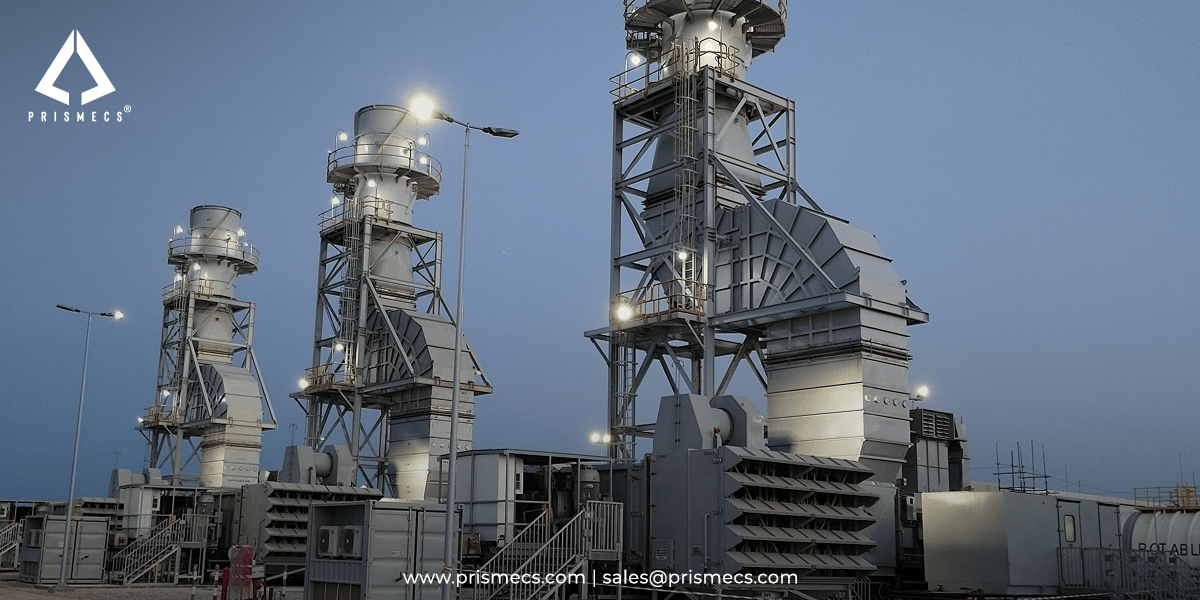
Site-level power architecture answers that constraint directly. The facility incorporates on-site generation, whether gas turbines, reciprocating engines, or fuel cells, engineered to operate in concert with the utility. These assets can carry the full critical load during grid events, run in island mode when needed, or supplement utility supply during peak-price hours.
The efficiency benefit follows from control. When capacity is local, operators plan rack density, expansion, and workload placement against known generation capability instead of guessing how the grid will behave. Peak shaving becomes a routine cost tool. And because the platform is engineered as a system, availability and data center power efficiency improve together rather than trading off.
Fast-deploy gas turbine packages deserve particular attention here. They can bridge a facility to full operation years before a grid interconnection completes, then transition to peaking and backup duty once utility capacity arrives. For AI facilities where time-to-power decides project economics, that bridge is often the difference between revenue this year and revenue in three years.
Battery Energy Storage Systems as UPS 2.0
A well-designed battery energy storage system gives a data center what traditional UPS-plus-diesel architectures cannot: a millisecond-response resource that serves both reliability and economics every single day.
The traditional stack, large UPS banks for ride-through and diesel generators for extended outages, works, but it is mechanically complex, maintenance-heavy, and idle almost all of the time. BESS changes the operating model:
- During grid events: storage steps in within milliseconds when voltage sags or an upstream breaker trips, then hands off cleanly to on-site generation or carries shorter events alone, sparing IT equipment the brownout-style disturbances that degrade hardware over time
- During normal operation: the same asset shaves demand peaks, flattens load profiles, and shifts consumption away from the most expensive hours, directly cutting the utility bill
That dual role is the key economic argument. A diesel generator earns its keep only during emergencies. A BESS earns its keep every day and still performs the emergency role faster. When storage, on-site generation, and the grid are orchestrated together, every efficiency measure in the facility rests on a stable engineered foundation.
Practical Ways to Boost Data Center Power Efficiency Without Adding Risk
Beyond site architecture, three upgrade paths deliver measurable efficiency gains while strengthening reliability: modular UPS, cooling modernization, and real-time energy management. Each attacks waste and risk at the same time.
Modular, Right-Sized UPS and Power Paths
Modular UPS architecture solves the twin problems of legacy power trains: poor efficiency from underloaded monolithic units and large blast radius during maintenance. Smaller hot-swappable modules run in their efficient band and contain faults to a single block.
Many legacy facilities still run large monolithic UPS units in 2N configurations at low load percentages. That wastes energy, since UPS efficiency drops sharply at partial load, and it strands capacity that could serve growth. Worse, any maintenance event touches a large share of the critical load.
The modular approach replaces a few big blocks with multiple smaller modules added or retired as demand changes. The gains stack up on both sides of the ledger:
The result is better PUE, lower mean time to repair, and redundancy that still satisfies SLA and Tier requirements. This is the clearest example of efficiency and reliability improving in the same project.
Cooling Modernization That Supports Uptime
Modern cooling moves heat removal closer to the source, which cuts non-IT power and improves thermal stability at the same time. As AI rack densities climb, this shift is becoming mandatory rather than optional.
Air-only cooling was designed for a different era of rack density. As AI-oriented loads push racks well beyond traditional power levels, fans work harder, chillers run longer, hot spots multiply, and operators overcool entire halls to protect a few dense rows. That overcooling is one of the largest hidden energy wastes in legacy facilities.
The modern toolkit, matched to density:
- Hot and cold aisle containment for conventional densities, the cheapest gain available in most legacy halls
- Rear-door heat exchangers for mixed environments where a subset of racks runs hot
- Direct-to-chip liquid cooling for sustained high-density AI and HPC clusters
- Immersion cooling for the highest densities, removing heat with fewer moving parts in the rack itself
Every option on that list shares two outcomes: less energy spent on heat removal, and tighter thermal control. The second matters as much as the first. Stable temperatures extend component life and reduce failures during load spikes, and redundant loops, pumps, and controls keep the cooling plant fault-tolerant even as its energy draw falls. The Uptime Institute's 2025 research flags cooling stress from AI workloads as a growing reliability concern, which makes modernization a risk-reduction project that happens to pay for itself in energy.
Data Center Energy Management with Real-Time Visibility
Technology alone does not make optimization safe. Real-time energy management platforms do, by connecting power metering, environmental sensors, UPS and generator data, and IT telemetry into one operational view.
With that visibility, teams can track live PUE, identify which subsystems consume the most power, and see exactly how workloads map to physical infrastructure. Trending analytics flag conditions that become incidents if ignored: a steadily warming row, imbalanced phase loading, a UPS module drifting out of spec. Planned changes get modeled first, implemented second, and verified with data third.
This observability layer is also the direct answer to the human error problem. With procedures anchored to live system data and changes verified against measured baselines, the failure-to-follow-procedure risk that Uptime's research highlights shrinks substantially. Energy optimization becomes an engineering discipline with a feedback loop, not a series of one-off projects judged on faith.
A Practical Playbook for U.S. Data Centers
The sequence matters. Facilities that upgrade in the right order capture efficiency gains early while reducing risk at every step, instead of gambling reliability on a big-bang redesign.
- Instrument first. Deploy energy management and monitoring before changing anything. You cannot safely optimize what you cannot see, and baseline data protects every later decision.
- Fix the power train. Replace aging monolithic UPS capacity with modular, right-sized architecture. This removes the single largest combined efficiency-and-reliability liability in most legacy facilities.
- Add storage. Deploy BESS for ride-through, peak shaving, and demand management. The asset pays operationally from day one.
- Build the generation layer. Add on-site generation sized to critical load, engineered for island mode and grid-parallel operation. This is what converts the facility from grid-dependent to grid-optional.
- Modernize cooling against real density plans. Match containment, liquid, or immersion approaches to current and projected rack loads, not to legacy assumptions.
- Close the loop. Use the monitoring layer to verify every change, then roll proven patterns across the estate.
Followed in order, each step de-risks the next. Monitoring makes the UPS work safe. The upgraded power train makes storage integration clean. Storage makes generation cutover seamless. The playbook turns efficiency, resilience, and sustainability from three competing projects into one integrated design problem.
Key Takeaways
- Efficiency and reliability are the same discipline. Power remains the top cause of impactful outages, and the fix, modern power architecture with monitoring, is also the biggest efficiency win.
- PUE is a lens, not a target. Improve it through right-sizing and verified changes, never by stripping redundancy or thermal margin.
- Site-level power architecture is the master lever. On-site generation plus BESS removes grid dependency, controls peak costs, and unlocks confident capacity planning.
- Modular UPS delivers on both ledgers. Higher operating efficiency and smaller failure domains in one upgrade.
- Cooling modernization is now a reliability project. AI densities are breaking air-only designs; moving heat removal closer to the source cuts energy and stabilizes temperatures.
- Sequence beats scale. Instrument, fix the power train, add storage, build generation, modernize cooling, verify. Each step protects the next.
Conclusion
The belief that every efficiency gain hides a reliability risk belongs to an older generation of data center design. Today the causality runs the other way. The facilities most exposed to outages are the ones running aging UPS fleets at inefficient loads, depending entirely on a constrained grid, and making changes without real-time visibility. Fixing those problems cuts energy cost and outage risk in the same motion.
With data center power demand growing faster than the grid can follow, the operators who win the next five years will be the ones who treat energy as engineered infrastructure: generation, storage, distribution, cooling, and monitoring designed as one system. Efficiency without outage risk is not a compromise. It is what good power engineering looks like.
Partner With Prismecs on Data Center Power Infrastructure
Prismecs works at the systems level with data center clients: on-site power generation including fast-deploy gas turbine packages, battery storage integration, resilient electrical design, and installation and commissioning executed to critical-facility standards. From bridge power that beats interconnection queues to OEM-agnostic operations and maintenance that keeps the platform performing, our teams support data center power infrastructure across its full lifecycle.
Call +1 (888) 774-7632 or email sales@prismecs.com to start a technical conversation about your facility.
Frequently Asked Questions
Does improving data center energy efficiency increase outage risk?
No, when changes are engineered properly. Poorly planned modifications to live power systems cause outages, but well-designed efficiency programs replace aging equipment, add fast-responding storage, and improve monitoring, all of which reduce failure risk. The most efficient facilities are typically also the most reliable, because both outcomes come from disciplined power architecture.
What is a good PUE for a data center in 2026?
Modern purpose-built facilities typically target PUE between 1.2 and 1.4, while many legacy enterprise sites still operate above 1.5. The right target depends on climate, density, and design. More important than the number is how you reach it: right-sizing and cooling modernization improve PUE safely, while cutting redundancy or thermal margin improves it dangerously.
What causes most data center outages?
Power-related failures remain the leading cause of serious and impactful data center outages, according to the Uptime Institute's 2025 analysis. IT and networking issues follow, and human error, especially failure to follow procedures, contributes a large share. Aging UPS systems, grid disturbances, and switching errors are among the most common power-related triggers.
Can battery storage replace a traditional UPS in a data center?
Increasingly, yes. A well-designed battery energy storage system responds within milliseconds to grid disturbances, carries shorter outages alone, and hands off to on-site generation for longer events. Unlike a traditional UPS-plus-diesel stack, the same asset also earns value daily through peak shaving and demand management, improving site economics.
Why are data centers adding on-site power generation?
Grid interconnection timelines and substation capacity limits now delay projects by years in major markets, while power demand keeps climbing. On-site generation lets facilities energize on their own schedule, carry critical load during grid events, and control peak-hour costs. For AI facilities, it is often the only way to meet time-to-power requirements.
How does liquid cooling improve both efficiency and reliability?
Liquid cooling removes heat directly at the source, so fans and central chillers work far less, cutting non-IT energy consumption. It also holds component temperatures more stable than air, which extends hardware life and reduces failures during load spikes. For high-density AI racks, air-only cooling can no longer do either job well.
What is the safest first step in a data center efficiency program?
Deploy real-time energy management and monitoring before changing anything physical. Baseline visibility into power, cooling, and IT load lets you model changes, catch developing problems, and verify every improvement with data. Optimizing without instrumentation is where efficiency projects turn into outage stories.
How do modular UPS systems improve efficiency without reducing redundancy?
Modular systems use multiple smaller hot-swappable modules instead of a few large blocks, keeping each module in its high-efficiency load band while N+1 or distributed redundant topologies preserve fault tolerance. Faults stay contained within a single module, maintenance windows shrink, and capacity scales in steps that match actual demand growth.
Tags: Data Center Energy Efficiency Data Center Power Architecture Battery Energy Storage Systems PUE Optimization On-Site Power Generation
recent posts
EPCM Services
19 minutes read
25 Questions to Ask a Power Plant EPC Contractor Before You Sign
Most lists of questions to ask an EPC contractor stop at the question. Get why each matters, the strong answer, the red-flag reply and a weighted bid...
Gas Turbines
19 minutes read
Dual-Fuel Gas Turbines: How Gas-and-Liquid Fuel Flexibility Works
A dual-fuel gas turbine switches from natural gas to diesel at load, but most failures start in idle oil lines. Get transfer steps and coking fixes be...
Power Utilities
18 minutes read
Temporary and Bridge Power for Industrial Facilities: When and How to Use It
Planning bridge power past 12 months? Under EPA rules your generators may be stationary from day one. Check Tier 4, NSPS KKKKa and SPCC triggers befor...
Gas Turbines
16 minutes read
What Is a Mobile Gas Turbine Power Plant? TM2500-Class Units Explained
A mobile gas turbine power plant is a transportable power generation system designed to add electrical capacity faster than a conventional permanent p...