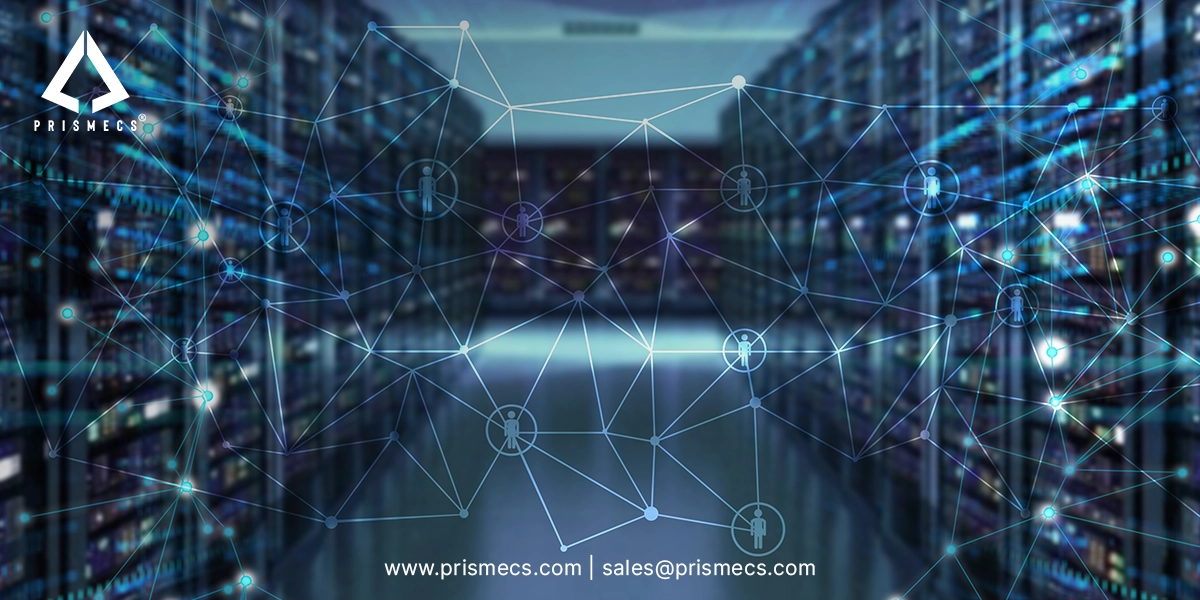
AI data center power demand is increasing as high-density GPU workloads place greater pressure on electrical infrastructure and grid capacity. For data center developers and operators, securing reliable power has become a critical challenge. Hybrid energy solutions that combine grid electricity, onsite power generation, battery energy storage systems (BESS), and microgrid controls are emerging as practical strategies to address capacity constraints, improve resilience, and support long-term energy planning.
AI’s rising energy appetite is pushing data centers from “large loads” to system-shaping assets in the US power mix. When AI workloads ramp up, no one in the control room is thinking about global forecasts; they are watching megawatts climb, checking transformer loading, and asking a simpler question: can the power system keep up without breaking the grid or the budget? In that moment, data center power demand ceases to be a planning assumption. It becomes a hard operational constraint that executives cannot ignore.
Unmanaged, that demand shows up as interconnection delays, escalating capacity charges, curtailment risk, and political scrutiny. Managed well, it becomes a reason to invest in smarter, cleaner, more resilient infrastructure: onsite generation, microgrids, storage, and digital twins that make the energy system as intelligent as the AI it supports. The difference is not the logo on the GPU; it is the way the energy layer is deliberately engineered to align with AI electricity demand.
This article examines what is driving AI data center power demand, why the grid alone cannot absorb it on current timelines, and how operators are designing hybrid power architectures that turn AI energy consumption into an advantage rather than a liability. It is written for CTOs, data center developers, and utility and energy leaders who live with the day-to-day realities of large loads and want concrete, technically sound guidance they can act on.
Why AI Has Changed Data Center Power Demand
Every operator is trying to do two things: keep capacity available when applications need it and keep the cost and risk of that capacity under control. In data centers, availability now depends as much on power as on fiber or server supply, and AI is what tipped up that balance.
Traditional cloud workloads are mixed and somewhat bursty. They drive high utilization over time but still leave room to shape the load. AI workloads are different. GPU clusters for training and large-scale inference operate at high power density, often near full load, and tend to run long stretches without breaks. These challenges require a tailored Energy Strategy, which can be supported by EPC Services to ensure the infrastructure remains scalable and cost-effective.
A single large AI-focused data center can draw electricity on the order of a mid-sized city, and the largest facilities under construction are slated to go far beyond that. That is not a metaphor; it is how utilities now describe these projects in planning documents.
The numbers show why these matter. Global data centers consumed about 415 TWh of electricity in 2024, roughly 1.5% of total global demand. The IEA expects that number to more than double to around 1,000 TWh by 2030, driven largely by AI and digitalization. In some higher-growth scenarios, independent analyses suggest that data center electricity demand could approach 1,500 TWh or more by the mid-2030s.
In the United States, the trajectory is even steeper. Data centers already consume several percent of national electricity. They are expected to drive nearly half of the total demand growth through 2030. The IEA projects that US data centers could use more power by the end of this decade than all current energy-intensive manufacturing sectors combined, including steel, cement, and chemicals. Within that footprint, AI data center power demand is the fastest-growing slice.
It helps to define terms clearly. Data center power demand is the total electrical power required to run IT, cooling, and supporting systems, measured as instantaneous load in megawatts (MW) and as annual consumption in MWh or TWh. For AI facilities, this number is rising because there are more racks; each rack draws more power, and the utilization profile is less flexible than past enterprise workloads.
From Growth To Grid Constraint - The New Reality For AI Electricity Demand
The US grid was built for incremental, geographically distributed growth. It was not built for dozens of projects that each want hundreds of megawatts, often in the same county, all on compressed timelines. This mismatch sits at the heart of today's AI electricity demand challenge.
Across the country, nearly 2,300 GW of generation and storage projects sit in transmission interconnection queues more than the entire existing US power plant fleet. Average wait times have more than doubled over the past fifteen years. The Data Center industry is particularly impacted by these delays, as the demand for power continues to grow in tandem with increasing AI workloads. Many projects now spend five years or more in the queue before reaching commercial operation, and some are withdrawn before they ever connect. For anyone planning an AI campus, that means the grid capacity they are counting on may realistically arrive closer to the next decade than the next product launch.
Nowhere is this more visible than in PJM, the regional transmission organization that covers parts of the Mid-Atlantic and Midwest and hosts a large share of US data centers. PJM’s 2027/2028 base residual capacity auction cleared at its price cap for the second year in a row and still fell short of its reliability target by more than 6 GW, according to auction reports and market analyses. Data centers accounted for about 40% of total capacity costs in that auction, despite many of the associated loads not yet fully built.
Regional demand hotspots are emerging as well. Northern Virginia, the world’s largest data center cluster, is on track for data center loads in the low double-digit gigawatt range by the mid-2020s, up sharply from just a few years ago. ERCOT in Texas expects data center and crypto loads to push peak demand projections significantly higher by 2030, with several individual sites in the hundreds of megawatts each. Utilities in both regions now explicitly highlight data centers as a primary driver of future load growth and a key source of planning uncertainty.
For AI operators, this turns AI electricity demand into a three-dimensional risk:

- Schedule risks. Interconnection and transmission upgrade timelines that stretch well beyond typical AI deployment cycles.
- Cost risk. Higher capacity and demand charges as marginal reliability get more expensive in constrained regions.
- Reliability risks. Greater exposure to curtailment, emergency measures, or local political constraints occurs when clusters of data centers saturate local infrastructure.
A grid-only approach to data center power demand may still work in some locations. In others, it is fast becoming a gamble.
The New Playbook For AI Data Center Power Demand
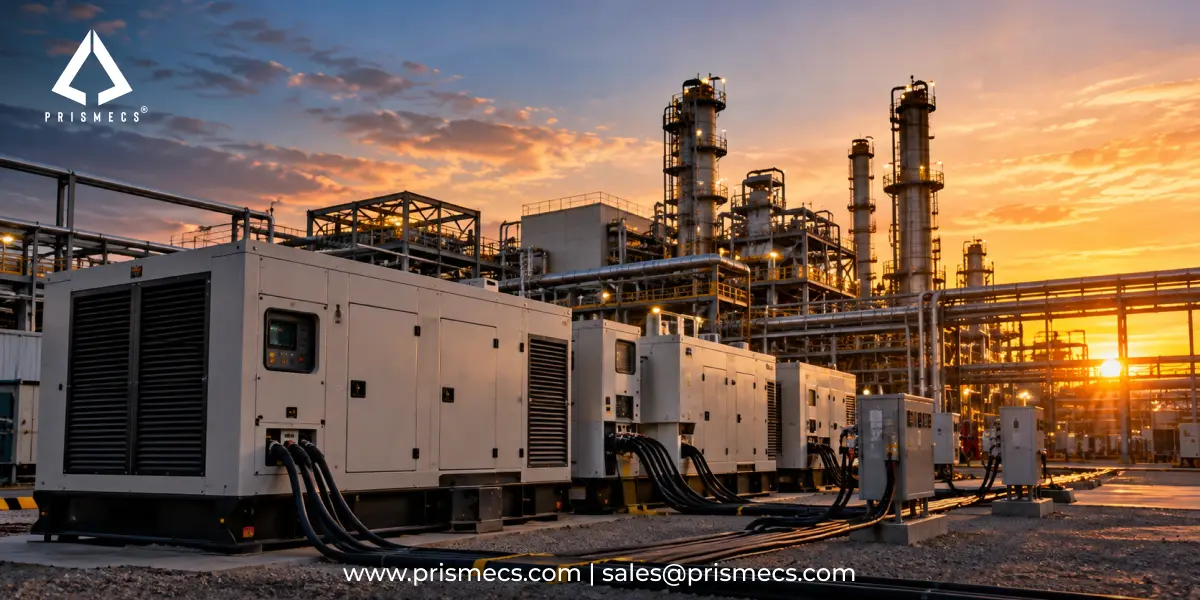
In response, the architecture of leading-edge facilities is changing. Instead of designing a single large utility feed and a row of backup generators, operators are designing portfolios: grid connection, onsite generation, energy storage, and microgrid controls that coordinate them all.
At a high level, the new playbook for AI data center power demand has three pillars:
- Grid supply for bulk energy and market access.
- On-site generation for controllable, dispatchable capacity.
- Storage and microgrids for flexibility, resilience, and optimization.
On-site generation is moving from a secondary layer to a primary source of power. Goldman Sachs estimates that global data center power demand could rise by about 165% by 2030, and it highlights onsite fuel cell generation as one of the main tools to meet that load. In its scenarios, fuel cells alone could provide 6–15% of incremental data center demand and as much as half of total behind-the-meter capacity in some markets.
A 2025 Bloom Energy data center report adds more color. Its survey suggests that roughly 30% of US data center sites expect to use onsite generation as a primary power source by 2030, more than double the share reported in the same study just months earlier. The same report projects that about 27% of facilities could be fully powered by onsite resources up from only around 1% at the time of the survey. That is a structural shift, not a minor adjustment.
On the technology side, options are diversifying:
- Fuel cells offer quiet, modular power blocks with high power density and relatively low local emissions, making them well-suited for urban or space-constrained sites.
- Gas turbines and engines provide fast ramping and dispatchable capacity. Projects like Meta’s permitted 200 MW onsite gas-fired plant in Ohio illustrate how hyperscale's are turning data centers into power plants.
- Battery energy storage systems (BESS) enable peak shaving, ride-through, and deeper integration of onsite solar or wind, and can provide grid services when appropriately connected.
Behind the meter, portfolios of these assets are already appearing in markets like Texas, California, and Virginia, where developers cannot afford to wait for grid upgrades alone. For AI operators, the design question is no longer “do we need onsite power?” It is “how much, and in which configuration, do we want to own versus buy from the grid?”
Turning AI Energy Consumption Into A Clean Energy Advantage

On paper, AI energy consumption makes decarbonization harder. In practice, it can accelerate if the right decisions are made.
On the procurement side, technology and cloud firms have become some of the world’s largest buyers of clean power. Bloomberg NEF and other trackers report that corporations signed roughly 30 GW of clean energy contracts globally in 2025, with US data center operators and their AI-heavy platforms at the forefront. Meta, Amazon, Microsoft, and Google alone account for tens of gigawatts of contracted wind, solar, and storage through power purchase agreements, with volumes still growing.
The quality of that procurement is also changing. Instead of targeting only annual “100% renewable” claims, many operators are pursuing 24/7 carbon-free energy, which requires portfolios that match load hour by hour. For AI data centers, this pushes toward mixes that combine variable renewables with firm, low - or zero-carbon sources, nuclear, hydro, geothermal or innovative long-duration storage.
Nuclear is back on the table. Existing plants are attracting data center colocation deals, and small modular reactors (SMRs) are being explored as future behind-the-meter anchors. The US Nuclear Regulatory Commission has already certified at least one SMR design, and multiple states have updated laws to enable advanced nuclear deployment, in part to support large industrial and data center loads.
On the systems side, AI is helping to manage the complexity it creates. Grid operators and utilities are deploying machine learning to forecast wind and solar output, predict congestion, and optimize unit commitment, thereby reducing curtailment and improving reliability. Microgrid research shows that AI-based controllers can cut operating costs by around 15–20% compared with static rules, while maintaining or improving reliability. These gains come from more precise scheduling of generators, batteries, and flexible loads in response to prices, weather, and grid signals.
Data centers themselves can play an active role. Non-urgent AI workloads such as model training runs, or certain batch inference tasks can be shifted within agreed windows. Combined with BESS, which allows sites to reduce their net draw during grid stress events or even export power when it is most valuable. In some markets, this capability is already being monetized through demand response and ancillary service programs.
The result is a more balanced view. AI energy consumption clearly increases total demand and creates local hot spots. Yet it also drives new clean energy projects, supports advanced grid operations, and strengthens the business case for flexible, low-carbon resources. Infrastructure design determines how much of this potential is realized.
Digital twins and real-time intelligence for AI infrastructure power
Static one-time designs struggle to keep up in a world where workloads, tariffs, and regulations are constantly evolving. Digital twins and real-time monitoring bridges that gap for AI infrastructure power.
A digital twin of a data center's power and cooling system is a continuously updated model that mirrors how transformers, UPS, generators, chillers, and IT loads behave as conditions change. It draws on design data, sensor readings, and operational history. When tuned correctly, it allows operators to test "what if" scenarios such as increasing rack densities, changing cooling setpoints, or adding a new AI cluster without touching live equipment.
The IEA and industry case studies on advanced controls and analytics indicate energy savings of 5–40% across commercial and industrial sites when digital optimization is fully implemented. In data centers, those savings often come from better cooling management and more refined control strategies rather than hardware swaps.
Practical use cases include:

- PUE optimization. Testing airflow strategies, containment schemes, fan speeds, and chiller setpoints in the twin, then applying only those combinations that reduce energy use while keeping thermal margins safe.
- Predictive maintenance. Using vibration, temperature, and electrical signatures from generators, UPS modules, and switchgear to detect issues before they cause outages, and timing interventions to minimize risk to AI workloads.
- Capacity planning. Modeling how new AI models and higher utilization will load electrical and cooling systems over time, and identifying bottlenecks feeds, transformers, cooling loops before they become constraints.
For AI infrastructure power, the benefit is strategic. Digital twins and real-time monitoring turn the power system into a tunable asset that can evolve with AI demand, rather than a fixed constraint baked into the initial design.
The Prismecs Strategic View - Engineering The Energy Layer For AI
Powering AI is not just about adding megawatts. It is about engineering an energy system that can grow, adapt, and decarbonize over time without compromising availability. That is where Prismecs focuses.
Prismecs sits at the intersection of energy and digital infrastructure, combining system integration, EPC delivery, operations, and technology consulting into a single offering. On the physical side, Prismecs designs and delivers hybrid power architectures for AI data centers that blend grid connections with fuel-flexible onsite generation and BESS. The aim is to provide controllable, resilient power that can be deployed quickly, meet strict uptime requirements, and transition toward lower-carbon fuels such as hydrogen as the market matures.
This work is grounded in real projects. Prismecs' portfolio includes battery-based systems in Florida, New York, Texas, and California that support solar-plus storage, frequency regulation, and large-scale retrofits of existing plants. The same building blocks modular generators storage, protection schemes, and microgrid controls are being applied to AI campuses that cannot depend solely on traditional interconnection timelines.
On the technology and consulting side, the Prismecs Technology & Consulting practice offers services that map directly to the needs outlined above:
- Plant assessments and feasibility studies that quantify AI data center power demand, assess grid constraints, and outline viable onsite and hybrid options.
- Energy and carbon optimization programs that identify efficiency opportunities and build realistic decarbonization pathways tailored to local grid mix and corporate commitments.
- CAPEX/OPEX strategy and independent due diligence to help owners, lenders, and regulators understand lifecycle cost and risk before projects move forward.
- Real-time monitoring and digital twin optimization via platforms such as RMGTD and Twin Control, providing operators with live visibility into performance and tools to continuously improve it.
What ties this together is a lifecycle mindset. Prismecs does not treat AI infrastructure power as a one-off engineering task. It treats it as a system that must work economically and reliably over decades, through multiple waves of AI, regulatory shifts, and market cycles.
What Forward-Looking Energy And Data Center Leaders Do Next
For leaders responsible for AI roadmaps and infrastructure, the next moves are practical and specific:
- Quantify your exposure. Build realistic models of AI data center power demand under multiple adoption scenarios, and overlay local interconnection queues, transmission constraints, and policy risks.
- Design hybrid power by default. Assume the grid alone may not deliver what you need when you need it. Explore combinations of grid supply, onsite generation, storage, and microgrid controls that align with your risk and sustainability profile.
- Embed digital intelligence into the power stack. Treat digital twins, real-time monitoring, and predictive maintenance as core infrastructure for AI, not optional extras.
- Choose partners who own the details. Work with system integrators, EPCs, and consultants who understand both energy and AI infrastructure, and who can support you from feasibility to operations.
Prismecs’ Technology & Consulting team is built for this kind of work. For organizations ready to turn data center power demand and AI electricity demand from constraints into strategic levers, an early conversation about power strategy, onsite options, and digital optimization can prevent years of delay and unlock the full value of their AI investments.
Tags: AI energy consumption data center infrastructure hybrid energy solutions power grid optimization renewable energy for data centers
recent posts
O&M Services
15 minutes read
Writing a Power Plant O&M RFP That Gets Comparable Bids
Write a power plant O&M RFP every bidder must price the same way. Get the pricing template, data room checklist and weighted scorecard that expose eve...
EPCM Services
19 minutes read
25 Questions to Ask a Power Plant EPC Contractor Before You Sign
Most lists of questions to ask an EPC contractor stop at the question. Get why each matters, the strong answer, the red-flag reply and a weighted bid...
Gas Turbines
19 minutes read
Dual-Fuel Gas Turbines: How Gas-and-Liquid Fuel Flexibility Works
A dual-fuel gas turbine switches from natural gas to diesel at load, but most failures start in idle oil lines. Get transfer steps and coking fixes be...
Power Utilities
18 minutes read
Temporary and Bridge Power for Industrial Facilities: When and How to Use It
Planning bridge power past 12 months? Under EPA rules your generators may be stationary from day one. Check Tier 4, NSPS KKKKa and SPCC triggers befor...