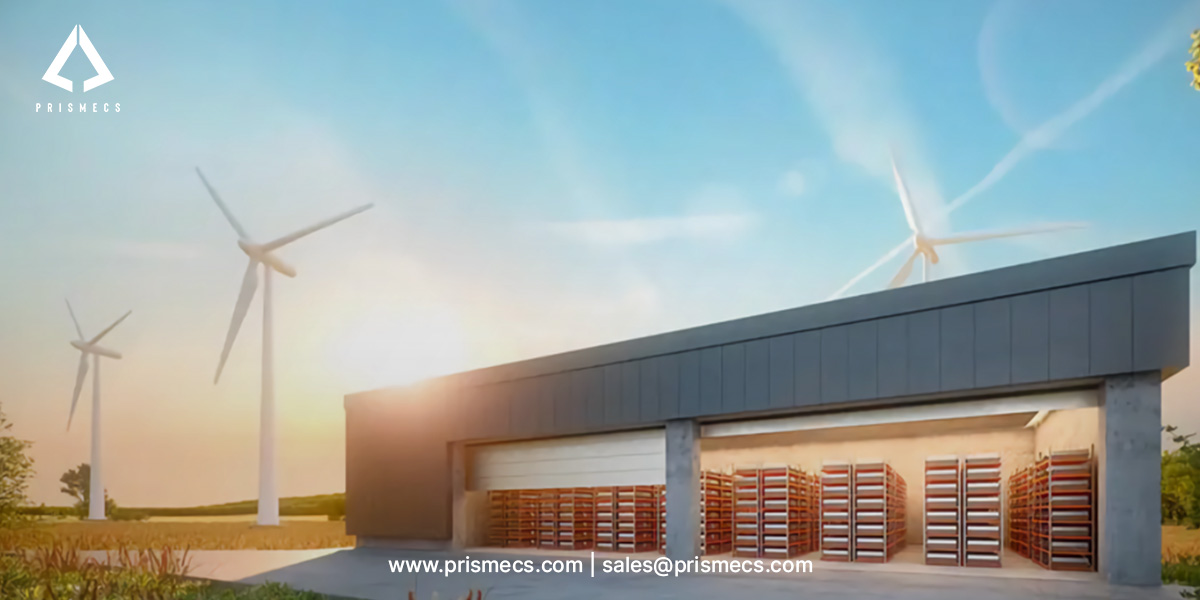
Distributed energy generation lets industrial and commercial operators produce power on-site, near the point of use, cutting grid dependence and protecting operations from outages. Implementing it well is an engineering project, not a purchase, requiring load assessment, the right technology mix, IEEE 1547-compliant interconnection, and lifecycle O&M.
This guide covers what distributed energy is, its benefits for high-demand operations, the core system components, the interconnection standards that govern it, the implementation steps, and how a turnkey partner delivers it. It is written for plant managers, facilities and energy engineers, and operators of data centers, industrial plants, and critical facilities that cannot tolerate downtime.
Prismecs designs, deploys, and maintains distributed energy systems at industrial scale. Prismecs has deployed over 1,500 MW of distributed energy across 40-plus projects in 15-plus countries, including 692 microgrids in the US totaling 4.4 GW of capacity.
What Is Distributed Energy Generation
Distributed energy generation is the production of electricity at or near the point of use, using on-site resources instead of drawing all power from distant centralized plants. The US Environmental Protection Agency defines distributed energy resources (DERs) as technologies that generate electricity at or near where it will be used.
For industrial and commercial operators, this means behind-the-meter generation on the facility's own premises. Common DERs include solar photovoltaics (PV), combined heat and power (CHP), fuel cells, battery energy storage systems (BESS), and reciprocating gensets, often combined into a microgrid that can operate connected to the grid or islanded from it.
The strategic value is proximity and control. On-site generation reduces load on the transmission grid, buffers the facility against outages, and gives the operator direct control over cost and reliability. For data centers, industrial plants, and critical facilities, that control is the difference between continuous operation and a costly interruption.
Why Industrial Operators Deploy Distributed Energy
Industrial and commercial operators deploy distributed energy for three reasons: resilience against outages, control over energy cost, and progress toward decarbonization targets. For operations where downtime is measured in thousands of dollars per hour, resilience is usually the primary driver.
The benefits in an industrial context:
- Resilience: on-site generation and storage keep critical loads running through grid failures, protecting production and safety systems.
- Cost control: peak shaving, demand response, and self-generation reduce demand charges and exposure to volatile grid pricing.
- Sustainability: integrating solar, CHP, and storage lowers emissions and supports corporate decarbonization goals.
- Energy independence: reduced reliance on a single grid connection strengthens operational and economic resilience.
The demand is real and growing. The US power grid added 20.2 GW of generating capacity in the first half of 2024, and distributed resources are a rising share of new additions. For operators, the question is no longer whether to consider distributed energy, but how to implement it reliably and compliantly.
Core Components of an Industrial Distributed Energy System
An industrial distributed energy system combines on-site generation, energy storage, and grid-interconnection controls into a coordinated microgrid. Each component addresses a specific need across generation, storage, and control, and the mix is engineered to the facility's load and resilience targets.
The microgrid controller is what turns components into a system. It coordinates when to draw from the grid, when to dispatch storage, and when to island, and it manages the interconnection so the facility can export surplus power or ride through a grid outage safely. Without engineered controls, the components are just equipment, not resilience. This coordination function is often built out as a full distributed energy resource management system as a facility scales beyond a single microgrid.
Interconnection Standards: IEEE 1547 and Compliance
Distributed energy interconnection in the US is governed by IEEE 1547-2018, the standard defining how DERs connect to the grid safely and reliably. Any grid-connected industrial DER system must comply with it, and interconnection approval depends on meeting its requirements.
The standards and terms that govern DER interconnection:
Interconnection is a defined engineering process, not a formality. IEEE 1547-2018 sets requirements for performance, response to abnormal conditions, power quality, islanding, ride-through, and commissioning tests completed before grid connection. It also ensures a DER does not unintentionally energize the grid during an outage, a critical safety function. The utility typically requires an interconnection study and field verification before approval.
How to Implement Distributed Energy: The Steps
Implementing distributed energy follows a defined sequence: assess the load, select and size the technology, engineer the interconnection, deploy, and maintain. Skipping the engineering steps is the most common cause of systems that underperform or fail interconnection approval.
The implementation path for an industrial operator:
- Assess energy needs: analyze consumption patterns, peak demand, and critical loads to size the system to real operating conditions.
- Select the technology mix: choose the right combination of PV, CHP, storage, and gensets for the site's load profile and resilience target.
- Engineer the system and interconnection: design generation, storage, controls, and IEEE 1547-compliant interconnection, with the required utility study.
- Deploy and commission: install and complete commissioning tests and field verification before grid connection.
- Monitor, maintain, and optimize: use real-time monitoring and O&M to sustain performance, efficiency, and availability over the asset life.
Sizing to the worst realistic case is the discipline that matters most. A system engineered for average load will fail to carry critical operations during the peak demand or extended outage that actually threatens the business. Runtime and islanding capability should be validated, not assumed.
Microgrid vs Backup Generator: Which Fits
A microgrid and a standby backup generator solve different problems: a generator provides emergency power during an outage, while a microgrid manages energy continuously and can island seamlessly. For operators needing both cost control and resilience, the microgrid is usually the stronger fit.
The difference is continuous value versus emergency-only value. A standby generator sits idle until an outage, while a microgrid actively reduces energy cost through peak shaving and self-generation every day, then provides resilience when the grid fails. For high-demand industrial and commercial operations, that dual role is what justifies the investment.
How Prismecs Delivers Distributed Energy
Prismecs delivers distributed energy as a turnkey, OEM-agnostic partner across engineering, equipment, interconnection, and lifecycle O&M, backed by one of the largest industrial DER track records in the sector. Prismecs has deployed over 1,500 MW of distributed energy across 40-plus projects in 15-plus countries, including 692 US microgrids totaling 4.4 GW.
The Prismecs capability set for distributed energy:
- Microgrid design and EPC: engineered systems combining solar, CHP, storage, and generation, sized to the facility's load and resilience target.
- IEEE 1547-compliant interconnection: interconnection engineering, studies, and commissioning to connect DERs safely and gain utility approval.
- Battery storage integration: multi-MWh BESS paired with solar PV and CHP for uninterrupted power during peak demand or grid failure.
- Grid-interactive and demand response: controls that reduce demand charges and enable participation in grid programs.
- O&M and monitoring: real-time monitoring and maintenance that sustain efficiency and availability across the asset lifecycle.
The differentiator is proven scale plus turnkey execution. Prismecs pairs interconnection-standards competence with a megawatt-scale delivery record, engineering, building, and maintaining the whole system under one accountable partner, which is what converts distributed energy from a concept into sustained resilience and savings.
Frequently Asked Questions
What is distributed energy generation?
Distributed energy generation is the production of electricity at or near the point of use, rather than from distant centralized plants. The US EPA defines distributed energy resources (DERs) as technologies that generate electricity where it will be used. Common DERs include solar PV, combined heat and power, fuel cells, and battery storage, often combined into a microgrid that can island from the grid.
What standard governs distributed energy interconnection?
IEEE 1547-2018 governs the interconnection and interoperability of distributed energy resources with the grid in the US, for systems up to 10 MVA at the point of common coupling. It sets requirements for power quality, islanding, ride-through, and commissioning. IEEE 1547.4 covers microgrids and intentional islanding, and UL 1741 certifies inverter and DER equipment safety.
What is the difference between a microgrid and a backup generator?
A backup generator supplies emergency power only during a grid outage and sits idle otherwise. A microgrid continuously coordinates on-site generation, storage, and the grid connection, reducing energy cost daily through peak shaving and self-generation, and islanding seamlessly during outages. For operators needing both cost control and resilience, a microgrid delivers continuous value rather than emergency-only value.
How do I size a distributed energy system?
Size a distributed energy system from the facility's consumption patterns, peak demand, and critical loads, then match generation and storage to the worst realistic operating case, not the average. A system engineered for average load will fail during the peak demand or extended outage that actually threatens operations. Runtime and islanding capability should be validated under load, not assumed.
How long does distributed energy interconnection take?
Interconnection timing depends on the utility and system size, but it is a defined engineering process requiring an interconnection study, IEEE 1547-2018 compliance, and commissioning tests with field verification before grid connection. Larger or more complex systems typically require a distribution-impact study under IEEE 1547.7. Engaging an experienced interconnection partner early reduces delays and rework.
Is distributed energy worth it for industrial operators?
Yes, for operations where downtime is costly and energy spend is significant. Distributed energy delivers daily savings through peak shaving and self-generation, plus resilience that protects production during grid failures. A microgrid provides continuous value, unlike a standby generator that only acts during outages. The return depends on load profile, energy prices, and the value of avoided downtime.
Why Distributed Energy Is a Partner Decision
Implementing distributed energy is an engineering and execution decision, not an equipment purchase, because the value depends on correct sizing, IEEE 1547-compliant interconnection, and sustained O&M working together. The technologies are proven, the standards are established, and the difference between a resilient facility and a failed project is the quality of the engineering behind it.
Operators implementing distributed energy need a partner who can assess the load, engineer the system and interconnection, deploy it, and maintain it at scale. That is the Prismecs model: turnkey, OEM-agnostic, and backed by 1,500-plus MW and 692 microgrids of delivered capacity.
To design a microgrid or distributed energy system for your operation, call +1 (888) 774-7632 or email sales@prismecs.com.
Tags: distributed energy generation industrial microgrids IEEE 1547 interconnection battery energy storage on-site power generation
recent posts
Power Utilities
16 minutes read
What Is a Mobile Gas Turbine Power Plant? TM2500-Class Units Explained
A mobile gas turbine power plant is a transportable power generation system designed to add electrical capacity faster than a conventional permanent p...
Power Utilities
20 minutes read
Fast-Track Power Plants Deployment: How to Reach Speed to Power in Under 12 Months
Fast-track power plant deployment can hit first power in weeks. See real TM2500 timelines from permitting to COD, proven in Oman and Taiwan. Plan your...

O&M Services
11 minutes read
Gas Turbine Outage Planning: Schedule, Scope Rules, and Checklist
Gas turbine outage planning starts 18 months out. Get the T-minus schedule, scope freeze rules, parts readiness gates and checklist. Talk to a Prismec...

O&M Services
15 minutes read
Predictive vs Preventive Maintenance: How to Choose Per Asset
Most plants apply predictive vs preventive maintenance facility wide and overspend. Match each asset by failure mode, criticality and P-F interval. Ta...