
Standby generator reliability is proven by testing under load, not by routine servicing, which is why NFPA 110 mandates specific intervals, load thresholds, and durations rather than a general maintenance obligation. A unit that starts every month can still fail when a real outage demands full output for hours.
This guide covers what NFPA 110 requires and when, why light-load exercising damages diesel engines, how load bank testing works and when it is mandatory, the federal runtime limits that constrain emergency engines, and what a compliant program documents.
It is written for plant managers, facilities and reliability engineers, and compliance leads responsible for emergency power at industrial plants, data centers, hospitals, and other critical facilities.
What NFPA 110 Actually Requires
NFPA 110, the Standard for Emergency and Standby Power Systems, does not merely recommend maintenance; it prescribes testing intervals, load levels, and durations for the emergency power supply system. Compliance is enforceable because the standard is adopted by reference into building and accreditation frameworks.
The adoption path is what gives it force. NFPA 110 is referenced through the International Building Code, NFPA 101 Life Safety Code, and Joint Commission standards for healthcare facilities, which means an authority having jurisdiction can require evidence of compliance during inspection.
The testing schedule
Healthcare facilities carry a stricter cadence. Under NFPA 99 and Joint Commission requirements, testing must occur twelve times per year at intervals of 20 to 40 days, meaning tests cannot be grouped to catch up at year end.
The 30-minute clock counts loaded operation only. Cool-down time does not contribute, and a test that runs 30 minutes including warm-up and cool-down does not satisfy the requirement.
Why Light-Load Exercising Damages Diesel Engines
Running a diesel generator repeatedly at low load causes wet stacking, a condition in which unburned fuel and soot accumulate in the exhaust system, turbocharger, and cylinder walls. The monthly exercise intended to protect the engine can therefore damage it if the load is too low.
The mechanism is combustion temperature. A diesel engine running well below its rated capacity never reaches full combustion temperature, so fuel does not burn completely. The residue produces carbon deposits, glazed cylinder liners, and fouled injectors, degrading performance progressively.
This is why the 30% threshold exists rather than a simple run-time requirement. The floor forces the engine hot enough to burn cleanly, which is also why NFPA 110 permits the manufacturer's minimum exhaust gas temperature as an alternative criterion.
The perverse outcome is common. A facility exercising weekly at 10 to 15% load is accelerating deposit accumulation while believing it is maintaining the asset, and the damage stays hidden until the unit is asked for full output.
Load Bank Testing: Proving Capacity
Load bank testing applies a controlled artificial load to prove the generator can deliver rated output, which a monthly exercise at partial load cannot demonstrate. It is both a compliance requirement and the remedy for wet stacking.
Exercise compared with load bank testing
The distinction is consequential. A generator that passes a 30-minute no-load exercise every month can still fail a 90-minute load bank test, and that is the purpose of the test rather than a defect in the generator. Load banks reveal restricted cooling airflow, marginal fuel delivery, failing injectors, clogged radiator cores, weakening voltage regulators, and loose cable lugs that arc only when current flows.
When it is required and how it runs
A supplemental annual load bank test is required when monthly exercising cannot achieve the 30% threshold through connected building loads. Facilities whose building loads consistently reach 30% during every monthly test are not obliged to perform the supplemental test.
The stepped protocol progressively evaluates engine and alternator performance rather than applying full load immediately. Under the current edition, supplemental testing runs at 50% of nameplate for 30 minutes followed by 75% for one hour. Because protocols have changed across editions and some authorities accept alternatives, the required procedure should be confirmed with the local authority before scheduling.
Load banking also remediates existing damage. Applying 75 to 100% load raises exhaust gas temperatures to roughly 800 to 1000°F, hot enough to burn off accumulated carbon, so a single properly conducted test can clear months of low-load buildup.
Sizing matters for a valid test. Verifying full capacity requires a load bank rated at or above the generator's output, so a 750 kW unit needs a load bank of at least that rating to prove 100% capability.
Federal Runtime Limits on Emergency Engines
Emergency stationary engines face a federal runtime ceiling that directly constrains testing programs, and exceeding it reclassifies the engine into a far stricter regulatory category. This is the compliance interaction most facilities discover too late.
Under 40 CFR Part 63 Subpart ZZZZ, the RICE NESHAP, there is no time limit on operating an emergency stationary engine during genuine emergencies. However, operation for maintenance checks and readiness testing is capped at 100 hours per calendar year.
The consequence of exceeding it is severe. If the engine is not operated according to those requirements, it is no longer considered an emergency engine under the subpart and must meet all requirements applicable to non-emergency engines, which carry substantially stricter emission limits and control obligations.
Two further provisions shape planning. Emergency engines at major sources of hazardous air pollutants may operate up to 50 hours per calendar year in non-emergency situations, and those hours count within the 100-hour allowance rather than in addition to it. Where federal, state, or local standards require testing beyond 100 hours, an operator maintaining records demonstrating that requirement does not need to petition for additional hours.
Recordkeeping is the compliance evidence. Engines must be fitted with a non-resettable hour meter, and RICE NESHAP requires operating and maintenance records to be retained for a minimum of five years.
Standards Governing Emergency Power Systems
Emergency generator programs sit at the intersection of fire safety, environmental, and equipment standards, each governing a different obligation.
Level and Class classification determines the obligations. NFPA 110 defines Level 1 systems as those where failure could result in loss of human life or serious injury, which carries the stricter testing regime including the 36-month four-hour continuous test.
What a Compliant Program Documents
A generator testing program is only defensible if it is documented, because an authority having jurisdiction assesses records rather than intentions. Documentation is also what preserves warranty coverage.
The records a program should maintain:
- Weekly inspection records for the emergency power supply system.
- Monthly test records showing date, duration, load achieved as a percentage of nameplate, and transfer switch operation.
- Annual load bank results with the load steps applied and the readings taken at each.
- Non-resettable hour meter readings, distinguishing emergency operation from maintenance and testing hours.
- Corrective actions taken in response to any deficiency found.
- Fuel quality testing results, since stored diesel degrades through microbial growth and water ingress.
Retention periods differ by obligation. NFPA 110 does not specify a minimum retention period, while RICE NESHAP requires five years, and state or local permits may impose longer. Best practice is retaining records for the equipment's life and storing them where they are immediately accessible for inspection.
Most manufacturers also require documented periodic testing as a warranty condition, which means a facility that skips load bank testing may forfeit coverage on precisely the failure that testing would have predicted.
Environment-Specific Testing Considerations
Testing intervals set the minimum, but operating environment determines what else a program must address, since ambient conditions attack different components. A single schedule applied across dissimilar sites will under-serve some of them.
Dusty environments such as mining and cement operations load air filtration far faster than a schedule based on run hours anticipates, making filter differential pressure a better trigger than the calendar. Coastal and marine-adjacent sites require corrosion inspection of enclosures, terminations, and cooling systems that inland sites do not.
Cold climates introduce starting reliability as the dominant risk, placing weight on block heaters, battery condition, and fuel cold-flow properties. High-ambient sites reduce available cooling margin, which is precisely the condition a load bank test at full load will expose and a light-load exercise will not.
Fuel storage duration deserves separate attention everywhere. An emergency engine consuming only its testing allowance may hold the same fuel for years, so polishing, filtration, and periodic testing determine whether that fuel will run the engine when it is finally needed.
How Prismecs Supports Generator Reliability
Prismecs supports emergency and standby power through equipment supply, commissioning, load testing, and lifecycle maintenance across industrial and critical facility generation. The work covers both the compliance obligation and the underlying asset.
The Prismecs capability set for generator reliability:
- O&M for industrial generation: maintenance across mixed-vendor diesel and gas generator fleets, including reciprocating engines and turbine-driven sets.
- Load testing and commissioning: load bank testing, transfer verification, and commissioning support, and commissioning support that proves rated output rather than assuming it.
- Ready-to-ship generation: rental and purchase units for temporary power during outages, testing windows, or capacity shortfalls.
- OEM-agnostic parts sourcing: filters, injectors, batteries, and major components sourced across manufacturers through eINDUSTRIFY.
- EPC and installation: engineering and installation for new or replacement emergency power systems, including electrical distribution and transfer equipment.
The differentiator is covering the asset as well as the test. Compliance contractors perform testing and issue reports, but when a load bank test reveals a failing injector, a marginal radiator, or a unit that can no longer reach rated output, the parts and the replacement capacity come from somewhere else. Prismecs supplies both.
Frequently Asked Questions
What does NFPA 110 require for generator testing?
NFPA 110 requires weekly inspection of the emergency power supply system, a monthly exercise of at least 30 continuous minutes at no less than 30% of nameplate kW or the manufacturer's minimum exhaust gas temperature, monthly transfer switch operation, and a thorough inspection every six months. Level 1 systems also require a four-hour continuous test every 36 months.
What is wet stacking and why does it matter?
Wet stacking is the accumulation of unburned fuel and soot in the exhaust system, turbocharger, and cylinder walls of a diesel engine run repeatedly below roughly 30% of rated capacity. Low load prevents full combustion temperature, producing carbon deposits, glazed cylinder liners, and fouled injectors. It matters because the monthly exercise meant to protect the engine causes the damage when load is insufficient.
When is load bank testing required?
A supplemental annual load bank test is required when monthly exercising cannot reach 30% of nameplate through connected building loads. Facilities whose building loads consistently achieve 30% during every monthly test are not obliged to perform it. The stepped protocol under the current edition applies 50% of nameplate for 30 minutes followed by 75% for one hour, though local authorities may accept alternatives.
What is the difference between exercising and load bank testing?
Exercising confirms the generator starts, transfers, and carries whatever load is connected, typically well below rated capacity. Load bank testing applies graduated artificial load up to 100% of rating to prove the unit delivers full output. A generator passing a monthly no-load exercise can still fail a load bank test, which reveals cooling restrictions, fuel delivery problems, and connections that fail only under current.
How many hours can an emergency generator run for testing?
Under 40 CFR Part 63 Subpart ZZZZ, emergency stationary engines may operate a maximum of 100 hours per calendar year for maintenance checks and readiness testing, with no limit during genuine emergencies. At major sources of hazardous air pollutants, up to 50 hours of non-emergency operation is permitted within that 100-hour allowance. Exceeding these limits reclassifies the engine as non-emergency.
What records does a generator compliance program need?
Programs should retain weekly inspection records, monthly test records showing duration and load achieved as a percentage of nameplate, annual load bank results with each step recorded, non-resettable hour meter readings separating emergency from testing hours, corrective actions, and fuel quality results. NFPA 110 sets no minimum retention period, while RICE NESHAP requires five years.
Why Testing Is the Only Proof of Readiness
An emergency generator spends nearly its entire life idle, and its value is realized in the minutes after a utility failure. The only evidence that it will perform is a test conducted under load, which is why the standards specify thresholds and durations rather than leaving maintenance to judgment.
Facilities relying on standby power need a partner who can test to the standard, interpret what the test reveals, supply the components it identifies, and provide temporary capacity while repairs proceed. That is the Prismecs model: equipment, testing, and O&M under one partner.
To arrange load bank testing, review a compliance program, or source generation capacity, call +1 (888) 774-7632 or email sales@prismecs.com.
Tags: NFPA 110 generator testing load bank testing wet stacking prevention RICE NESHAP compliance emergency power systems
recent posts
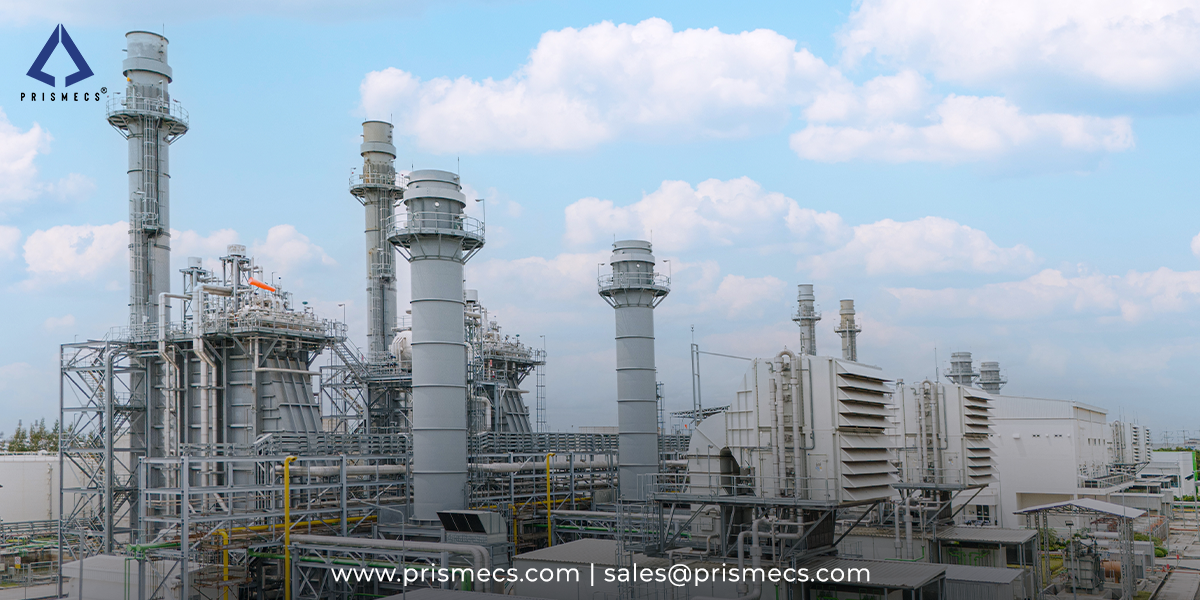
Gas Turbines
19 minutes read
Dual-Fuel Gas Turbines: How Gas-and-Liquid Fuel Flexibility Works
A dual-fuel gas turbine switches from natural gas to diesel at load, but most failures start in idle oil lines. Get transfer steps and coking fixes be...
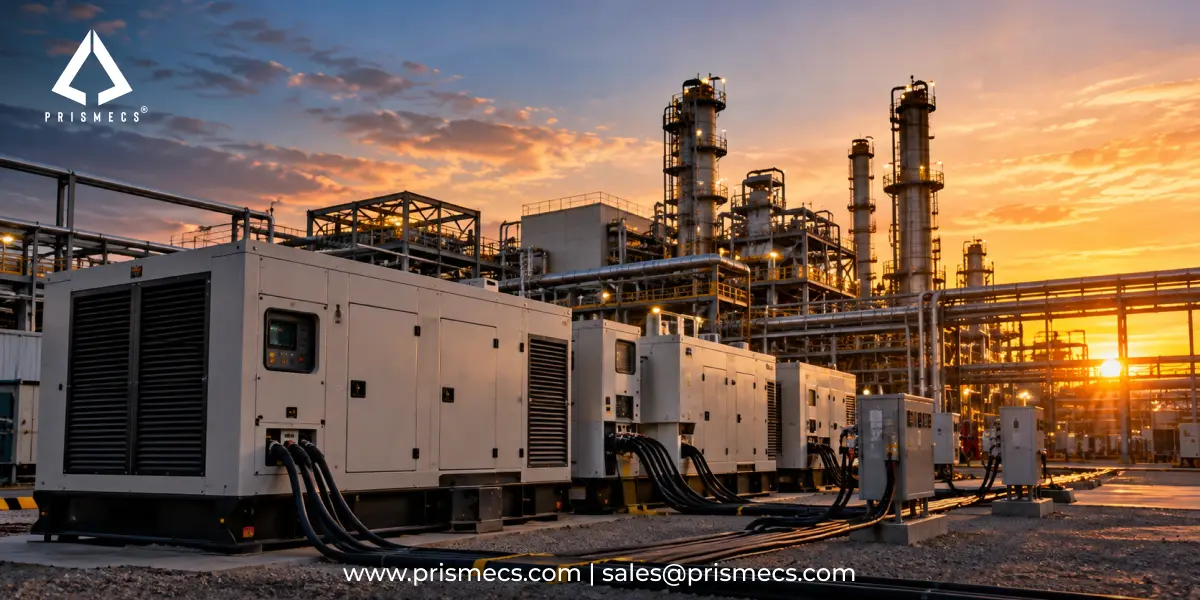
Power Utilities
18 minutes read
Temporary and Bridge Power for Industrial Facilities: When and How to Use It
Planning bridge power past 12 months? Under EPA rules your generators may be stationary from day one. Check Tier 4, NSPS KKKKa and SPCC triggers befor...
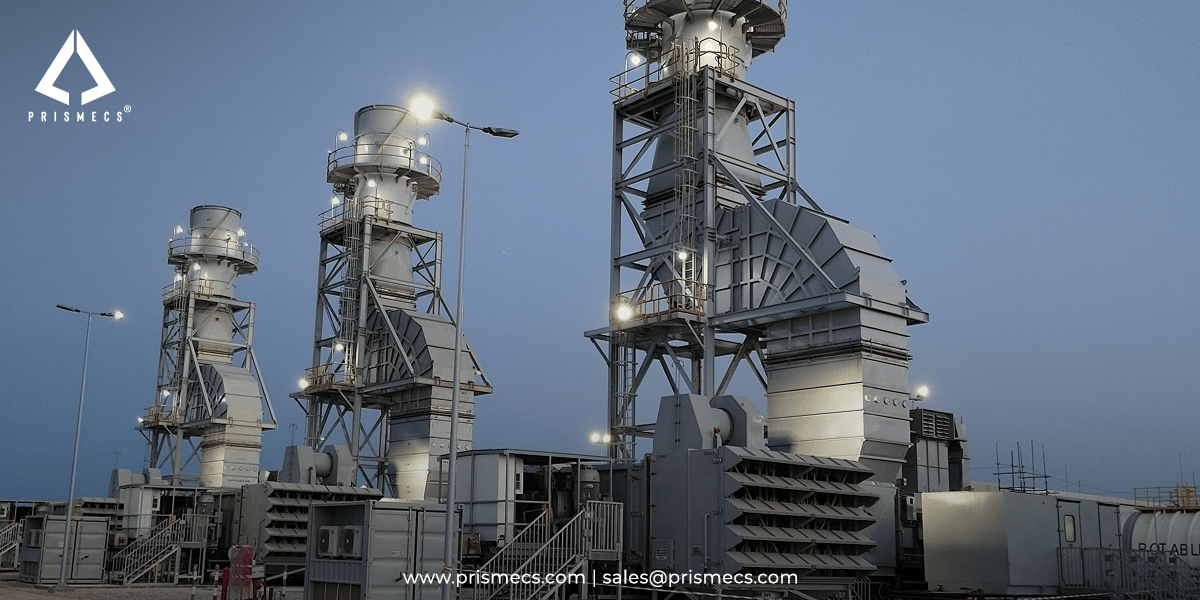
Gas Turbines
16 minutes read
What Is a Mobile Gas Turbine Power Plant? TM2500-Class Units Explained
A mobile gas turbine power plant is a transportable power generation system designed to add electrical capacity faster than a conventional permanent p...
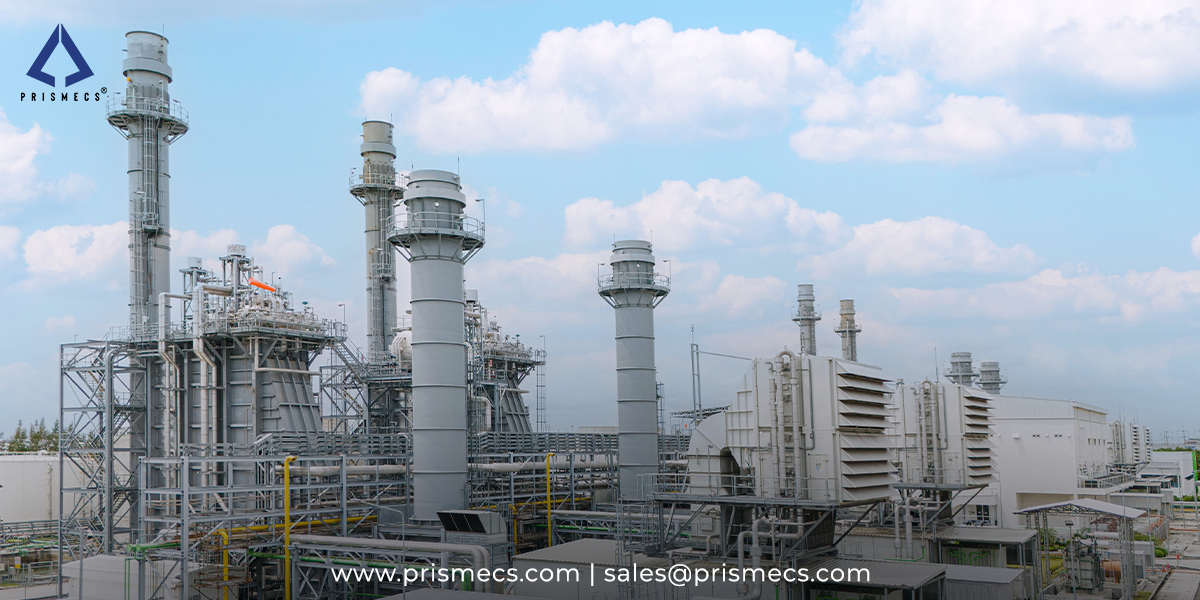
Power Utilities
20 minutes read
Fast-Track Power Plants Deployment: How to Reach Speed to Power in Under 12 Months
Fast-track power plant deployment can hit first power in weeks. See real TM2500 timelines from permitting to COD, proven in Oman and Taiwan. Plan your...