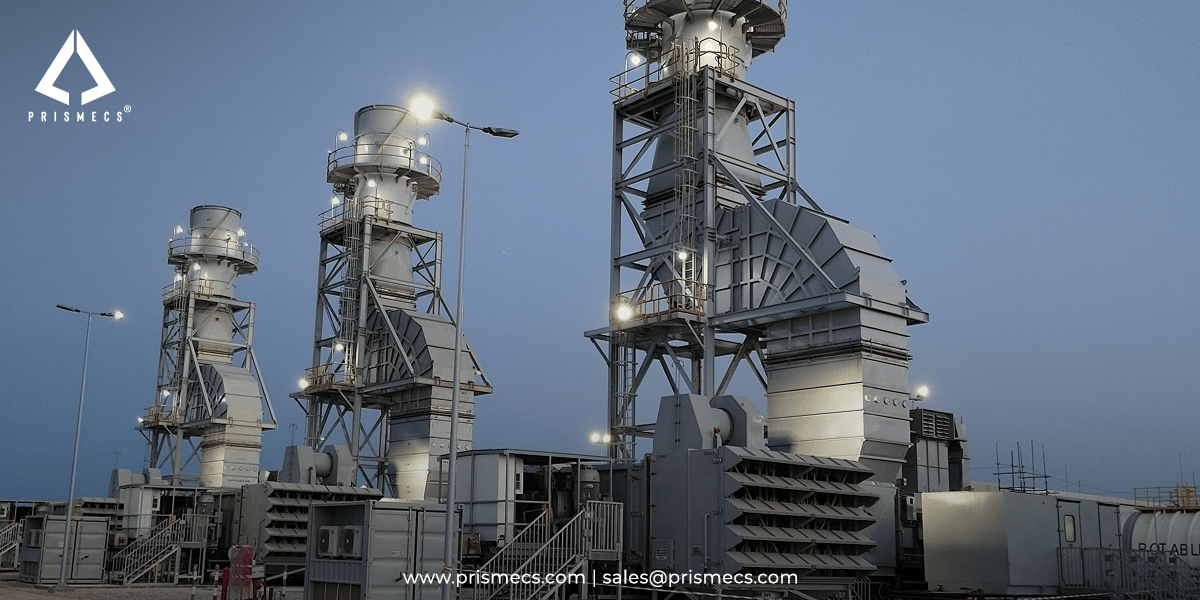
A mobile gas turbine power plant is a transportable power generation system designed to add electrical capacity faster than a conventional permanent plant. The best-known example, GE Vernova's TM2500, packages an aeroderivative gas turbine and generator on trailers so it can be transported, installed, commissioned, and relocated as power needs change.
A TM2500 unit delivers roughly 30 to 37 MW depending on the model and site conditions. GE rates the latest TM2500 DLE at 34.5 MW net at ISO conditions. These systems are commonly used for emergency generation, bridge power, peaking capacity, remote industrial facilities, isolated grids, and temporary power projects.
This guide is written for plant owners, utilities, EPC teams, and procurement leads who are sizing, buying, or renting mobile generation.
Mobile Gas Turbine Power Plant: Key Facts
Actual power output should be based on site-rated capacity, not nameplate capacity alone. Ambient temperature, elevation, fuel conditions, auxiliary loads, electrical interconnection, and redundancy requirements all affect how much power a unit delivers at a specific location.
How Mobile Gas Turbine Systems Are Configured
TM2500 systems are simple-cycle power plants built around transportable modules. Their core is an aeroderivative gas turbine, a lightweight turbine design adapted from aviation technology for stationary power generation. The high power-to-weight ratio and fast-start characteristics make it well suited to mobile and fast-response generation.
Core Turbine-Generator Package
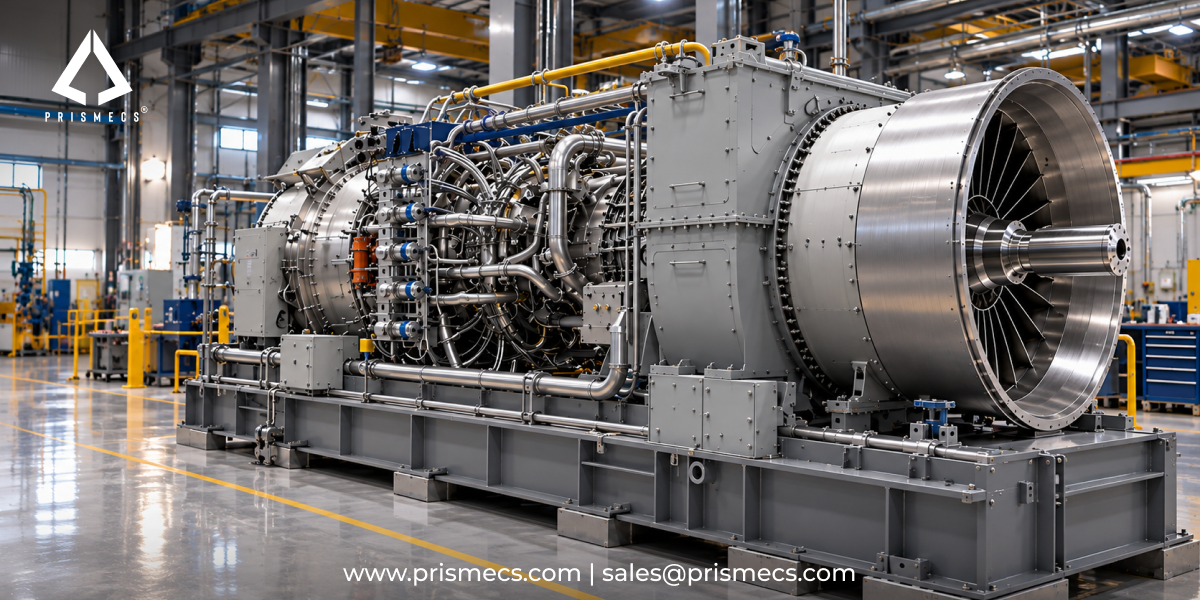
The primary package includes the gas turbine, generator, lubrication systems, controls, air inlet, and exhaust equipment. Fuel may be supplied as natural gas, liquid distillate, or through a dual-fuel configuration, depending on the machine and project requirements.
Balance of Plant and Electrical Systems
The turbine alone is not a complete power plant. A working installation also needs the systems below, and any of them can set the project schedule.
Prismecs supports these systems through its power generation asset services, including gas turbine O&M, electrical systems, controls, SCADA, fuel systems, commissioning, and balance-of-plant support.
Mobile therefore does not mean infrastructure-free. Fuel, electrical interconnection, site preparation, transformers, permitting, and commissioning still determine the final project schedule.
How Does a Mobile Gas Turbine Generate Electricity?
A mobile gas turbine produces electricity through the Brayton cycle, the same basic process used by other simple-cycle gas turbine plants. Filtered air is compressed, mixed with fuel in the combustor, and burned. The hot gas expands through the turbine and spins the shaft connected to the generator.
Generator output then passes through protection equipment, switchgear, and a step-up transformer before reaching a utility grid, industrial load, microgrid, or isolated power system. Plant controls manage operation, synchronization, alarms, and dispatch. Depending on environmental requirements, emissions controls may include Dry Low Emissions (DLE) combustion, water injection, or Selective Catalytic Reduction (SCR).
How Much Power Does a TM2500 Mobile Gas Turbine Produce?
A TM2500 unit provides roughly 30 to 37 MW depending on model, but delivered output depends on the operating environment. The important distinction is between nameplate output and site-rated output. A published MW rating does not guarantee the same output at every location.
GE Vernova's TM2500 ratings are net outputs at ISO conditions: natural gas, inlet and exhaust losses included, balance of plant excluded. The TM2500 DLE is rated at 34.5 MW net. Your delivered MW at the interconnection point will differ.
How Site Conditions Change Mobile Gas Turbine Output
Fuel composition and turbine condition also affect output, so confirm both with the OEM site rating.
Worked example (arithmetic, not an OEM guarantee):
For project planning, mobile power capacity should be calculated from expected site conditions and firm power requirements. Four nominal 30 MW units may represent about 120 MW of installed capacity, but that does not guarantee 120 MW of firm output under all conditions.
How Fast Can a Mobile Gas Turbine Power Plant Be Deployed?
Two different timelines matter when evaluating mobile generation: turbine startup time and total project deployment time.
Turbine Startup Time
Once installed, commissioned, fueled, and ready for dispatch, aeroderivative gas turbines can respond within minutes. California's Department of Water Resources deployed four temporary generating units with a combined capacity of 120 MW. Each unit could provide up to 30 MW, and DWR reported the units could be online within five minutes when requested by grid operators.
Total Project Deployment Time
A five-minute turbine start does not mean a plant can be delivered in five minutes or even five days. Project delivery depends on:
- Site preparation
- Fuel connections
- Transformers and switchgear
- Interconnection studies
- Permitting
- Grid synchronization
- Testing and commissioning
A prepared site with existing electrical and fuel infrastructure can move much faster than a greenfield project. Real plants took from under 200 days to ten months. For a deeper schedule comparison across technologies, see our guide to fast-track power plant deployment.
In short: startup time describes the turbine; deployment time describes the complete power project.
Where Are Mobile Gas Turbine Power Plants Used?

Mobile gas turbines are useful when significant generating capacity is needed quickly or when permanent power infrastructure is not yet available.
Emergency, Bridge and Peak Power
Utilities can use mobile generation during grid shortages, equipment outages, disaster recovery, or periods of unusually high electricity demand. Mobile turbines can also provide bridge power while a permanent plant, grid connection, or transmission project is still under development.
Industrial and Off-Grid Power
Mobile gas turbines can serve industrial sites where utility power is limited or unavailable, including:
- Oil and gas operations
- Refineries
- Petrochemical facilities
- Mines
- Ports
- Remote manufacturing sites
With the appropriate controls, protection, fuel systems, and black-start capability, mobile turbines can also operate within isolated or islanded electrical systems.
Bridge Power for Data Centers
Data centers use mobile and modular aeroderivative turbines when the grid cannot supply power as fast as the building can be finished. Lawrence Berkeley National Laboratory's Queued Up report found the median generation project that reached commercial operation in 2025 spent over five years from interconnection request to operation. That dataset excludes load interconnection, so a data center's own utility timeline is separate and site-specific.
Aeroderivative turbines are already being bought for this:
- GE Vernova is supplying 29 LM2500XPRESS packages of about 35 MW each, nearly 1 GW in total, for Crusoe's data center projects.
- GE says one 35 MW unit can replace 11 to 12 diesel generator sets.
- GE cites installation in as little as two weeks once equipment is on site.
Data-center-grade design adds requirements the generic case does not:
- Redundancy math. For a 100 MW firm at 30 MW site-rated per unit, N is four units (120 MW) and N+1 is five units (150 MW installed). This is an illustration. See N, N+1, 2N and 2N+1 redundancy.
- Islanding and black start. If the plant runs without the grid, controls, protection, and black-start capability decide whether the load stays up.
- Permits and noise. Air permits and neighbor noise limits can set the schedule. At Birr, residential noise limits required a twenty-meter wall.
Planning bridge power for a data center campus? See our data center power solutions or talk to a project engineer.
Mobile Gas Turbine vs. Gas Engines vs. Diesel Fleets
Diesel generators remain useful for standby loads and smaller distributed power requirements. At utility scale, many individual gensets may be needed to match one turbine, and gas reciprocating engines are a serious alternative. The right choice depends on size, speed, and duty.
Fuel type also affects direct CO₂ intensity. The U.S. Energy Information Administration lists 116.65 lb CO₂ per million Btu for natural gas and 163.45 for distillate fuel oil, about 29% lower on a fuel-energy basis.
That coefficient alone understates the real differences, because plant efficiency matters too. Using EIA's aeroderivative planning heat rate of 9,447 Btu/kWh, a simple-cycle aeroderivative emits about 1,100 lb CO₂/MWh. The Wartsila 50SG's published heat rate of 7,165 kJ/kWh works out to about 790 lb CO₂/MWh, roughly 28% lower. These are vendor and planning figures at rated conditions, so use site-specific heat rates for real comparisons.
Prismecs Mobile Gas Turbine Project Experience: Duqm, Birr and Miaoli
At Birr, GE Vernova built the plant and Prismecs supported operations and balance of plant. Miaoli uses LM2500XPRESS units, a modular packaged turbine rather than a trailer-mounted TM2500.
Across the three projects, delivery ranged from under 200 days to ten months. In each case the schedule was set by interconnection, fuel, noise, or logistics, not turbine availability.
Deep Dive: Duqm, Oman
Prismecs supported a mobile gas turbine project in Duqm, Oman, where additional generating capacity was required while grid infrastructure was still being developed. Prismecs helped install and operate four TM2500 mobile gas turbine units with a combined capacity of 110 MW [CONFIRM capacity and role wording]. The plant supplied round-the-clock power to the city and port in a grid-isolated environment and was commissioned in under 200 days.
What Prismecs supported:
- Mechanical, electrical, and controls O&M staffing
- CMMS implementation
- Work-order and spare-parts management
- Standalone fuel, water, and site utilities setup
- Natural-gas transition support, replacing diesel generation
- Site-specific HSE procedures
The Duqm project shows why mobile power generation is more than a turbine deployment. Fuel systems, electrical infrastructure, controls, maintenance, safety, and site operations must work together for the plant to deliver reliable power.
What Should Be Checked Before Selecting a Mobile Gas Turbine?

Select a mobile turbine around the actual site and operating requirement, not nominal turbine output alone.
Power, Site and Redundancy
Fuel and Electrical Integration
Permitting and O&M
Addressing these factors early shows whether a mobile gas turbine is technically suitable and gives a more realistic project schedule.
How Prismecs Supports Mobile Gas Turbine Projects
Prismecs supports mobile and aeroderivative power assets from installation and commissioning through operations, maintenance, and balance of plant. It also supports TM2500, LM2500, LM6000-class, and other gas turbine equipment.
This whole-plant approach matters because turbine availability depends on the electrical, fuel, control, utility, and maintenance systems around the machine.
Frequently Asked Questions
What Is the Difference Between a TM2500 and an LM2500?
The LM2500 is an aeroderivative gas turbine platform used in power generation and other applications. The TM2500 is a mobile power solution that packages aeroderivative turbine technology with transportable equipment for faster installation and relocation. The LM2500XPRESS is a related modular, largely factory-assembled package for fast installation.
How Much Power Does a TM2500 Produce?
TM2500 units provide roughly 30 to 37 MW depending on model, electrical frequency, ambient conditions, and elevation. GE rates the TM2500 DLE at 34.5 MW net at ISO conditions. Final project sizing should use site-rated output.
How Long Does It Take to Deploy a Mobile Gas Turbine?
Deployment depends on site preparation, fuel supply, transformers, switchgear, permits, interconnection, testing, and commissioning. GE cites about 14 days to install a unit once equipment is on site, while Prismecs-supported plants took from under 200 days to ten months. A prepared site with existing infrastructure can move considerably faster than a greenfield project.
Can a Mobile Gas Turbine Operate Without a Grid Connection?
Yes. A mobile gas turbine can serve an isolated electrical system when the plant includes appropriate controls, protection, black-start capability, voltage regulation, fuel supply, and balance-of-plant equipment.
Can Mobile Gas Turbines Meet Emissions Requirements?
Mobile gas turbines can use emissions controls such as DLE combustion, water injection, and SCR. The required configuration depends on the turbine, fuel, operating profile, permit, and applicable environmental standards.
How Much Does a Mobile Gas Turbine Power Plant Cost?
There is no list price. Mobile power is quoted per project. For a permanent-plant benchmark, EIA's AEO2026 assumptions show $2,275/kW overnight capital cost for a new aeroderivative turbine plant. Mobile units, balance of plant, and rental terms differ.
What Drives the Price of Mobile Power?
The main drivers are required firm MW, duty hours, fuel type, balance of plant and transformers, interconnection, emissions controls, mobilization, O&M staffing, spares, and contract term.
Should I Rent or Buy a Mobile Gas Turbine?
Rent for short, seasonal, or emergency needs. Buy when the term is multi-year or when relocation or resale value matters. Surplus units can later be placed through equipment marketing.
What Does It Cost to Run a Mobile Gas Turbine?
Fuel cost per MWh equals heat rate in MMBtu/MWh times gas price. At EIA's 9.447 MMBtu/MWh planning heat rate and an illustrative $4/MMBtu, fuel costs about $37.80/MWh. The $4 input is illustrative, not a forecast. O&M and spares are additional.
What Should a Mobile Gas Turbine Quote Include?
Confirm whether it covers the unit, balance of plant, transformers, installation and commissioning, O&M, fuel, spares, mobilization and demobilization, and permitting support. Quotes that differ on scope are not comparable.
Planning a Mobile Gas Turbine Project?
Mobile gas turbines can provide modular generation for emergency power, bridge power, grid support, peaking demand, data centers, and isolated industrial facilities. But successful deployment depends on more than turbine availability. Fuel, electrical interconnection, balance of plant, controls, permitting, commissioning, and O&M need to be planned together.
- Need equipment? Browse available inventory.
- Planning a project? Request a project consultation.
- Need capital? Explore financing.
To discuss your project, call 1 (888) 774-7632 or email sales@prismecs.com.
Tags: TM2500 mobile gas turbine aeroderivative gas turbine trailer-mounted power generation site-rated turbine output mobile power for data centers
recent posts
O&M Services
15 minutes read
Writing a Power Plant O&M RFP That Gets Comparable Bids
Write a power plant O&M RFP every bidder must price the same way. Get the pricing template, data room checklist and weighted scorecard that expose eve...
EPCM Services
19 minutes read
25 Questions to Ask a Power Plant EPC Contractor Before You Sign
Most lists of questions to ask an EPC contractor stop at the question. Get why each matters, the strong answer, the red-flag reply and a weighted bid...
Gas Turbines
19 minutes read
Dual-Fuel Gas Turbines: How Gas-and-Liquid Fuel Flexibility Works
A dual-fuel gas turbine switches from natural gas to diesel at load, but most failures start in idle oil lines. Get transfer steps and coking fixes be...
Power Utilities
18 minutes read
Temporary and Bridge Power for Industrial Facilities: When and How to Use It
Planning bridge power past 12 months? Under EPA rules your generators may be stationary from day one. Check Tier 4, NSPS KKKKa and SPCC triggers befor...