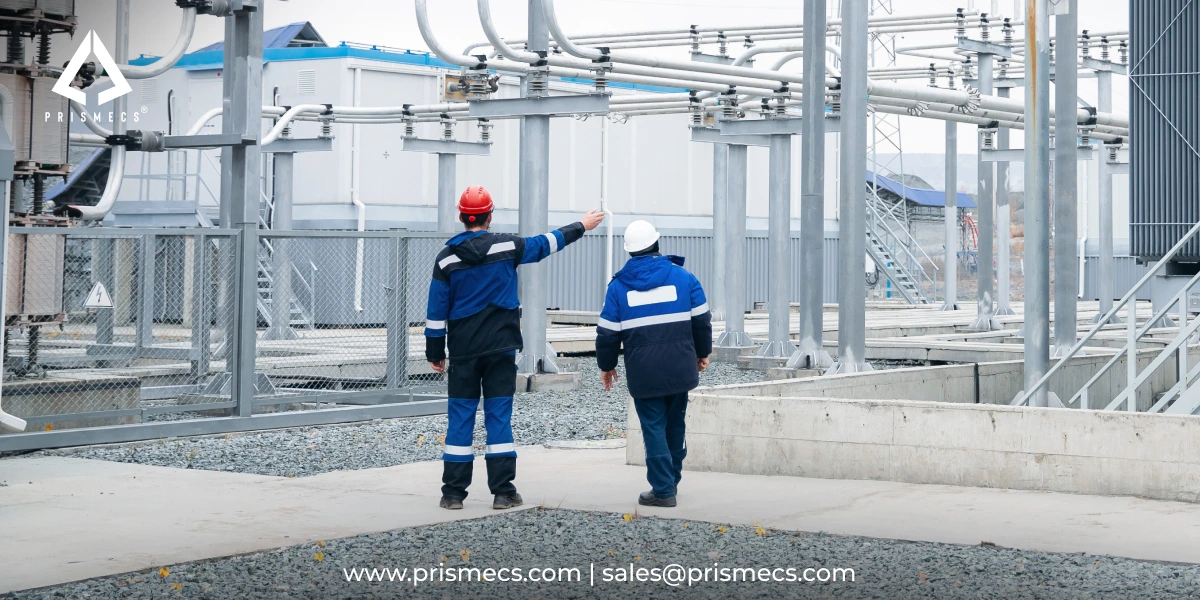
You need an owner’s engineer when a power or industrial project is too large, complex, or heavily financed to rely on the contractor’s word alone. That typically means building a new plant or major upgrade, signing an EPC contract, bringing in lenders, or lacking the in-house engineers to review designs and witness tests.
An owner’s engineer (OE) is an independent engineering firm hired by the project owner to protect the owner’s technical and commercial interests, from early planning through commissioning.
What Does an Owner’s Engineer Do?
An owner’s engineer works on your side of the table. While the EPC contractor builds the plant and the equipment maker supplies the machines, the OE checks their work, flags risks early, and makes sure what gets delivered matches what you paid for.
Typical responsibilities include:
- Reviewing feasibility studies, designs, and technical specifications.
- Preparing or reviewing tender documents and evaluating EPC and equipment bids.
- Reviewing contracts for technical gaps, guarantees, and testing requirements.
- Monitoring construction progress, quality, safety, and schedule.
- Witnessing factory and site tests, commissioning, and performance tests.
- Reviewing change orders and supporting claims or disputes.
- Checking handover documents, as-built drawings, and O&M readiness.
Owner’s Engineer vs. Other Project Roles
Role | Who hires them | Whose interests they protect |
Owner’s engineer | The project owner | The owner’s cost, quality, schedule, and performance |
Owner’s representative / project management consultant (PMC) | The project owner | The owner’s overall project management: budget, schedule, and coordination across contracts. May work alongside an OE or include OE services. |
EPC contractor | The project owner | Delivering the contract scope at the agreed price |
OEM | The EPC contractor or owner | Its own equipment and warranty terms |
Lenders or independent engineer | Banks or investors | The lenders’ risk on their loan |
The key difference is independence. An OE should have no role in supplying the equipment or building the plant on your project, so its advice is focused only on getting you a plant that works.
One more distinction matters on international projects. Under FIDIC’s Red and Yellow Book contracts, the “Engineer” is a named contract role that administers the contract and must make fair determinations between owner and contractor. Under the Silver Book, used for EPC and turnkey projects, there is no Engineer role, so owners rely on their own owner’s engineer to protect their technical interests.
Can a Firm That Also Builds Be Your Owner’s Engineer?
Yes, but only with clear separation. Many engineering firms, including Prismecs, offer both project delivery (EPC, EPCM, equipment, O&M) and owner’s engineering. That experience is valuable: engineers who have built and run plants spot practical problems faster. The independence has to hold on your project, though.
Before hiring any OE that also builds, confirm in writing that it will not bid the EPC contract, supply major equipment, or take the O&M contract on the same project without your informed agreement. Prismecs follows this rule: our owner’s engineering team supports projects we are not bidding on, and if Prismecs would have any other role on your project, we tell you up front.
Why Demand for Owner’s Engineers Is Growing
The pace of new power projects is putting pressure on contractors, suppliers, and owner teams alike. According to the U.S. Energy Information Administration, developers planned to add a record 86 GW of new utility-scale generating capacity in 2026, after 53 GW in 2025. That includes 24 GW of battery storage, compared with a record 15 GW in 2025, and many of those storage projects are led by owners building the technology for the first time. With so many projects competing for the same engineers, crews, and equipment, owners need someone dedicated to protecting their project.
6 Signs You Actually Need an Owner’s Engineer
1. You’re Building a New Plant or Major Expansion
New gas turbine plants, BESS sites, hybrid projects, and large upgrades involve hundreds of design decisions. An OE makes sure those decisions serve your long-term operating needs, not just the lowest build cost.
2. You’re Signing an EPC or Turnkey Contract
Once the contract is signed, gaps in scope, guarantees, or testing become expensive change orders. An OE reviews the contract and technical specifications before you commit.
3. Lenders or Investors Are Involved
Financed projects face close scrutiny from banks and their independent engineers. An OE prepares the technical information they need and answers their questions on your behalf, helping keep financing on track. The OE represents you to the lender’s engineer; it does not replace them.
4. Your Team Lacks Engineering Bandwidth
Many owners run lean teams focused on operations or development. An OE adds experienced engineers for the duration of the project without permanent hiring.
5. The Technology Is New to You
First-time owners of aeroderivative turbines, battery storage, mobile power, or hybrid systems benefit from someone who has seen the common problems before.
6. Your Project Is Already Slipping
If schedules are sliding, budgets are growing, or the contractor’s reports raise more questions than answers, an OE can provide an independent assessment and a recovery plan.
When You May Not Need a Full Owner’s Engineer
Not every project needs a full OE team. You can often manage without one, or with a lighter arrangement, when:
- The work is small and routine, such as like-for-like equipment replacements or scheduled maintenance.
- You have a strong in-house engineering team with experience on the same technology.
- You are buying a standard, proven package with clear OEM support and minimal site integration.
- The financial risk is low compared with the cost of independent oversight.
In these cases, consider targeted support instead: a one-time design or contract review, an independent bid evaluation, or a commissioning witness for critical tests. You get expert eyes where they matter most without paying for full-time coverage.
What an Owner’s Engineer Does at Each Project Stage

The earlier an OE joins, the more value it can add, because the cheapest time to fix a problem is before it is built.
Stage | What the OE delivers | Owner decision it supports |
Development and planning | Feasibility review, technology and site assessment, grid and fuel plan review, realistic schedule | Whether and how to proceed |
Procurement and contracting | Technical specifications, tender documents, like-for-like bid evaluation, contract and guarantee review | Which contractor and which contract terms |
Construction | Progress, quality and safety monitoring; design change and change order review; owner and lender reporting | Whether to approve changes and payments |
Commissioning and handover | Test witnessing, guarantee verification, punch list review, documentation and training check | Whether to accept the plant |
Development and Planning
The OE reviews feasibility studies, site options, technology choices, and fuel and grid connection plans. Early planning matters because some steps take years. Lawrence Berkeley National Laboratory found that the median time from an interconnection request to commercial operation was over 5 years for U.S. projects built in 2025. That median was 61 months, up from 36 months in 2015 and 22 months in 2008. An OE helps set realistic schedules and avoid choices that add delay.
Procurement and Contracting
The OE helps write technical specifications, prepares or reviews tender documents, compares EPC and equipment bids on a like-for-like basis, and checks performance guarantees and testing terms before signing. This guide to power plant EPC explains how EPC delivery works and where owners carry risk.
Construction
During construction, the OE monitors progress, quality, and safety; reviews design changes and change orders; and reports clearly to the owner and lenders so issues are caught while they are still easy to fix.
Commissioning and Handover
The OE witnesses commissioning and performance tests, confirms guarantees are met, reviews punch lists, and makes sure you receive complete documentation, spare parts, and training before accepting the plant.
Owner’s Engineer Cost vs. Value
An OE is usually a small share of total project cost, while the problems it helps prevent, such as scope gaps, failed performance tests, late completion, and disputes, can cost far more.
Public cost studies show how small that share can be:
- Battery storage. In a cost study for the New York grid operator (NYISO), a 2-hour battery storage project with an EPC cost of $168 million carried $0.6 million for the owner’s engineer, well under 1% of EPC cost.
- Emissions control retrofits. The U.S. Environmental Protection Agency’s cost methodology budgets owner’s engineering, management, and procurement together at 5% of capital cost.
Set that against the cost of a single month of delayed commercial operation, or a performance guarantee that is never enforced.
The real question is not whether you can afford an OE, but whether you can afford to discover problems after the contractor has been paid.
How to Choose the Right Owner’s Engineer
The right OE combines independence, hands-on experience, and clear communication. Look for these qualities:
- True independence: no role in the EPC contract or equipment supply on your project, and no financial ties to the contractors you are evaluating.
- Experience with your technology: gas turbines, reciprocating engines, BESS, hybrid, or mobile power, and the specific OEM platforms on your site.
- Field and commissioning know-how: engineers who have operated and maintained plants, not just designed them, spot practical problems faster.
- Multi-OEM perspective: an OE that works across manufacturers can compare options without brand bias. Teams with broad gas turbine and power generation services experience bring that practical view.
- Global reach: for projects in the Middle East, Africa, Latin America, or remote sites, local knowledge and the ability to mobilize quickly matter.
- Clear scope and reporting: agree up front on deliverables, site visit frequency, report formats, and who on your team receives them.
Questions to Ask Before You Hire an OE
- Which similar projects have you supported, and can we speak to those owners?
- Who will be our lead engineer, and how much time will they commit?
- Do you have any relationship with our EPC contractor or OEM?
- Will you bid on any part of this project, now or later?
- How will you report issues, and how quickly?
- Can you scale support up or down as the project moves through each stage?
Frequently Asked Questions About Owner’s Engineers
What is an owner’s engineer?
An owner’s engineer is an independent engineering firm hired by a project owner to protect the owner’s interests. It reviews designs and contracts, monitors construction, and witnesses testing to make sure the project is delivered as promised.
What is the difference between an owner’s engineer and an independent engineer?
An owner’s engineer works for the project owner. An independent or lender’s engineer works for the banks or investors financing the project and focuses on their risk.
When should an owner’s engineer be hired?
Ideally during early development or before the EPC contract is tendered. Joining early lets the OE shape specifications and contracts, which is where it adds the most value.
Do small projects need an owner’s engineer?
Not always. Small, routine, or low-risk projects can often rely on targeted support, such as a contract review or commissioning witness, instead of a full OE team.
Can an owner’s engineer help on a project that is already underway?
Yes. An OE can step in mid-project to assess progress, review change orders, and support recovery planning, commissioning, and handover.
How much does an owner’s engineer cost?
It depends on scope, project size, and how early the OE joins, but it is usually a small share of project cost. In a NYISO cost study, the owner’s engineer for a 2-hour battery storage project was budgeted at $0.6 million against a $168 million EPC cost. EPA’s cost methodology budgets owner’s engineering, management, and procurement together at 5% of capital cost.
Can an EPC company act as an owner’s engineer?
Yes, if it has no other role on your project. Many firms offer both delivery and owner’s engineering. Confirm in writing that the firm will not bid the EPC contract, supply major equipment, or take the O&M contract on the same project without your informed agreement.
Key Takeaways
You need an owner’s engineer when the project is large, complex, financed, or new to your team, and especially before you sign an EPC contract. For small, routine work, targeted reviews may be enough. The earlier an OE joins, the more it can protect your budget, schedule, and plant performance.
On a 96 MW TM2500 mobile generation project in Puerto Rico, Prismecs served as the owner’s engineer and on-site supervisory team, providing owner’s representation on site and validating the commissioning test plan to achieve a safe startup and grid-ready performance within a tight schedule.
Planning a Power Project or Signing an EPC Contract?
Project owners, developers, and asset managers can rely on Prismecs for owner-side engineering support, from specification and bid review to construction monitoring and commissioning, across gas turbine, BESS, and hybrid power projects. Our owner’s engineering team supports projects we are not bidding on, and if Prismecs would have any other role on your project, we tell you up front.
Talk to our power expert today at 1 (888) 774 7632.
Tags: owner’s engineering services owner’s engineer vs independent engineer EPC contract oversight owner’s engineer cost independent technical advisor
recent posts

Owner’s Engineer
11 minutes read
When Do You Actually Need an Owner’s Engineer?
When to hire an owner’s engineer? Before your EPC terms are locked, not after. See 6 signs you need one, when targeted reviews are enough, and what it...

Gas Turbines
15 minutes read
Gas Turbine Major Overhaul: How Operators Decide Scope, Timing and Budget
A gas turbine major overhaul hinges on scope, timing, provider and budget. Weigh repair vs replace, OEM vs independent and RLA life extension before y...

O&M Services
12 minutes read
Combustion vs Hot Gas Path vs Major Inspection: What Each Covers and When It's Due
Combustion vs hot gas path vs major inspection timing is not just hours. A peaker can owe an HGPI in 4 years on starts alone. Check which limit hits y...

O&M Services
15 minutes read
Writing a Power Plant O&M RFP That Gets Comparable Bids
Write a power plant O&M RFP every bidder must price the same way. Get the pricing template, data room checklist and weighted scorecard that expose eve...