A battery energy storage system stores electricity in rechargeable battery modules and returns it through a power conversion system when the load, the tariff, or the grid requires it. The cells determine how much energy the system holds. The PCS determines how much power it can deliver at any instant. The BMS protects the cells and manages thermal conditions. The EMS decides when to charge and when to discharge based on tariff intervals, state of charge, and load demand. Prismecs engineers all four layers against your specific site conditions rather than deploying a preconfigured container.
Store Power. Control the Peak. Keep Operating.
Battery Energy Storage Systems (BESS) and Microgrids for Industrial and Critical Loads
Prismecs engineers BESS, microgrids, and solar-plus-storage solutions that can lower demand charges and minimize outage costs. Each system is tailored to the facility's load data and tariffs for optimized performance.
The Right BESS Starts with
the Right Operating Case
A battery can perform exactly as specified and still fail to deliver expected value. This can happen when the Energy Management System (EMS) is not configured around your tariff or the Power Conversion System (PCS) does not respond to power plant load steps. As a result, equipment may work without delivering the expected business value.
Prismecs addresses these gaps by evaluating load, tariff, and interconnection requirements, then engineering the BESS, PCS, EMS, generation, and protection as one integrated system.
Prismecs determines how the battery will operate, what value it can capture, and its limits, and identifies constraints before capital is committed.
End-to-End Battery Storage and Microgrid Solutions
Prismecs delivers industrial battery storage solutions across six disciplines. Each is scoped to the facility's electrical infrastructure, load characteristics, and commercial objectives.
Industrial Battery Storage
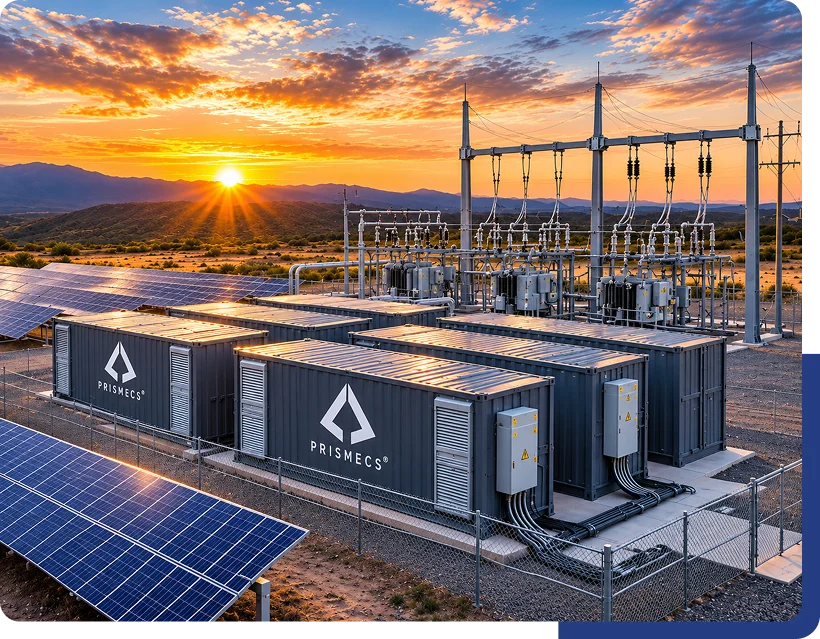
Behind-the-meter LFP battery systems integrate PCS, BMS, and EMS for energy management. They can be containerized or building-housed and can operate grid-connected or off-grid while supporting peak shaving and demand charge reduction.
Microgrid Design and Controls
Gas generation, modular gensets, BESS, and renewables are coordinated through a microgrid controller. It manages energy dispatch, enables monitoring, and supports grid-parallel or islanded operation while maintaining resilience for critical loads.
Solar-Plus-Storage
PV arrays are coupled with battery storage to manage changing commercial and industrial loads. The battery can shift energy into evening hours and smooth PV output, while reducing curtailment and supporting hybrid dispatch.
Islanding and Black Start
Critical loads remain powered during grid loss through automatic islanding and black-start capability. The system can use staged load restoration and coordinated protection, while testing confirms performance before the installation is commissioned.
Grid Interconnection and Protection
Point-of-connection and voltage-level selection are developed with the interconnecting utility. System engineering is then designed to cover short-circuit analysis, relay coordination, grounding, synchronization logic, and utility metering interfaces.
Storage Retrofit and Repowering
BESS can be added to existing gas turbine, genset, or solar plants. The retrofit includes tie-in engineering and switchyard capacity review, while phased execution can be planned to minimize power plant outages and construction downtime.
How Prismecs Delivers BESS and Microgrids
A structured delivery process keeps engineering, procurement, and site work aligned from the first load assessment through commissioning and ongoing operation.
The Equipment Behind the System
Prismecs specifies equipment based on technical merit and project fit, while qualified OEMs and integrators retain design and warranty responsibilities.
LFP is widely used for C&I and utility storage because it provides thermal stability. Final chemistry is selected to suit the application, while systems can be containerized or building-housed. System duration is sized to the load, with BMS controls integrated. Thermal management, gas detection, and fire suppression follow applicable codes and OEM requirements, while warranty throughput is tracked to deliver contracted cycles.
PCS selection considers load steps, grid-forming or grid-following duty, and OEM fault-current characteristics for protection studies. The PCS can operate in grid-following or grid-forming mode, depending on whether the system must independently anchor and maintain island mode.
Dispatch logic is configured around tariff intervals, state of charge, and load forecasts. It also incorporates islanding, black-start sequencing, and generation coordination within the overall control architecture.
Natural-gas gensets and reciprocating generation can be paralleled with storage for long-duration resilience and black-start anchoring. PV can be coupled AC- or DC-side to storage with curtailment management. Switchgear, transformers, protection relays, grounding, and metering are coordinated with the utility interface.
Why Industrial Operators Choose Prismecs for BESS and Microgrids
A battery delivers value when dispatched around your tariff, load profile, and grid connection. Prismecs sizes, integrates, and operates BESS as part of the complete power plant, helping achieve demand-charge savings and resilience during outages.
Sized for Your Load and Tariff
Duration, power rating, and dispatch logic are based on tariff intervals, demand-charge windows, and interval load data. The savings model uses your actual meter records rather than a generic performance sheet.
Storage Within a Complete Power System
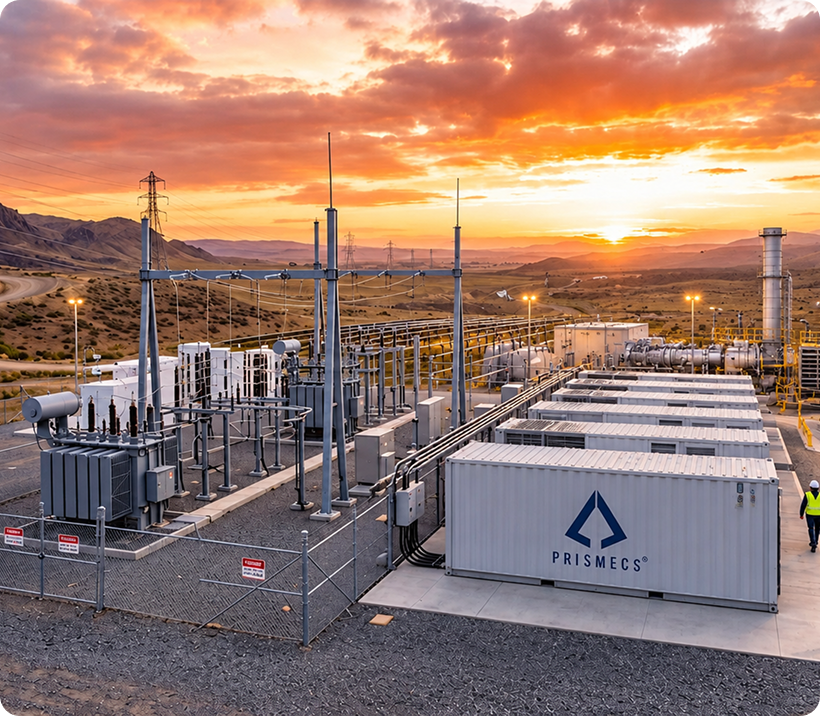
BESS, PCS, and EMS are integrated with gas generation, solar, switchgear, and protection. Prismecs integrates the battery from the point of interconnection through the power plant’s protection systems.
Island Mode That Holds Under Load
Islanding, black-start sequencing, and staged load restoration are coordinated with the protection system. Load-acceptance testing is completed before service, helping critical loads remain powered during grid outages.
Operated as a Power Plant Asset
Monitoring, CMMS-based maintenance, degradation tracking, and system management support performance throughout the service life. Prismecs supports system operation even after handover through condition monitoring.
Proven at Grid Scale
Prismecs has integrated 113.6 MW of battery storage into an existing California facility. Interconnection, protection, and controls were engineered around existing infrastructure, with 1,500 MW delivered across 15+ countries.
Compliance Built into the Scope
Applicable NFPA, UL, NEC, interconnection requirements, and AHJ approvals are addressed from the start. These requirements are incorporated into the project's scope before equipment arrives on site.
Industries That Deploy BESS and Microgrids
Prismecs serves several industries with battery energy storage and microgrid needs that vary by operating environment. Each system is designed around the facility’s load, energy needs, and operational priorities.

Data centers
Enabling Reliable, Scalable Infrastructure for Critical Operations
Explore More

E-Mobility
Empowering the Future with Electrified Mobility
Explore More
Power & Utilities
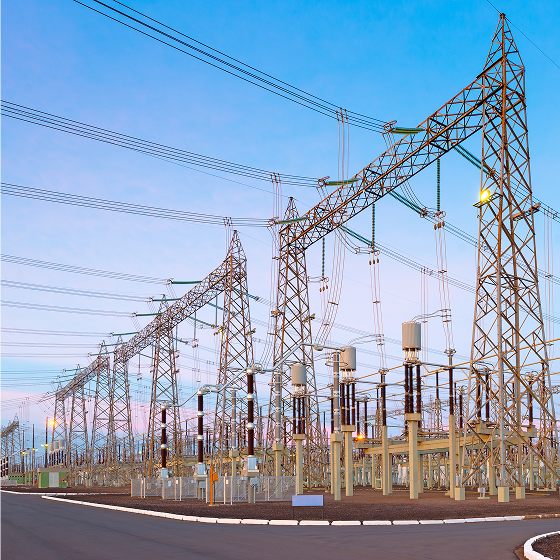
Ensuring Reliable, Efficient Solutions for Energy Infrastructure
Explore More

HEALTHCARE
Powering Healthcare with Uninterrupted Energy Solutions
Explore More

oil & gas
Ensuring Uninterrupted Power Operations Across Oil & Gas Phases
Explore More
Commercial & Industrial
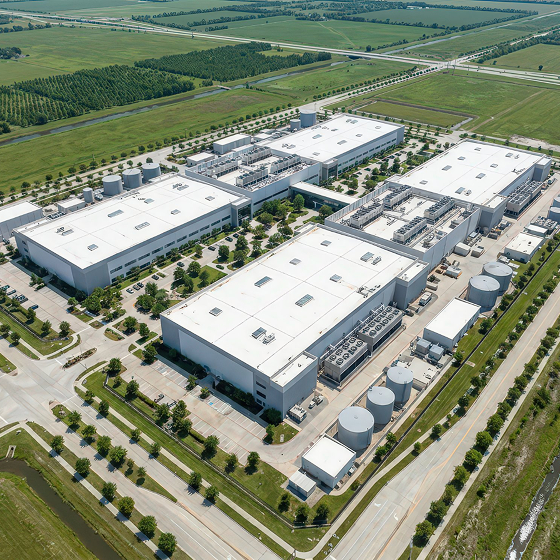
Scalable Power Solutions for Uninterrupted Operations
Explore More
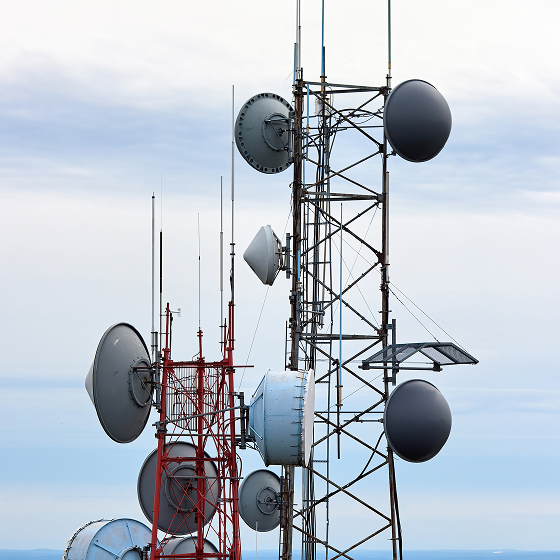
Telecommunications
Empowering Smooth Connectivity with Scalable Communication Solutions
Explore More

Metals & Mining
Enhancing Efficiency and Sustainability in Mining Operations
Explore More
Frequently Asked Questions
Sizing starts from your facility's interval load data and the tariff's demand-charge window. Those two inputs set the power needed to clip the peak and the energy required to sustain that clip for the full billing interval. Prismecs then checks the result against interconnection limits, PCS load-step capability, and projected cell degradation over the contract term, so the shaved peak is maintained in year eight, not just at commissioning.
The microgrid controller coordinates BESS, gas generation, and solar to serve the facility from on-site sources, shifting load off the grid during peak tariff windows and islanding the site when the grid drops. Black-start capability and staged load restoration bring critical loads back in priority order. Every operating mode is protection-coordinated and tested for load acceptance before the system is placed in service.
Cost is driven by energy duration, power rating, battery chemistry, PCS and switchgear selection, interconnection scope, site civil work, safety systems, and the commercial terms. Cells are usually the largest single line item. Prismecs quotes from a load, tariff, and site assessment rather than a generic per-kWh rate, and quantifies CAPEX, OPEX, and levelized cost of storage in the feasibility study, so the financial case is clear before procurement begins.
Payback depends on the demand-charge rate and how frequently your facility hits its peak, achievable charge-discharge cycles per day, cell degradation and warranty throughput, available incentives, and the avoided cost of outages if resilience is part of the investment case. Prismecs models those variables against your site data and delivers a proceed, revise, or stop recommendation, including the honest assessment when storage does not pay back within an acceptable timeframe.
Utility-scale BESS connects to the grid and earns value through arbitrage, ancillary services, and capacity markets. C&I systems sit behind the meter, reducing demand charges, supporting resilience, and increasing solar use. Prismecs engineers each system around its connection, controls, and operating requirements.
READY TO TURN PEAK DEMAND INTO A STORAGE ASSET?
Send us twelve months of interval load data, your current tariff schedule, and your outage history. Prismecs will assess what storage is worth on your site, including when it is not worth building, and define the system configuration, expected demand charge savings, and resilience capability before any equipment is specified.