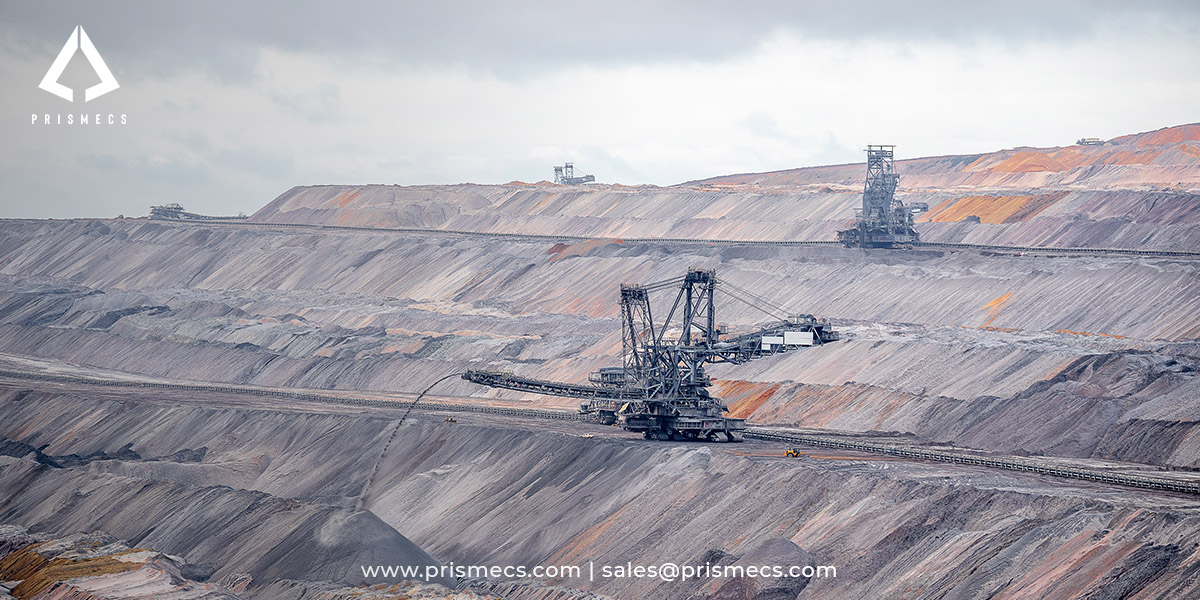
Reducing unplanned downtime in cement and mining plants means shifting from reactive repair to a structured reliability program built on predictive maintenance, disciplined spare-parts strategy, and OEM-agnostic operations and maintenance. It matters because a single kiln or crusher stop converts directly into lost tonnes, lost revenue, and cascading production delays across the operation.
This guide covers what drives downtime in cement and mining operations, what it costs per hour, the maintenance strategies and standards that reduce it, and how a turnkey O&M partner sustains availability. It is written for plant managers, maintenance and reliability engineers, and procurement leaders who own uptime and throughput targets.
What Unplanned Downtime Really Costs Cement and Mining Operations
Unplanned downtime in heavy industry is now the single largest hidden cost in industrial operations, and cement and mining feel it acutely because their assets run continuously against tight production targets. According to Siemens' True Cost of Downtime analysis, unplanned downtime costs the world's 500 largest companies roughly USD 1.4 trillion a year, equal to about 11% of revenue.
The cost is measured in lost output, not repair hours. A large mining haul truck out of service runs USD 5,000 to USD 10,000 per hour in lost haulage capacity, idle crew, and production impact, per McKinsey mining research cited across the sector. In cement, a single kiln stop can cost tens of thousands of dollars per day depending on tonnage and fuel mix.
The trend is worsening. Siemens data shows the per-incident cost of downtime has risen roughly 62% since 2019, even as the number of incidents has fallen, because leaner plants lose more output per stoppage. Every hour of avoided downtime now protects more margin than it did five years ago.
What Drives Downtime in Cement and Mining Plants
Downtime in cement and mining plants is driven mostly by reactive maintenance on continuously stressed rotating and crushing equipment, not by single catastrophic failures. The recurring culprits are the assets at the heart of the production chain, where a single stop halts everything downstream.
The critical assets that most often trigger lost production:
- Cement: rotary kiln, clinker cooler, raw mill, ball mill, preheater, and crusher circuits.
- Mining: primary and secondary crushers, SAG and ball mills, conveyors, and the haul fleet.
- Shared failure modes: bearing fatigue, refractory wear, erosion, thermal shock, lubrication breakdown, and misalignment.
The structural problem is reactive culture. Many plants still run paper-based or spreadsheet maintenance, where a missed inspection or delayed lubrication route accumulates into a failure at the worst moment. Field studies find that a large share of "root causes" logged in legacy systems are actually symptoms, so the same failure repeats.
How to Reduce Unplanned Downtime
The single most reliable way to reduce downtime in cement and mining plants is to perform maintenance before equipment fails, using condition data rather than a fixed calendar. Predictive maintenance programs consistently show a 35% to 50% reduction in unplanned downtime, along with better planning and improved reliability, across mining and heavy-industry deployments.
The core levers of a downtime-reduction program:
- Predictive maintenance (PdM): vibration analysis, thermography, oil analysis, and online condition monitoring to detect degradation before failure.
- Preventive maintenance (PM) discipline: structured routes covering every critical asset, tracked to compliance rather than intention.
- Root-cause analysis (RCA): each failure traced to its mechanism, so it becomes a searchable, preventable data point across identical assets.
- Spare-parts strategy: forecasting critical spares to eliminate the "waiting for parts" delay that extends outages.
Emergency work is where cost compounds. Repairs performed under breakdown pressure typically cost four to five times more than the same work in a planned window, and emergency parts carry a 30% to 40% premium. Moving work from unplanned to planned is the highest-return lever in the program.
Reactive vs Preventive vs Predictive Maintenance
The maintenance strategy a plant runs is the biggest single determinant of its availability, and the industry benchmark is a planned-maintenance ratio of 70% to 80%. Plants below that threshold are still running a reactive shop, absorbing repeated failures and emergency-parts premiums.
The measurable target is availability. World-class heavy-industry operations hold equipment availability above 85%, and best-in-class cement producers keep unplanned downtime below 3% of available hours. Median plants lose far more, which is exactly the gap a structured O&M program closes.
Standards Governing Reliability and Asset Management
Reliability and maintenance in cement and mining are governed by a family of ISO, IEC, and SAE standards, not by any single code. Citing the correct framework is how operators, contractors, and auditors align on what a credible reliability program actually requires.
The standards that a reliability specialist works to:
The ISO 55000 family sets the strategic asset-management vision, while ISO 14224 defines the field-level data structure that predictive analytics and CMMS platforms depend on. A reliability program without consistent failure-data classification produces inputs that RCM, FMECA, and spare-parts optimization cannot trust.
Why an OEM-Agnostic O&M Partner Reduces Downtime Faster
An OEM-agnostic operations and maintenance partner reduces downtime faster because it optimizes the whole mixed-vendor asset base, rather than a single manufacturer's equipment. Most cement and mining plants run assets from many OEMs, so a vendor-neutral partner can standardize reliability practice across the entire fleet instead of one silo.
The advantage is integration across three layers that plants usually buy separately. Condition monitoring detects the problem, a spare-parts supply chain has the component ready, and field crews execute the repair in a planned window. When these sit with different providers, the handoff gaps are where downtime hides.
This is the gap most reliability tools leave open. CMMS software and condition-monitoring sensors identify what needs doing, but they do not supply the parts or perform the work. Uptime is produced by execution, and execution is a crew, a part, and a plan arriving together before the asset fails.
How Prismecs Delivers Downtime Reduction for Cement and Mining
Prismecs delivers downtime reduction as a turnkey, OEM-agnostic partner across operations and maintenance, spare-parts procurement, and rapid field response, so operators get availability as an outcome rather than a stack of disconnected tools. The model is built around throughput and uptime, which are the metrics that decide a plant's margin.
The Prismecs capability set for cement and mining reliability:
- OEM-agnostic O&M: operations and maintenance that maximizes uptime and extends asset life across mixed-vendor fleets, backed by condition monitoring and predictive maintenance.
- Spare-parts and supply-chain support: sourcing, vendor coordination, and delivery through eIndustrify to eliminate the parts-availability delay that extends outages.
- 24/7 emergency response: rapid mobilization of crews and equipment when a critical asset is down or at risk.
- Distributed energy solutions: reliable power for remote and off-grid mine sites, where power interruption is itself a source of downtime.
The differentiator is that Prismecs carries the execution risk end to end, from reliability strategy and standards-aligned data through spare-parts logistics and field repair. That is what converts a maintenance plan into sustained availability, and it is precisely the layer that software and sensor vendors cannot provide.
Frequently Asked Questions
What does unplanned downtime cost a mining or cement plant?
Unplanned downtime is the largest hidden cost in heavy industry. A large mining haul truck out of service runs USD 5,000 to USD 10,000 per hour in lost haulage and idle crew, per McKinsey research. Across the world's 500 largest firms, Siemens estimates downtime costs about USD 1.4 trillion a year, roughly 11% of revenue.
What is the difference between preventive and predictive maintenance?
Preventive maintenance (PM) services equipment on a fixed time or hours-based schedule, so some work is done before it is needed and some failures still slip through. Predictive maintenance (PdM) uses real condition data such as vibration and oil analysis to intervene only when degradation appears. PdM delivers higher availability and typically cuts unplanned downtime 35% to 50%.
How much can predictive maintenance reduce downtime?
Predictive maintenance programs consistently show a 35% to 50% reduction in unplanned downtime across mining and heavy-industry deployments. The gains come from detecting bearing, lubrication, and alignment degradation before failure, then scheduling the repair in a planned window. Planned work also avoids the 4x to 5x cost premium of emergency breakdown repairs.
What standards govern reliability and asset management in heavy industry?
Reliability and asset management are governed by ISO 55000 and ISO 55001 for asset-management systems, ISO 14224 for reliability and maintenance data taxonomy, IEC 60300 for dependability, IEC 60812 for FMEA and FMECA, and SAE JA1011 for Reliability-Centered Maintenance. ISO 45001 covers occupational safety in hazardous mining and cement environments.
What availability should a cement or mining plant target?
World-class heavy-industry operations hold equipment availability above 85%, and best-in-class cement producers keep unplanned downtime below 3% of available hours. Reaching those targets requires a planned-maintenance ratio of 70% to 80%. Plants below that ratio are still reactive, absorbing repeated failures and emergency-parts premiums.
Why choose an OEM-agnostic O&M partner over the equipment manufacturer?
An OEM-agnostic partner optimizes the entire mixed-vendor fleet, not one manufacturer's equipment, which is how most cement and mining plants are actually built. It integrates condition monitoring, spare-parts supply, and field execution under one accountable provider, closing the handoff gaps between separate tool, parts, and service vendors where downtime typically hides.
Why Downtime Reduction Is an Execution Decision
Reducing downtime in cement and mining is ultimately an execution decision, not a software purchase, because availability is produced by crews, parts, and plans arriving together before an asset fails. The standards are established, the strategies are proven, and the cost of inaction is quantifiable in lost tonnes per hour.
Operators weighing how to lift availability and throughput need a partner who can set the reliability strategy, supply the spares, and perform the work across a mixed-vendor fleet. That is the Prismecs model: turnkey, OEM-agnostic, and built around uptime and throughput as the deliverables.
To discuss an O&M and reliability program for your cement or mining operation, call +1 (888) 774-7632 or email sales@prismecs.com.
Tags: cement and mining plant downtime predictive maintenance for heavy industry OEM-agnostic O&M services mining equipment reliability cement plant maintenance solutions
recent posts

Power Utilities
18 minutes read
Temporary and Bridge Power for Industrial Facilities: When and How to Use It
Planning bridge power past 12 months? Under EPA rules your generators may be stationary from day one. Check Tier 4, NSPS KKKKa and SPCC triggers befor...
Gas Turbines
16 minutes read
What Is a Mobile Gas Turbine Power Plant? TM2500-Class Units Explained
A mobile gas turbine power plant is a transportable power generation system designed to add electrical capacity faster than a conventional permanent p...
Power Utilities
20 minutes read
Fast-Track Power Plants Deployment: How to Reach Speed to Power in Under 12 Months
Fast-track power plant deployment can hit first power in weeks. See real TM2500 timelines from permitting to COD, proven in Oman and Taiwan. Plan your...

Gas Turbines
11 minutes read
Gas Turbine Outage Planning: Schedule, Scope Rules, and Checklist
Gas turbine outage planning starts 18 months out. Get the T-minus schedule, scope freeze rules, parts readiness gates and checklist. Talk to a Prismec...