Supply chain management in industrial power operations is the discipline of coordinating sourcing, procurement, logistics, inventory, and quality assurance so that every component arrives where the project needs it, when the schedule demands it. Done well, it is invisible. Done poorly, it becomes the reason a plant misses commissioning or a grid-critical asset sits offline waiting for a part.
The margin for error has never been thinner. Large power transformer lead times have stretched to three to five years in some categories, with prices up 50 to 80 percent from pre-2020 levels, according to reporting from POWER Magazine on the equipment shortage now shaping utility capital plans and project timelines across the industry. Gas turbines face similar pressure, with global orders far exceeding manufacturing capacity and production slots booked years ahead. In this market, supply chain capability is not a back-office function. It decides which projects get built on time.
This guide breaks down what industrial supply chain management looks like at execution level: the components that matter, the risks that break projects, current market realities around lead times and trade policy, and the disciplines that keep complex energy operations running.
What Is Supply Chain Management in an Industrial Context?
Industrial supply chain management is the integrated coordination of supplier relationships, procurement, international logistics, inventory positioning, and quality assurance across a project or operating asset's full lifecycle. It differs from ordinary procurement because every decision is measured against one outcome: keeping megawatts online and milestones intact.
For a power generation project, that means managing turbine components sourced from multiple OEMs, coordinating freight across international corridors and customs regimes, holding the right critical spares to protect uptime, and sequencing every delivery against construction and commissioning schedules. A missing shipment is never just a logistics event. It is a schedule event, a cost event, and sometimes a contractual penalty event.
The distinction from simple purchasing matters. Procurement asks "what does this component cost?" Supply chain management asks "what does this component cost delivered, inspected, on schedule, and backed by a qualified alternative source if the primary supplier fails?" In power, oil and gas, and petrochemical environments, only the second question protects the asset.
Why Supply Chain Management Now Decides Project Outcomes

Supply chain performance has moved from supporting projects to gating them. Equipment lead times, trade policy volatility, and freight disruption now set the critical path on most industrial energy projects, which makes supply chain discipline a direct driver of commercial results.
Five outcomes depend on it directly:
Operational efficiency.
Logistics bottlenecks and extended lead times do not just slow work. They threaten plant availability and construction sequencing. Disciplined lead-time management and procurement coordination keep turbines running and programs on track.
Cost control.
Procurement inefficiency, excess inventory, and emergency expediting fees are among the most controllable cost variables in an energy project. Optimized sourcing, routing, and warehouse positioning cut total project cost without adding supply risk.
Schedule certainty.
In EPC and O&M environments, delivery timing is precision work. A transformer arriving three weeks early creates storage and handling cost. Three weeks late, it can become a liquidated damages event.
Risk resilience.
Disruptions from geopolitical instability, OEM capacity constraints, or freight corridor failures can halt a plant for weeks. Supplier diversification and contingency logistics separate resilient operators from reactive ones.
Competitive position.
Operators and contractors who mobilize supply chains faster than competitors win awards and protect margins. In a market where equipment scarcity is the binding constraint, supply chain speed is a sales advantage.
The trade policy environment has raised the stakes further. In the Thomson Reuters 2026 Global Trade Report, 72 percent of trade professionals identified U.S. tariff volatility as the most impactful regulatory change they face, up from 41 percent a year earlier, and 76 percent expect the current tariff approach to persist for at least four years. For industrial operators importing steel-intensive equipment and internationally manufactured components, tariff strategy is now inseparable from supply chain strategy.
The Current Market Reality: Lead Times and Landed Costs
Long-lead equipment now sets the critical path on most power and industrial projects. Planning against real market lead times, not historical assumptions, is the single most important scheduling discipline in industrial supply chain management today.
The numbers that should drive your planning:
Demand growth explains the squeeze. Industry analysis from Wood Mackenzie found demand for generator step-up transformers rose 274 percent between 2019 and 2025, driven by data center load, grid modernization, and renewable deployment competing for the same factory slots.
Three planning behaviors follow from this market. First, procurement must start at front-end engineering, initiating supplier conversations 12 to 24 months before ground-breaking rather than after final approvals. Second, specification standardization matters, because over-customized equipment forfeits access to pre-engineered factory designs that ship faster. Third, alternative sourcing channels, including surplus equipment markets and asset relocation, have shifted from fallback options to primary strategies when a new-build order cannot meet the schedule.
Core Components of Industrial Supply Chain Management
An industrial supply chain is a network of interdependent functions, not a linear pipeline. Five components must operate together, because a failure in any one cascades across the whole project.
Strategic procurement.
Beyond vendor selection and price negotiation, industrial procurement means qualifying suppliers against technical specifications, managing long-lead orders for turbines and rotating equipment, and building sourcing redundancy so a single supplier disruption cannot halt a project. Every critical component should have a qualified second source before the project needs one.
Logistics and cross-border coordination.
Moving industrial equipment internationally involves customs compliance, freight forwarding, oversized and hazardous cargo handling, and last-mile delivery to often-remote sites. With tariff classifications and documentation requirements changing rapidly, customs expertise has become schedule protection. A misclassified shipment can sit in a bonded warehouse while your commissioning window closes.
Inventory and spare parts management.
For operating plants, inventory strategy is the difference between a planned maintenance window and an unplanned outage. Too little inventory creates availability risk; too much locks up capital. The optimal position depends on equipment criticality, real lead times, and run hours, and it needs continuous adjustment as all three change.
Supplier performance and quality assurance.
A component that fails in the field costs many multiples of one that fails inspection at the source. Active tracking of delivery reliability, rejection rates, and technical compliance protects both project outcomes and asset longevity. Quality assurance belongs at the supplier's factory, not at your site gate.
Delivery coordination against milestones.
Every material delivery must align with construction sequencing or maintenance windows. This is a precision function requiring live integration between supply chain execution and project scheduling, so procurement decisions are always made with delivery consequence in view.
The Real Cost Equation: Reliability First, Then Optimization
The correct optimization target in industrial supply chain management is total cost of ownership, never unit price. A procurement saving that introduces quality risk or schedule exposure is not a saving. It is a deferred cost with interest.
Total cost of ownership spans five elements: procurement price, logistics cost, inventory carrying cost, quality failure cost, and the operational cost of delays or unplanned outages. The last element dominates. For a power plant operator, an outage caused by a supply chain failure carries grid penalty exposure, lost generation revenue, emergency expediting fees, and reputational damage with offtakers and regulators. Those costs dwarf any unit-price saving that created the exposure.
A worked example makes it concrete. Cutting procurement cost 8 percent by switching to an unproven supplier means nothing if that supplier delivers a 15 percent rejection rate or a lead time that slips commissioning by six weeks. The rejected components cost remediation money; the slipped schedule costs revenue and possibly liquidated damages. The companies that consistently outperform on project economics structure their supply chains around reliability first, and apply cost optimization inside that constraint, never the reverse.
Tariff volatility strengthens this logic. With a large share of companies now absorbing tariff costs rather than passing them through, sourcing decisions made purely on quoted price can invert within a single policy announcement. Landed-cost modeling by origin, with duty scenarios included, is now baseline discipline.
Technology That Earns Its Place in Industrial Supply Chains

Technology in industrial supply chain management exists for one purpose: giving teams the visibility and decision speed that multi-geography energy projects demand. Four capabilities deliver measurable operational value.
Real-time shipment tracking.
Equipment moves from OEM facilities in Europe or Asia to plant sites in the Middle East, Africa, or the Americas across multiple freight legs. IoT and GPS-enabled tracking gives project teams live visibility into location, customs status, and delivery windows at every leg. For a commissioning team working toward a fixed grid synchronization date, knowing the exact position of a critical component 72 hours out determines whether the schedule holds or penalty exposure begins.
Predictive analytics for parts demand.
In O&M environments, reactive procurement and emergency freight cost far more than positioning inventory correctly in advance. Analytics applied to run hours, failure history, and maintenance intervals lets operators anticipate parts demand, pre-position spares against upcoming windows, and eliminate the expediting fees that erode contract margins. For aging fleets and multi-unit plants, this is what separates asset management from firefighting.
Workflow automation.
Human error in purchase order processing, supplier communication, and shipment documentation compounds across a project timeline. Automated procurement workflows and digitized documentation keep high-volume, multi-supplier operations moving at project pace without sacrificing accuracy or customs compliance.
Shared cloud platforms.
Procurement teams, engineers, logistics coordinators, inspectors, and client representatives work across time zones and organizational boundaries. A shared real-time view of purchase order status, delivery schedules, supplier performance, and inventory removes the lag and version-control errors of email-chain reporting. For long-term O&M contracts where supply continuity is contractual, this shared layer keeps every party aligned and accountable.
The selection test for any of these tools is simple: does it shorten the time between a problem emerging and the team acting on it? Platforms that pass that test pay for themselves in avoided expediting fees alone.
Building Supply Chain Resilience by Design
Resilience is a design requirement, not a contingency plan. The most damaging supply chain failures happen at operations that treated resilience as an afterthought: unmapped single-source dependencies, spares sized for best-case scenarios, and logistics contingencies improvised mid-disruption.
Four deliberate design choices build resilience before it is needed:
- Qualify multiple suppliers for critical components before the project requires them. Second-source qualification takes months; doing it during a disruption means doing it under duress at premium prices.
- Hold strategic buffers for high-criticality, long-lead items. Inventory carrying cost on a critical spare is insurance priced far below the outage it prevents.
- Build logistics redundancy across freight corridors and customs jurisdictions. When one corridor fails, whether from conflict, congestion, or policy, pre-planned alternates keep cargo moving.
- Maintain active supplier relationships, not just transactional purchase orders. When market supply tightens, priority access goes to the customers suppliers know and trust. Relationship capital converts directly into allocation when everyone is competing for the same factory slots.
For operators managing assets across multiple geographies and long lifecycles, these choices translate directly into availability, contract compliance, and the capacity to operate through the geopolitical and logistics volatility that now defines the industrial environment.
Key Takeaways
- Supply chain management gates industrial projects now. Transformer lead times of three to five years and turbine order books beyond factory capacity put procurement on the critical path.
- Plan against real market lead times. Initiate supplier engagement at front-end engineering, 12 to 24 months before ground-breaking, and standardize specifications to access faster pre-engineered designs.
- Tariff strategy is supply chain strategy. With most trade professionals expecting current tariff approaches to persist for years, landed-cost modeling by origin is baseline discipline.
- Optimize total cost of ownership, never unit price. The operational cost of a supply-driven outage dwarfs any procurement saving that caused it.
- Reliability first, cost optimization inside that constraint. That ordering is what separates operators who deliver from operators who explain.
- Design resilience in from day one: second sources qualified early, strategic buffers on critical spares, logistics redundancy, and supplier relationships that earn priority allocation.
Conclusion
Supply chain management in industrial power and energy operations determines whether projects deliver on schedule, whether plants run at capacity, and whether operators achieve the financial performance their assets were designed for. In today's market, where equipment scarcity, extended lead times, and trade policy volatility define the operating environment, that capability has moved from support function to core competency.
It demands more than process and coordination. It requires technical knowledge of the equipment being sourced, fluency in the regulatory environments being crossed, active management of supplier and logistics networks across geographies, and tight integration between supply chain execution and project scheduling. Operators who build or engage that capability deliver. Those who treat the supply chain as an afterthought discover, usually at commissioning, exactly what it was protecting them from.
Partner With Prismecs for Industrial Supply Chain Solutions
Prismecs delivers end-to-end supply chain solutions for industrial operators across power generation, oil and gas, petrochemicals, and energy infrastructure: procurement strategy, global logistics execution, turbine and rotating equipment parts sourcing, and inventory management for operating plants across 15+ countries. Backed by ready-to-ship equipment inventory and the eIndustrify procurement platform, we operate as an integrated supply chain partner from first purchase order through long-term O&M support.
Call +1 (888) 774-7632 or email sales@prismecs.com to strengthen the supply chain behind your next project or operating asset.
Frequently Asked Questions
What is supply chain management in industrial power operations?
It is the integrated coordination of sourcing, procurement, international logistics, inventory positioning, and quality assurance across a project or asset's lifecycle. Unlike ordinary purchasing, every decision is measured against operational outcomes: plant uptime, commissioning schedules, and total cost of ownership rather than unit price alone.
Why are equipment lead times so long in the power industry right now?
Demand from data centers, grid modernization, and renewable deployment is competing for limited factory capacity built during years of underinvestment. Large power transformer lead times have stretched to three to five years in some categories, and gas turbine order books exceed global manufacturing capacity, pushing delivery slots years into the future.
How do tariffs affect industrial supply chain management?
Tariffs change landed costs, sometimes overnight, and most trade professionals now expect current tariff approaches to persist for years. Steel and aluminum duties directly affect transformers, switchgear, and structural components. Disciplined operators model landed cost by origin, qualify alternate-origin suppliers, and treat customs classification accuracy as schedule protection.
What is the right inventory strategy for critical spare parts?
Size inventory by equipment criticality, real supplier lead times, and operational run hours rather than best-case assumptions. Too little inventory converts a planned maintenance window into an unplanned outage; too much locks up capital. High-criticality, long-lead items justify strategic buffers, because carrying cost is insurance priced below the outage it prevents.
How should procurement timing align with project schedules?
Start supplier engagement at front-end engineering, typically 12 to 24 months before ground-breaking, rather than waiting for final approvals. Long-lead equipment now sets the critical path on most power projects, so procurement sequencing must be built into the master schedule from day one, with delivery dates driving construction sequencing.
What is total cost of ownership in industrial procurement?
It is the full cost of a sourcing decision: procurement price, logistics, inventory carrying cost, quality failure cost, and the operational cost of delays or outages. A cheaper component that arrives late or fails inspection costs far more than its price saving, which is why reliability-first sourcing consistently outperforms unit-price optimization.
How does supply chain resilience differ from contingency planning?
Contingency planning reacts to disruptions; resilience is designed in before them. Resilient operations qualify second sources before they are needed, hold strategic buffers on critical items, build logistics alternatives across freight corridors, and maintain active supplier relationships that earn priority allocation when market supply tightens.
When should an operator engage an external supply chain partner?
When projects span multiple geographies, involve long-lead OEM equipment, or carry schedule risk the internal team cannot absorb. An integrated partner brings established OEM relationships, customs expertise across jurisdictions, ready-to-ship inventory access, and procurement discipline that would take years to build internally, applied from first purchase order onward.
Tags: Industrial Supply Chain Management Long-Lead Equipment Procurement Power Generation Parts Sourcing Supply Chain Resilience Total Cost of Ownership
recent posts
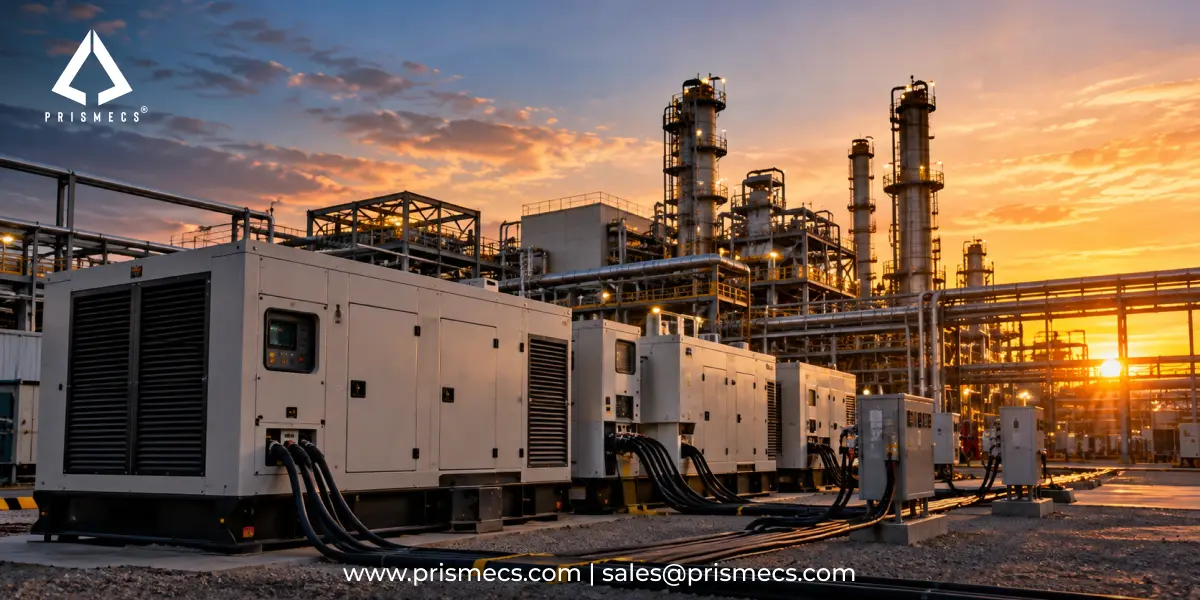
Power Utilities
18 minutes read
Temporary and Bridge Power for Industrial Facilities: When and How to Use It
Planning bridge power past 12 months? Under EPA rules your generators may be stationary from day one. Check Tier 4, NSPS KKKKa and SPCC triggers befor...
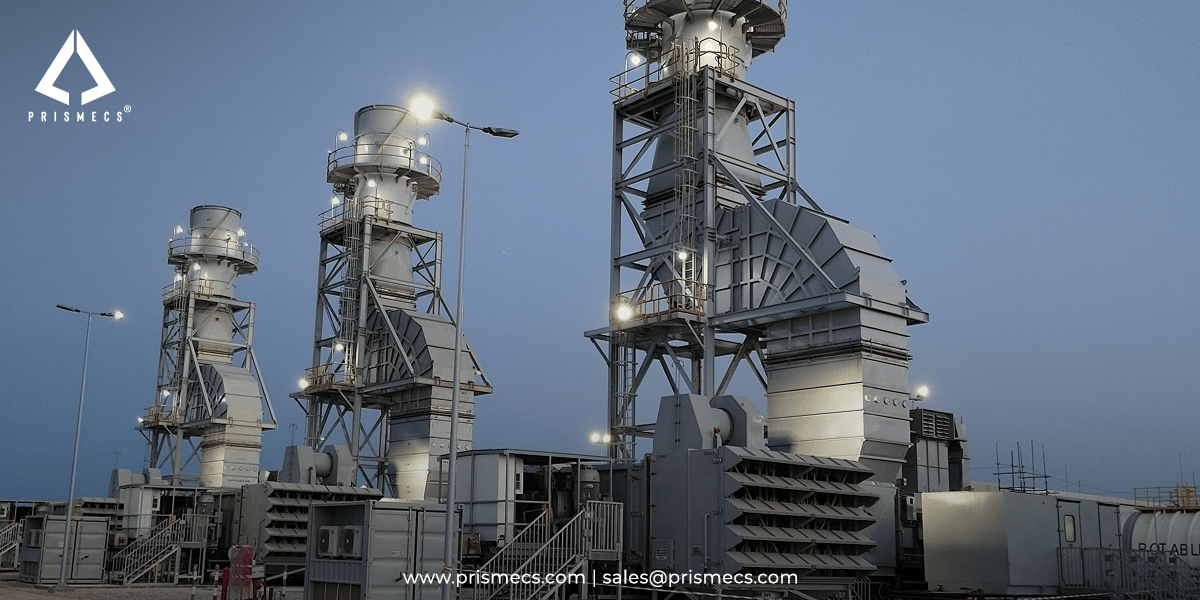
Gas Turbines
16 minutes read
What Is a Mobile Gas Turbine Power Plant? TM2500-Class Units Explained
A mobile gas turbine power plant is a transportable power generation system designed to add electrical capacity faster than a conventional permanent p...
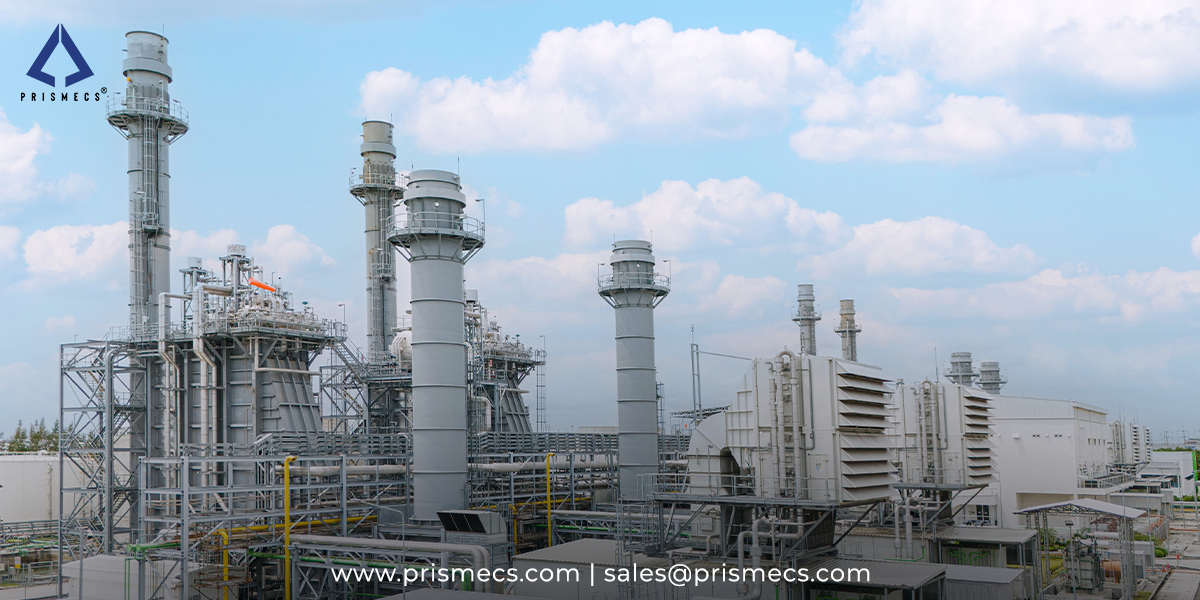
Power Utilities
20 minutes read
Fast-Track Power Plants Deployment: How to Reach Speed to Power in Under 12 Months
Fast-track power plant deployment can hit first power in weeks. See real TM2500 timelines from permitting to COD, proven in Oman and Taiwan. Plan your...

Gas Turbines
11 minutes read
Gas Turbine Outage Planning: Schedule, Scope Rules, and Checklist
Gas turbine outage planning starts 18 months out. Get the T-minus schedule, scope freeze rules, parts readiness gates and checklist. Talk to a Prismec...