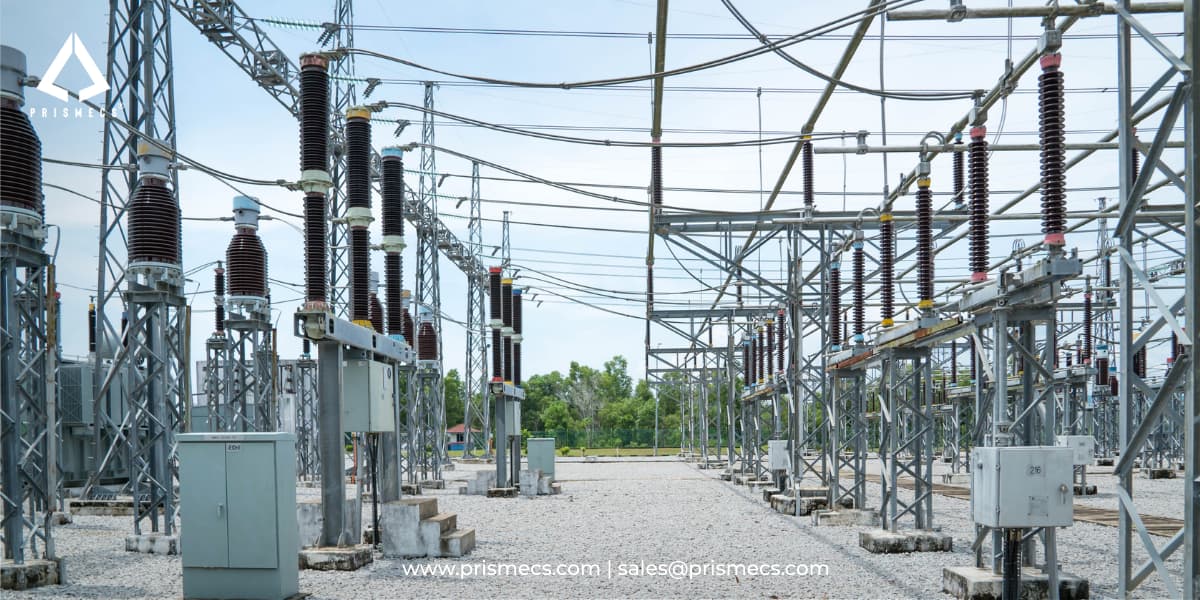
Temporary power is not a technology decision. It is a schedule decision, and the technology follows from how fast you need power and for how long.
A mobile gas turbine can be installed and commissioned in as few as 11 days. A new heavy-duty gas turbine carries an 18 to 24 month manufacturing lead time, and slots are effectively sold out through 2030. That gap is why temporary and bridging power stopped being a niche and became the default answer to a deadline.
This guide covers deployment timelines by asset class, the ISO 8528-1 rating that decides whether your unit survives the job, what NFPA 110 does and does not permit with rented plant, the 2026 emissions rules for temporary turbines, and what a full-service scope must contain.
What Temporary Power Is, and When You Need It
Temporary power is generation deployed for a defined period to cover a capacity gap, rather than installed as a permanent asset. It is bought as a service or a rental in most cases, and the defining characteristic is that it leaves when the gap closes.
Bridging power is temporary generation that covers the interval between when you need capacity and when permanent capacity exists. The industry term is bridge-to-permanent: the temporary plant carries the load while the permanent plant, substation or interconnection is built.
Five situations create the gap. A permanent plant or grid connection is under construction and the commercial date arrives first. An existing unit is out for a planned outage or a forced failure. Load has grown past the existing connection and the utility upgrade will take years. A site has no grid at all. Or demand is seasonal and does not justify permanent capacity.
The distinction that matters commercially is duration. Under roughly three months, you are renting equipment. Between three months and two years, you are buying a service with an operating crew. Beyond two years, the economics usually favour owning or rent-to-own, because rental payments start to exceed the capital cost.
Why the Capacity Gap Got Worse
New generation equipment cannot be ordered and delivered inside a normal project schedule, which is the structural reason temporary power demand has risen.
New gas turbines and large reciprocating engines carry manufacturing lead times of 18 to 24 months or more. Heavy-duty gas turbine capacity is tighter still. GE Vernova reported combined gas power equipment backlog and slot reservation agreements of 116 GW at the end of Q2 2026, with roughly 10 GW of production capacity remaining across 2029 and 2030 combined, and reservations now being taken for 2031 delivery.
Interconnection is the second constraint. Grid connection queues run multi-year in most US markets, and a distribution feeder at its hosting capacity limit can turn a six-month project into a three-year one regardless of how quickly equipment arrives.
Demand is rising against both constraints. Explosive compute demand in North America is absorbing 60 Hz gas turbines at record pace, tightening availability across every asset class and raising the value of anything that can be energised quickly.
Why oversizing the permanent plant is not the answer
Building spare capacity into a permanent plant means paying capital and emissions compliance cost for capacity you will not use for years, and it does nothing about the lead time problem, because the oversized unit is also 18 to 24 months out. Temporary power converts a capital and schedule problem into an operating expense for exactly the period you need it.
Deployment Timelines by Asset Class
Deployment time varies by more than an order of magnitude across asset classes, so start by deciding how fast you actually need power on the bus.
Those mobile turbine figures come from GE Vernova's emergency and temporary power programme, which reports the TM2500 as a proven mobile bridge-to-permanent and emergency solution with more than 340 units installed worldwide, over 6 million hours of operating experience, and installation and commissioning achievable in as few as 11 days.
Industrial mobile turbine rental providers commonly target 30-day global deployment, with actual timing depending on location, permits, logistics complexity and site preparation.
Mobile gas turbine versus rental gensets
Choose mobile turbines when you need a large block of power fast, when footprint is constrained, and when fuel gas or dual fuel is available. A single TM2500 delivers what roughly twenty 1.8 MW containerised gensets would, on far less land, with one control system.
Choose rental gensets when the requirement is under about 10 MW, when the duration is short, when you need granular redundancy through unit count, or when only liquid fuel is available.
Where battery storage fits
Battery storage responds in milliseconds and covers the ride-through window no rotating machine can, but it time-shifts energy rather than adding it. Storage alone cannot bridge a sustained capacity gap. Storage paired with a smaller generation set often beats generation alone, because the battery absorbs peaks and lets the engine or turbine run at its efficient point. For sizing, chemistry and permitting, see our guide to battery energy storage systems.
ISO 8528 Ratings: The Rating You Were Sold Versus the Rating You Need
ISO 8528-1:2018 defines four distinct power ratings for reciprocating engine driven generating sets, and choosing the wrong one is the most expensive and most common mistake in temporary power procurement.
A rating is not a single true output figure. It is an output figure plus the permitted operating conditions, which is why the same generator carries several different power values in a catalogue and every one of them is correct for a different duty.
Manufacturers may publish ratings beyond the standard, such as Data Center Continuous (DCC). Those are legitimate but they are not ISO 8528-1 classes, so compare them carefully against the four above.
The load factor rule that catches people
The PRP rating carries a load factor constraint: average load must not exceed 70 percent of the PRP rating over a 24-hour period. A 500 kVA PRP unit can therefore carry an average of only around 350 kW across a day, even though it will briefly accept 500 kVA. In the load factor calculation, any load below 30 percent of the PRP rating is counted as 30 percent.
What happens if you get it wrong
Running an ESP-rated generator as prime power can reduce engine life by 50 to 70 percent and void manufacturer warranty coverage. PRP-rated units typically cost 10 to 20 percent more than an ESP-rated unit of the same kVA class, and that premium is far cheaper than the repair and downtime consequence of the mismatch.
On a rental this matters more, not less. You do not own the asset, so a rating mismatch does not present as a repair bill. It presents as a dispute over who caused the failure, at the moment you most need the unit running.
How to specify it
State the ISO 8528-1 rating class in the enquiry, alongside expected annual running hours, the load profile, and whether the load is constant or variable. Ask the provider to confirm in writing which class the offered unit is rated to. A quote that gives only a kVA figure has not answered the question.
NFPA 110: What Standby Classification Requires
NFPA 110, Standard for Emergency and Standby Power Systems, classifies emergency power supply systems by Level, Type and Class, and it is the standard that determines whether your temporary arrangement is compliant when life safety loads are involved.
Two terms are load-bearing. The emergency power supply (EPS) is the source of power, meaning the generator set, fuel supply and accessories. The emergency power supply system (EPSS) is everything that distributes it, including transfer switches, circuit breakers, paralleling switchgear, conductors and supervisory equipment.
For Level 1 systems, all Level 1 loads must transfer to the emergency supply within 10 seconds regardless of system size, which is the Type 10 designation. Class X is interpreted differently by different authorities but commonly translates to 72 or 96 hours of rated output.
NFPA 110 does not decide whether you need emergency power
That comes from elsewhere. NFPA 101, Life Safety Code, NFPA 99, Health Care Facilities Code, and local building codes determine which occupancies require emergency power. NFPA 110 governs how the system must be installed, classified, tested and maintained once it is required.
In the National Electrical Code, NFPA 70, Level 1 broadly corresponds to Article 700, Emergency Systems, and Level 2 to Article 701, Legally Required Standby Systems. Article 702 covers Optional Standby Systems and Article 445 covers generators generally.
The critical limitation for temporary power
NFPA 110 applies to permanently installed emergency and standby power systems. A rented generator bridging a life safety load therefore sits outside the standard's assumed scope, and the compliance position has to be established with the authority having jurisdiction rather than assumed.
Raise this with the AHJ before the equipment arrives, not after. In practice the workable approaches are to keep the permanent EPSS in service and use temporary plant only for non-life-safety load, or to obtain an explicit AHJ variance for the bridging period with defined testing and monitoring.
Two engineering traps worth knowing
A large natural gas generator may not meet a Type 10 requirement. Gas engines carry deliberate start delays as a safety measure against ignition risk, and large gas units can struggle with the NFPA 110 requirement to accept full rated load in a single step. If the requirement is Type 10, verify it by test rather than by datasheet.
As of the 2024 edition, generators used for Level 1 applications cannot be equipped with EPA-mandated emissions-related inducement shutdowns. That effectively rules out EPA stationary non-emergency Tier 4 certified diesel generators for Level 1 service, which has a direct bearing on what a rental fleet can lawfully supply.
Rental, Rent-to-Own, or Fast-Track Purchase
Duration decides the commercial structure. Under two years, rental is usually cheaper. Beyond two years, rental payments begin to exceed the capital cost of owning, and rent-to-own or purchase becomes the better structure.
Rental is an operating expense, which preserves capital for core operations and avoids a capital approval cycle. That is often the deciding factor rather than the arithmetic, because a rental can be authorised in weeks where capital cannot.
Rent-to-own suits the case where the bridge turns out to be permanent. Many bridging projects extend, and converting rental payments into equity in the asset is better than paying rental for four years. Establish the conversion formula at the outset, not at renewal.
Fast-track purchase makes sense where you have more than one site, because a purchased mobile asset can be relocated. Prismecs maintains ready-to-ship generation and transformer inventory with rental and rent-to-own options for this reason.
Financing and accounting
Lenders treat contracted rental with a service agreement differently from owned plant, and rental generally does not appear as project debt. Confirm the lease accounting treatment with your finance team before signing, since classification affects covenants. For permanent generation technology selection once the bridge closes, see our guide to power generation systems.
What a Full-Service Scope Must Include
A temporary power scope is only complete when everything between the fuel and your switchgear is assigned to someone by name. Gaps in this list are where temporary projects fail.
A full-service scope should contain the prime mover and generator, control and protection systems, the step-up transformer, interconnection and paralleling equipment, cabling and distribution, fuel handling, remote monitoring, maintenance, and the operating crew if you are not providing one.
A load bank is test equipment. It applies a controlled artificial electrical load so a generator can be commissioned, load-tested and periodically exercised at full output. It is not an operational load-balancing device and it does not fine-tune output during normal running. Specify load bank testing at commissioning and at defined intervals during the term.
Commissioning a temporary plant
Witness a full-load test against the specified ISO 8528-1 rating using a load bank, a single-step load acceptance test if any Type requirement applies, protection and relay verification against your settings, synchronisation and load sharing across all units, transfer and retransfer if an ATS is in scope, and alarm and shutdown functional checks. Agree pass criteria before mobilisation.
Where the temporary plant will run in parallel with the utility, IEEE Std 1547-2018, Standard for Interconnection and Interoperability of Distributed Energy Resources with Associated Electric Power Systems Interfaces, governs the interconnection, and IEEE Std 1547.1-2020 defines the commissioning test procedures. For the wider interconnection process and market participation, see our guide to smart grid and distributed energy resources.
Black start is the capability to energise from a fully de-energised state with no grid reference. If the temporary plant must restore a dead site, specify black start explicitly and witness it, because standard grid-following equipment cannot provide it.
Mobilisation, Logistics and Site Preparation
Equipment availability is rarely the binding constraint on a temporary power project. Transport, permitting and site readiness usually are.
The sequence from enquiry to power on the bus runs: load and duration definition, technical proposal and rating confirmation, contract and mobilisation authorisation, transport and customs, site preparation in parallel, installation, commissioning and load bank testing, then handover to operation. Site preparation and permitting should start the day the contract is signed, not when the equipment arrives.
Site preparation
A mobile turbine or genset installation needs a level prepared pad or foundation capable of carrying the unit and crane loads, crane and trailer access with adequate turning radius and overhead clearance, fuel delivery access, an electrical termination point at the right voltage and fault level, spill containment, and fire separation distances.
NFPA 37, Standard for the Installation and Use of Stationary Combustion Engines and Gas Turbines, governs installation separation, ventilation and fire protection for engines and turbines. Apply it to temporary installations as well, because a temporary unit next to an occupied building is subject to the same physics as a permanent one.
Heavy haul transport
Large mobile units move under oversize and overweight permits, route surveys, and often police escort. Permitting is jurisdictional and can take weeks. Bridge and overpass clearances, weight restrictions, and seasonal road limits all constrain the route, and a route survey should be completed before the transport is booked.
Prismecs has managed this end to end, including decommissioning LM6000 packages at Kvaerner and Houston in Norway, managing the heavy transport, and preparing reassembly and recommissioning at the receiving site, coordinating civil, mechanical, electrical and controls work to safety, environmental and schedule targets without incident.
Customs and cross-border movement
For international deployments, customs classification, temporary import bonds, duty treatment for re-exported equipment, and local content or local partner requirements all sit on the critical path. Temporary import regimes exist in most jurisdictions specifically for equipment that will leave again, and using them correctly avoids paying full duty on an asset you are returning.
Prismecs brought a TM2500 online at Miaoli, Taiwan under strict security and logistics constraints, which is the class of problem this section describes.
Noise and local permitting
Temporary does not mean exempt. Noise limits, operating hour restrictions and visual screening frequently apply, and they are usually set locally rather than nationally. On the eight-unit TM2500 reserve plant at Birr, Switzerland, robust noise controls were engineered specifically to meet local rules alongside a new 220 kV interconnection.
Fuel supply and storage
Fuel is the most common cause of a temporary plant failing to deliver its contracted availability. Establish delivery frequency, storage volume on site, and what happens when a delivery is late.
Storage volume should be sized to your required run duration plus a margin. Where an NFPA 110 Class applies, the Class sets the minimum hours at full load without refuelling, and NFPA 110 also addresses on-site fuel supply requirements, with a minimum 96-hour supply applying to Level 1 systems in higher seismic design categories under ASCE 7. NFPA 30, Flammable and Combustible Liquids Code, governs liquid fuel storage.
Dual fuel capability lets a unit run on gas or liquid fuel and switch between them, which protects against supply disruption and price volatility. The TM2500 platform operates on gas, LPG and distillate liquid fuel for this reason, and the eight units at Birr are dual-fuel specifically to guarantee winter reliability.
Emissions Compliance for Temporary Units
Temporary generation is regulated generation, and the applicable rule depends on the prime mover, the fuel, the installation date and whether the unit is classified as stationary or nonroad.
This is the most commonly underestimated item in temporary power procurement, because buyers assume a short deployment carries a light compliance burden. It frequently does not.
The EPA finalized Subpart KKKKa on 9 January 2026 and published it in the Federal Register on 15 January 2026. The final rule established subcategories for combustion turbines by size, design efficiency and utilisation, and created a new source category specifically for temporary combustion turbines. Full detail is published on the EPA's stationary combustion turbines NSPS page.
That new category is the single most important regulatory development for anyone deploying temporary turbine capacity, and it did not exist eighteen months ago.
Stationary versus nonroad
The distinction determines which rule set applies. A unit that remains at one location beyond a defined period is generally treated as stationary and falls under the Part 60 and Part 63 rules above. Genuinely mobile equipment may be certified as nonroad under 40 CFR Part 1039 instead, with different standards. Rental fleets contain both, and a nonroad-certified unit left in place too long can become a stationary source with obligations the operator has not met.
Confirm the certification of the specific units offered, in writing, and confirm how long they may remain on site before reclassification.
Air permitting
Whether you need a permit depends on your state or local air district, your site's existing permit status, the aggregate capacity you are adding, and expected annual operating hours. Temporary sources have dedicated permit pathways in many jurisdictions, but they are not automatic exemptions. Engage your air permitting adviser at the same time as you issue the enquiry, because permit timelines can exceed equipment lead times.
Emissions reporting
Temporary generation adds to your reported Scope 1 emissions for the period it runs. Where the temporary plant displaces grid import, the net effect depends on the carbon intensity of the displaced electricity. Establish the accounting basis your reporting framework requires before claiming any reduction.
Cost and Contract Structure
Price temporary power as five separate elements, because providers bundle them differently and comparing single monthly figures hides the gaps.
The five elements are the monthly or daily rental rate for the equipment, mobilisation and demobilisation as one-off charges, fuel, operation and maintenance, and consumables.
Typical minimum terms for industrial mobile turbine rental run 6 to 12 months depending on project scope and configuration, with shorter terms evaluated case by case. Mobilisation and demobilisation are frequently billed separately from the rental rate, and on international deployments logistics may be itemised and billed after successful deployment rather than upfront.
What to establish in the contract
Availability guarantee, stated as a percentage with the exclusions written out in full, and the remedy when it is missed. Who supplies fuel and who carries the price risk. Extension terms and the rate that applies if you need the unit longer, which happens frequently. Liability for damage to the equipment, and whose insurance covers it. Demobilisation scope and site restoration obligations. Response time for a unit failure, with a stated hours-to-site figure.
Insurance is worth resolving early. Rented plant on your site is usually your insurable interest for damage and often the provider's for mechanical breakdown, and the boundary needs to be explicit. Notify your broker before the equipment arrives.
The number that decides the business case
Calculate your cost of not having power, per day, before you evaluate any quote. Use lost production value, contractual liquidated damages, capacity payments forgone, or the service value your site delivers. That figure tells you how much speed and availability are worth buying, and it is almost always far larger than the rental rate.
Demobilisation, Redeployment and Relocation
Agree the exit before you agree the entry, because demobilisation scope and site restoration are the most common source of end-of-term disputes.
Demobilisation covers disconnection, de-fuelling and purging, removal of the units and balance of plant, removal of temporary cabling and distribution, and restoration of the site to an agreed condition. Establish in writing whether the foundation or pad stays or goes, who removes spill containment, and what "restored" means.
When relocation beats renting
If you have a second site with a comparable need, relocating an owned asset can beat both renting and building new. A full relocation involves decommissioning, preservation, heavy transport, reassembly and recommissioning, and it is an engineering project rather than a haulage job.
Prismecs has executed exactly this, decommissioning LM6000 packages in Norway, managing heavy transport, and reassembling and recommissioning at the receiving site with civil, mechanical, electrical and controls work coordinated to safety, environmental and schedule targets. Where equipment has residual value and no further internal use, equipment marketing solutions recover it instead.
When the bridge becomes permanent
Many bridging deployments extend. Decide at the outset what happens if it does: convert to rent-to-own, purchase the units in place, or replace them with a permanent plant. A deployment with no defined exit path tends to default to open-ended rental, which is the most expensive outcome of the three.
Specification and Vendor Evaluation
Specify temporary power by rating class, availability guarantee and scope boundary, and evaluate providers on evidence they can produce rather than claims they can make.
Reference checks that produce real information
Do not ask whether the reference was satisfied. Ask what the actual time from contract to power was against what was promised. Ask what fell outside the scope and who paid. Ask what the availability was and how it was measured. Ask what demobilisation cost against the estimate. Ask whether they would use the provider again on the same terms and, if not, what they would change.
Staffing and operation
Establish whether you or the provider operates the plant. A temporary plant needs an operating and maintenance regime whether it runs for three weeks or three years, and the most common failure is assuming the other party has staffed it. For how to structure and evaluate an O&M scope, including availability definitions, see our guide to choosing a power plant O&M provider.
How the Decision Changes by Sector
The engineering is constant. What changes is what the gap costs you and what constrains the site.
Data centers
The gap is usually interconnection or substation construction against a contracted go-live date, and the cost of missing it is contractual. Weight deployment speed and availability above efficiency, and size for the IT load plus cooling rather than the IT load alone. Temporary plant bridging a critical facility must be integrated with the existing redundancy scheme, not bolted alongside it.
Oil, gas and petrochemicals
Hazardous area classification governs siting and separation, and temporary units are frequently placed at the boundary for this reason. Electric fracturing operations are a distinct high-demand case requiring large mobile blocks with rapid relocation between pads. Weight area classification compliance, fuel flexibility and mobilisation speed.
Metals and mining
Remote sites, weak or absent grid, high ambient temperatures, dust and altitude derate all apply. Temporary power often becomes semi-permanent here, which makes PRP or COP rating and a rent-to-own path more relevant than short-term rental.
Construction and major projects
The requirement is distribution as much as generation: heavy equipment, site offices, lighting and welding loads across a changing footprint. Specify the distribution scope and cable runs explicitly, size for the largest motor starting load rather than the average, and expect the load to change as the project phases move.
Utilities and seasonal reserve
Winter or summer peaking reserve that does not justify permanent capacity is a classic temporary application. Prismecs runs seasonal O&M teams keeping a TM2500 safe and ready for rapid restarts during peak demand, which is the operating model this case requires.
Emergency and disaster response
Speed dominates everything. Containerised gensets deploy in days and disaster response deployment is claimed at 48 to 72 hours by fleet operators, while mobile turbines can be installed and commissioned in as few as 11 days. Pre-qualify a provider before you need one, because a procurement process run during an emergency produces a bad contract.
Frontier and emerging markets
Customs, local content, fuel logistics and in-country technical support dominate the decision rather than equipment specification. A provider without a local entity and customs capability will be slower than their equipment suggests.
Below 1 MW
Packaged containerised rental from a local dealer almost always beats a bespoke arrangement at this scale, because the fixed engineering, permitting and mobilisation effort is nearly the same regardless of size.
What Prismecs Has Deployed
Prismecs installs, commissions, operates and maintains mobile and fast-track generation, and has done so across four countries on aeroderivative gas turbine fleets.
Verified deployment scope includes four TM2500 mobile gas turbine units at Duqm, Oman totalling 110 MW, kept grid-ready with O&M teams, CMMS and parts support; eight TM2500 dual-fuel units at Birr, Switzerland totalling 260 MW, delivered as a fast-track reserve plant online in six months on a compact site, with a new 220 kV interconnection and engineered noise controls to satisfy local rules and guarantee winter reliability; a TM2500 brought online at Miaoli, Taiwan under strict security and logistics constraints; three TM2500 units under full O&M staffing delivering primary power; seasonal O&M teams maintaining a TM2500 for rapid restarts during peak demand; three LM6000PC units installed and commissioned to add 150 MW of fast-start reserve; and an LM6000 fleet decommissioned in Norway, transported, then reassembled and recommissioned at a new site.
Prismecs is an OEM-agnostic engineering, procurement, construction management and O&M organisation rather than an equipment manufacturer. That means the rating, fuel and configuration recommendation is not tied to one supplier's fleet, and the same crews that install the plant can operate it for the duration.
Apply the framework in this article to any provider, including us. Ask for the ISO 8528-1 rating class in writing, the site-corrected output calculation, the emissions certification for the specific units, the commissioning test plan, and the plant manager contact on a comparable deployment.
To request a temporary power deployment plan, send your load in MW, your required energisation date, the expected duration, your fuel availability and your site location to sales@prismecs.com or call +1 (888) 774-7632. We return an asset recommendation, a rating class, a deployment schedule and an indicative cost structure.
Frequently Asked Questions
What is bridging power and how is it different from backup power?
Bridging power is temporary generation that carries the load between when you need capacity and when permanent capacity exists, commonly during construction of a plant, substation or grid connection. Backup power sits idle and runs only when the primary source fails. The distinction matters because bridging duty requires a prime or continuous rating and hundreds or thousands of running hours, while backup duty may be rated for as few as 200 hours per year.
How fast can temporary power actually be deployed?
Containerised diesel gensets deploy in days, with fleet operators claiming 48 to 72 hours for disaster response. A trailer-mounted mobile gas turbine can be installed and commissioned in as few as 11 days per GE Vernova, and mobile turbine packages with containerised balance of plant can reach the grid within approximately 60 days of contract execution. Fast-track modular plants of 100 MW or more run six to twelve months.
What are the four ISO 8528-1 generator ratings?
ISO 8528-1:2018 defines Emergency Standby Power (ESP) at 200 hours per year with variable load, Limited-Time Power (LTP) at 500 hours per year, Prime Rated Power (PRP) for unlimited hours with average load at or below 70 percent of the rating, and Continuous Operating Power (COP) for unlimited hours at constant load. The same generator carries different output figures under each class, and every one is correct for its duty.
What happens if I run a standby-rated generator as prime power?
Running an ESP-rated generator as prime power can reduce engine life by 50 to 70 percent and void manufacturer warranty coverage. PRP-rated units typically cost 10 to 20 percent more than an ESP unit of the same kVA class, which is far cheaper than the failure. On rented equipment the consequence appears as a liability dispute rather than a repair bill, at the moment you most need the unit running.
What does the PRP 70 percent load factor rule mean in practice?
A PRP-rated generator must average no more than 70 percent of its PRP rating over a 24-hour period. A 500 kVA PRP unit can therefore carry an average of only around 350 kW across a day, even though it will briefly accept the full 500 kVA. In the load factor calculation, any load below 30 percent of the PRP rating counts as 30 percent, so light running does not offset heavy running fully.
What do NFPA 110 Level, Type and Class mean?
NFPA 110 classifies emergency power supply systems three ways. Level 1 applies where failure could result in loss of human life or serious injuries; Level 2 where failure is less critical. Type is the maximum seconds the load terminals may be without acceptable power, so Type 10 means 10 seconds. Class is the minimum hours at full rated load without refuelling, so Class 48 means 48 hours.
Can rented equipment serve an NFPA 110 emergency load?
NFPA 110 applies to permanently installed emergency and standby power systems, so temporary equipment sits outside its assumed scope and the compliance position must be agreed with the authority having jurisdiction rather than assumed. The workable approaches are to keep the permanent system in service and use temporary plant for non-life-safety load only, or to obtain an explicit AHJ variance with defined testing and monitoring for the bridging period.
Which code decides whether I need emergency power at all?
NFPA 110 does not. It governs how an emergency power supply system must be installed, classified, tested and maintained once required. NFPA 101 Life Safety Code, NFPA 99 Health Care Facilities Code and local building codes determine which occupancies require emergency power. In the National Electrical Code, NFPA 70, Level 1 broadly corresponds to Article 700 and Level 2 to Article 701.
What emissions rules apply to temporary generation?
Stationary diesel engines fall under 40 CFR Part 60 Subpart IIII, stationary gas engines under Subpart JJJJ, and both under 40 CFR Part 63 Subpart ZZZZ for hazardous air pollutants. Combustion turbines fall under Subpart KKKK or, for units constructed after 13 December 2024, Subpart KKKKa. Genuinely mobile equipment may instead be certified as nonroad under 40 CFR Part 1039, with different standards.
What changed for temporary turbines in 2026?
The EPA finalized 40 CFR Part 60 Subpart KKKKa on 9 January 2026, published 15 January 2026, establishing subcategories for stationary combustion turbines by size, design efficiency and utilisation. The final rule created a new source category specifically for temporary combustion turbines, which did not previously exist. Anyone planning temporary turbine capacity should confirm which subpart and subcategory applies before ordering equipment.
What should a full-service temporary power scope include?
Prime mover and generator, control and protection systems, step-up transformer, paralleling switchgear and interconnection equipment, containerised balance of plant, automatic transfer switch where required, cabling and distribution, load bank for commissioning and periodic testing, fuel handling, remote monitoring, maintenance and consumables, and the operating crew. The step-up transformer and the operating crew are the two most frequently omitted items.
What is a load bank actually for?
A load bank applies a controlled artificial electrical load to a generator so it can be commissioned, load-tested and periodically exercised at full output without depending on real site load. It is test equipment, not an operational device, and it does not balance load or fine-tune output during normal running. Specify load bank testing at commissioning and at defined intervals through the rental term.
How long is a typical temporary power rental term?
Industrial mobile turbine rental minimum terms commonly run 6 to 12 months depending on project scope and configuration, with shorter terms assessed case by case. Containerised genset rental is available for much shorter periods. Beyond roughly two years, cumulative rental payments begin to exceed the capital cost of ownership, which is the point at which rent-to-own or purchase becomes the better structure.
Is relocating an existing asset cheaper than renting?
It can be, where you own a suitable unit and have a second site with a comparable need. A relocation involves decommissioning, preservation, heavy haul transport, reassembly and recommissioning, and it is an engineering project rather than a haulage job. Compare the full relocation cost and schedule against the rental cost for the same duration, and against the residual value if the asset were sold instead.
What is the most common cause of a temporary power project failing?
Scope gaps and fuel. A unit arrives without the step-up transformer needed to connect, or paralleling switchgear is assumed to be the other party's responsibility, or no one has been staffed to operate it. On the fuel side, delivery frequency and on-site storage volume are frequently sized for nominal rather than peak consumption. Both are contractual problems, not technical ones, and both are avoidable before mobilisation.
Tags: Temporary Power Solutions Mobile Gas Turbine ISO 8528 Generator Ratings NFPA 110 Standby Power Bridging Power
recent posts

EPCM Services
19 minutes read
25 Questions to Ask a Power Plant EPC Contractor Before You Sign
Most lists of questions to ask an EPC contractor stop at the question. Get why each matters, the strong answer, the red-flag reply and a weighted bid...
Gas Turbines
19 minutes read
Dual-Fuel Gas Turbines: How Gas-and-Liquid Fuel Flexibility Works
A dual-fuel gas turbine switches from natural gas to diesel at load, but most failures start in idle oil lines. Get transfer steps and coking fixes be...
Power Utilities
18 minutes read
Temporary and Bridge Power for Industrial Facilities: When and How to Use It
Planning bridge power past 12 months? Under EPA rules your generators may be stationary from day one. Check Tier 4, NSPS KKKKa and SPCC triggers befor...
Gas Turbines
16 minutes read
What Is a Mobile Gas Turbine Power Plant? TM2500-Class Units Explained
A mobile gas turbine power plant is a transportable power generation system designed to add electrical capacity faster than a conventional permanent p...