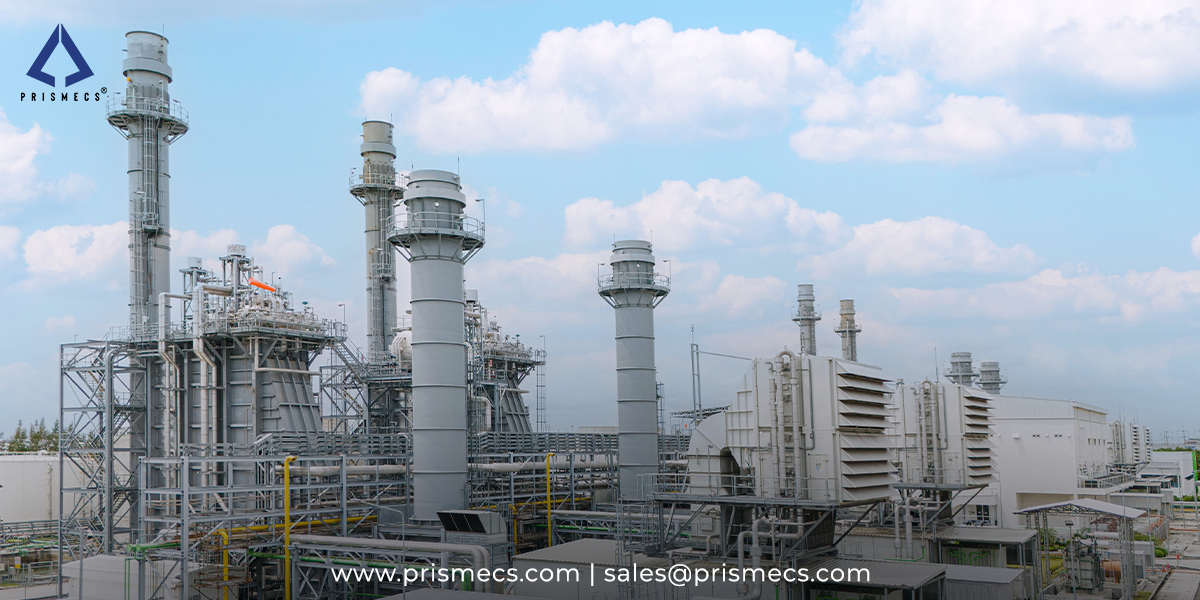
A fast-track power plant can reach first power in weeks to about three months with mobile units that are already available. It can take six to seven months for a mobile or bridge plant with a full balance of plant, and about 10 to 12 months for a modular permanent plant. A conventional combined cycle plant ordered today takes years, because turbine delivery alone now runs three years or more at major manufacturers.
The deciding factor is rarely the turbine. It is whether transformers, switchgear, fuel supply, permits and the grid connection are ready when the generation equipment arrives.
This guide is for developers, utilities, data center operators and industrial asset owners who need megawatts faster than a conventional development cycle allows. It covers:
- The four realistic paths to fast power, and which technologies fit each one
- What actually sets the critical path
- The shortcuts that avoid long interconnection queues
- How to test your own project against a sub-12-month target
- It draws on Prismecs project work in Switzerland, Oman, Taiwan, Greece and Angola.
How Long Does It Take to Build a Power Plant?
It depends on which of four paths the project takes. Each path trades speed against efficiency, permanence and cost. These windows are measured for commercial operation, not to turbine installation. Setting a turbine can take days. Getting the complete plant to reliable, dispatchable output is what the schedule has to deliver.
What Is a Fast-Track Power Plant?
A fast-track power plant is generation capacity delivered through an accelerated engineering, procurement, construction and commissioning strategy. Activities that a conventional project runs one after another are run in parallel.
Four things usually make it possible:
- Modular or mobile generation equipment that arrives largely factory-assembled
- Early procurement of long-lead electrical equipment
- Site preparation that starts before the equipment ships
- Commissioning planned from the first week of the project
Fast-Track Power vs. Emergency Power
Emergency power and fast-track power sit on the same spectrum. They differ in how long the plant is meant to run and how much permanent infrastructure it needs.
Emergency deployments restore power within weeks and accept temporary fuel and electrical arrangements. Bridge plants run for months or years until a grid connection or permanent plant arrives. Fast-track permanent plants are built for a 20-year operating life on a compressed schedule.
The same mobile turbine can serve all three roles. What changes is the foundations, fuel system, protection design and maintenance strategy around it.
Fast-Track Power vs. Conventional Generation
Conventional projects move through engineering, procurement, construction and commissioning in sequence, and each phase waits for the one before it. Fast-track projects overlap them. Procurement starts once the design is mature enough to specify long-lead equipment, and civil works start before detailed engineering is finished.
That overlap only works when the technical scope is frozen early. Late changes erase the time savings.
Why Speed to Power Matters in 2026
Three pressures are converging: rising demand, long interconnection queues and multi-year equipment lead times. Together they make a conventional schedule too slow for many projects.
Rising Electricity Demand
Data centers are the clearest example. Berkeley Lab's United States Data Center Energy Usage Report: 2025 Update estimates that data centers could consume 11.8% of total U.S. electricity by 2030, with its scenarios ranging from 9.5% to 15.3%.
Manufacturing, mining, electrified industry and hydrogen projects are adding load at the same time. For many operators, the date power is available has become as important as its price.
Long Interconnection Queues
According to Berkeley Lab's Queued Up: 2026 Edition, about 8,200 projects were actively seeking U.S. grid interconnection at the end of 2025, totaling 1,312 GW of generation and roughly 749 GW of storage. The same report found active natural gas capacity in queues rose 86% during 2025, to 253 GW. Developers are clearly turning to dispatchable gas generation.
One detail in that report matters for fast-track planning: the queue data covers only transmission-connected generation, and excludes behind-the-meter and distribution-connected projects. A generation project designed to sit outside the transmission queue, such as a behind-the-meter or islanded plant, follows a different path to power. We cover those options below.
Multi-Year Equipment Lead Times
The equipment market is now the tightest constraint of all. Siemens Energy executives said in August 2026 that lead times across the company run three years or more. Utility Dive
Transformers are just as constrained. According to Wood Mackenzie data, standard U.S. power transformer lead times averaged about 128 weeks in 2026, and generator step-up (GSU) units averaged roughly 144 weeks.
A 12-month plant schedule cannot absorb a 144-week transformer order. Fast-track projects succeed by removing that item from the critical path, not by building faster around it.
Speed to Power for Data Centers: Bridge and Behind-the-Meter Generation
"Speed to power" means the time between a site being ready for load and electricity actually being available to serve it. For data center developers, it is often the single biggest risk to the project's economics. A completed data hall with no power earns nothing.
The most common fast-track answer is bridge power: onsite generation that serves the load while the permanent utility connection is built. Configurations include:
- Islanded prime power. The plant supplies the entire load with no grid connection. The design has to handle load steps, redundancy and black start without grid support.
- Behind-the-meter, grid-parallel generation. The plant runs alongside a smaller utility service and sits on the customer's side of the meter. Protection and utility coordination still apply, but the path differs from a transmission-level generator interconnection.
- Bridge-to-backup. Generation serves as prime power until the grid arrives, then moves to reserve, peak shaving or backup duty. This preserves the asset's value after the bridge period ends.
Each option changes the redundancy design. An N+1 bridge plant serving a 2N-designed facility needs careful thought about which failures the combined system can tolerate. Our guide to data center power redundancy covers what each redundancy level takes to prove.
Which Power Generation Technologies Support Faster Delivery?
Technology choice sets the equipment lead time, the amount of site construction and how much commissioning is needed. The right choice depends on the capacity required, the operating profile, the fuel and the plant's long-term role.
Based on Prismecs project data. Output varies with ambient temperature, altitude and fuel: the Duqm, Birr and Miaoli plants averaged roughly 20, 32 and 30 MW per unit respectively.
GE Vernova positions the TM2500 for mobile power applications and fast-track projects, with units available for mobile deployment within about three months.
Prismecs works across OEMs, including GE, Siemens, Solar Turbines and other platforms. Technology selection is driven by the project's requirements and what equipment can actually be secured in time, not by a single manufacturer's portfolio.
Mobile and Modular Gas Turbines
Mobile and modular aeroderivative gas turbines shorten field construction because the turbine, generator and auxiliaries arrive as standardized, factory-tested packages. The same units can serve as emergency power, bridge power, reserve capacity or long-term supply, depending on the foundations and balance of plant built around them.
Duqm, Oman. The Duqm Special Economic Zone had no national grid connection. There, four TM2500 mobile gas turbines went from project start to power export in under 200 days, providing 80 MW of installed capacity and allowing an older diesel-fired plant to be retired. GE Vernova built, owns and operates the plant, which is set to run for at least three years until the area connects to the 400 kV grid. Prismecs helped install and operate the units, establishing local O&M, a CMMS and site-specific HSE, and supporting the switch from diesel to natural gas.
Birr, Switzerland. A fast-track reserve plant using eight TM2500 units on a compact site came online in six months. Prismecs supported O&M setup, the CMMS and spares management, while a new 220 kV interconnection and noise controls kept the plant compliant with local rules.
Simple Cycle Gas Turbines
Simple cycle plants involve far fewer major systems than combined cycle plants: there is no heat recovery steam generator, steam turbine or cooling system for a steam cycle. That cuts construction and commissioning scope when fast capacity is the priority.
Simple cycle generation suits peaking, reserve, backup, industrial and grid-support duty where fast starts and dispatchability matter. The trade-off is a higher heat rate, which raises fuel cost per MWh at high operating hours.
Combined Cycle Generation
Combined cycle plants recover exhaust heat through a steam cycle to reach the highest thermal efficiency of any fossil generation. The heat recovery equipment, steam systems, water treatment and extra commissioning steps make them the least suited to a sub-12-month target. Current turbine manufacturing backlogs lengthen the schedule further.
A common strategy is phased delivery. Install simple cycle units on a fast-track schedule, then add the steam cycle later, once capacity is already earning revenue.
What Makes a Power Plant Project Fast-Track?

A short delivery window comes from coordinated execution, not from any one technology choice. Engineering, procurement, construction, logistics and commissioning have to move as connected workstreams under one schedule and one accountable team.
Equipment Availability
Equipment availability decides whether a sub-12-month target is realistic before any construction starts. A turbine that installs in days gives little schedule benefit if the GSU transformer, switchgear, generator breaker or controls take two or more years to arrive. The first fast-track question is always: which long-lead items can we secure now?
Factory-Assembled Equipment
Factory assembly moves fabrication and testing into a controlled manufacturing environment. That reduces field labor, weather exposure and the number of complex interfaces on site.
At the 180 MW Miaoli plant in Taiwan, the LM2500XPRESS units' modular design and high factory preassembly enabled rapid installation, and each unit can go from cold start to full load in about eight minutes.
Parallel Engineering and Procurement
Sequential execution builds in waiting time. Engineering packages should move forward alongside procurement and site preparation as soon as the design is mature enough to specify equipment. Purchase decisions for GSU transformers, switchgear and generators have to come first, because they are the items most likely to set the finish date.
Early Site Preparation
Site preparation becomes a hidden constraint when it starts late. Geotechnical investigation, foundations, equipment pads, drainage, access roads, utilities, fuel systems and underground electrical work should be finished before major equipment arrives, so installation crews never stand idle.
Integrated Logistics
Large power equipment needs detailed transport and lifting plans. Routes, port capacity, customs, laydown storage, heavy lifts and installation sequence should be locked in before anything ships. In Taiwan, Prismecs' scope included specialized port logistics, site readiness, turbine grid tie-ins and regulatory navigation.
Commissioning Planned from the Beginning
Commissioning should be planned at project kickoff, not after mechanical completion. Protection settings, control logic, synchronization, fuel system testing, operator training, performance testing and handover documentation all shape the date of commercial operation. Plants that plan commissioning early reach COD with fewer surprises and with maintenance systems already running.
How In-Stock Equipment Removes the Transformer Bottleneck
For most fast-track projects, the practical question is whether the long-lead electrical and generation equipment can be sourced outside the standard factory queue. There are four proven routes.
- Ready-to-ship inventory. Equipment already built and available shortens procurement from years to weeks. Prismecs offers ready-to-ship turbines, transformers and generators, including a Hyundai Electric TM1337 transformer package with a load tap changer and a Caterpillar C175 PGAL diesel generator package.
- Relocating existing assets. Turbines idle at one site can often be moved faster than new units can be manufactured. Prismecs relocated LM6000PC units to Crete, Greece, coordinating GE as the OEM, specialist rigging contractors, the Greek grid operator and a compressed commissioning schedule under one contract.
- Refurbished and secondary-market units. Never-energized or lightly used transformers, switchgear and generators can fill a critical-path gap, provided they pass inspection, testing and specification review. Prismecs' equipment marketing solutions work both ways: they help owners sell surplus assets and help buyers find them.
- Global sourcing through procurement-as-a-service. eINDUSTRIFY, Prismecs' supply chain platform, handles RFQs, vendor qualification, logistics and delivery across a global supplier network. It turns a single-supplier wait into a competitive search for the earliest compliant delivery.
Reciprocating engine capacity can also be rented, including with a purchase option. That lets a project reach power before its capital approvals are final.
What Does a Sub-12-Month Power Plant Timeline Look Like?
Fast-track projects overlap activities instead of completing each phase in turn. The framework below shows how the workstreams progress toward commercial operation, and the condition each window depends on.
The critical path shifts from project to project. It most often moves when long-lead electrical equipment, air permits, fuel supply or grid approvals need more time than the equipment itself.
What Can Delay a Fast-Track Power Plant?
The biggest risks usually sit between project interfaces, not in equipment installation. Identifying these constraints in the first month protects the delivery date.
Long-Lead Electrical Equipment
GSU transformers and switchgear become critical-path items the moment procurement starts late. With new-build GSU lead times now well over two years, electrical specifications must be fixed early. Sourcing should include inventory, relocation and refurbished options from day one.
Permitting Requirements
Environmental, air, construction and operating permits bring review periods that faster construction cannot compress. Air permitting deserves particular attention. Whether a plant qualifies for a minor-source permit or triggers a major-source review can change the schedule by many months, depending on emissions, operating hours and controls such as dry low emissions (DLE) combustion or selective catalytic reduction (SCR).
The regulatory pathway should be mapped before the execution schedule is finalized.
Grid Interconnection
Grid-connected generation may need system impact studies, protection changes, transmission upgrades and utility approvals. Fast equipment delivery does not guarantee fast grid access.
Several pathways can shorten this:
- Reuse an existing connection. Brownfield sites with a point of interconnection (POI) from a retiring or underused plant can avoid a new application. FERC approved revised PJM Surplus Interconnection Service rules in February 2025, widening access to underused interconnection capacity.
- Use an expedited process. PJM's expedited interconnection track will consider up to 10 requests a year for two years, for resources of at least 250 MW that can come online within three years. PJM expects about 10 months from request to interconnection agreement.
- Stay off the transmission grid. Behind-the-meter and islanded designs follow a different path from transmission-level generation, as covered in the data center section above.
Site Conditions
Unknown soil conditions, poor access, drainage problems, missing utilities or limited fuel supply can extend construction by months. Early geotechnical, topographic and fuel-supply surveys expose these constraints before they affect major installation work.
Scope Changes
Late changes to capacity, fuel type, emissions systems, voltage, redundancy or operating mode can trigger redesign and new procurement. A frozen technical scope, backed by independent owner's engineering, protects the schedule from avoidable disruption.
How Should Developers Select a Fast-Track Configuration?
The right configuration starts with the power outcome required, not with a specific turbine or equipment package. Load characteristics, fuel, site conditions, operating hours and the plant's intended life should drive the technology decision.
Define the Load Profile
Establish the required MW, load pattern, load steps, ramp rates, operating hours, voltage, availability target and future expansion. A data center with fast-rising demand needs a different configuration than a mine seeking captive power or a utility adding reserve capacity.
Determine the Operating Model
The plant may run as grid-connected generation, behind-the-meter generation, captive power, temporary capacity, a bridge to permanent generation, or an islanded system. Each model sets different requirements for protection, controls, electrical infrastructure and commissioning.
Confirm the Fuel Strategy
Fuel availability should be assessed alongside the technology. Natural gas, diesel, dual fuel and hydrogen blends affect equipment selection, fuel storage and treatment, gas compression, emissions controls, permitting and operating cost. Dual-fuel capability adds resilience when pipeline gas is uncertain.
Plan the Long-Term Role
A fast-track plant may become permanent generation, stay temporary, expand in phases or move to another site. The intended lifecycle should shape foundations, electrical design, maintenance strategy, spare parts and expansion provisions.
Fast-Track Power Plant Readiness Checklist
A sub-12-month target becomes realistic when the major constraints are identified before execution starts. Use the pass condition on each line to test your project.
- Generation: Does the technology match the required MW and operating profile? Pass: unit count, redundancy and site-rated output confirmed.
- Equipment: Are the major generation and balance-of-plant components available? Pass: turbines or engines and the GSU have confirmed delivery dates within the schedule.
- Site: Can civil and installation work begin without major unknowns? Pass: geotechnical survey done; site control secured.
- Fuel: Is the required fuel supply and infrastructure available? Pass: fuel volume, pressure and delivery contract confirmed for the operating profile.
- Permitting: Is the regulatory pathway defined? Pass: air permit category identified; approval timeline inside the schedule.
- Electrical: Are transformers, switchgear, protection and controls in scope? Pass: single-line diagram frozen; protection studies scheduled.
- Grid: Are interconnection requirements understood? Pass: interconnection pathway chosen (new request, existing POI, expedited track, behind-the-meter or islanded).
- Logistics: Can major equipment reach the site when required? Pass: route survey, port capacity and heavy-lift plan complete.
- Commissioning: Are testing and synchronization requirements planned? Pass: commissioning plan and utility witness tests scheduled.
- Operations: Can the plant move into reliable operation after COD? Pass: O&M team, CMMS, spares and service agreement in place before COD.
A project that passes all ten is a strong candidate for sub-12-month delivery. Any "no" on lines 2, 5 or 7 usually sets the real finish date.
Frequently Asked Questions
What is speed to power?
Speed to power is the time between a site being ready for electrical load and electricity actually being available to serve it. It has become a key measure for data centers and industrial projects, because long interconnection queues and equipment lead times can leave finished facilities waiting for power. Onsite fast-track or bridge generation is the most common way to shorten it.
What is bridge power?
Bridge power is onsite generation that supplies a facility temporarily until a permanent grid connection or permanent plant is available. Mobile gas turbines, reciprocating engines and battery storage are the usual technologies. When the bridge period ends, the equipment can be relocated, kept as backup, or converted to reserve or peaking duty.
What is the fastest type of power plant to build?
Mobile aeroderivative gas turbines and reciprocating engine plants are usually the fastest generation to deploy. Units arrive factory-assembled, and first power is possible within weeks to a few months when equipment and fuel are available. Battery storage installs quickly but provides limited-duration energy, so it complements rather than replaces generation.
Why do transformers delay power plant projects?
Large power transformers and generator step-up units have multi-year manufacturing lead times. Wood Mackenzie data puts GSU units at roughly 144 weeks in 2026. A plant cannot export power without its GSU, so fast-track projects source transformers from inventory, relocated assets or qualified refurbished units rather than waiting for new production.
Can you rent or lease power generation equipment?
Yes. Reciprocating engine gensets and some mobile gas turbines are available for rental, and some come with a purchase option, which lets projects reach power before capital approvals are final. Prismecs offers generation equipment for sale and rental, including rental with a purchase option.
Is fast-track generation only a temporary solution?
No. Many fast-track plants are designed for permanent operation from the start. The Miaoli plant in Taiwan, for example, supports a long-term shift from coal to gas generation. What makes a plant temporary or permanent is its foundations, fuel system, emissions controls and maintenance strategy, not the delivery schedule.
From Turbine to COD: Planning a Fast-Track Project with Prismecs
Fast-track deployment depends on more than installing turbines quickly. A sub-12-month target requires engineering, procurement, site preparation, logistics, permitting, electrical integration and commissioning to move as one coordinated project. The real question is how quickly the complete system reaches reliable commercial operation.
Prismecs brings that coordination to power projects in more than 15 countries, combining EPC delivery, owner's engineering, supply chain management and O&M under one team.
- Birr, Switzerland: supported a reserve plant that came online in six months
- Duqm, Oman: helped install and operate a plant that went from start to power export in under 200 days
- Miaoli, Taiwan: supported the logistics, site readiness and grid tie-ins behind a 10-month delivery
Where to start:
- Need equipment fast? Check ready-to-ship turbines, transformers and generators.
- Planning a capacity addition? Request a fast-track feasibility review covering equipment availability, site readiness, permitting and a realistic path to COD.
- Need to fund it? Explore Prismecs financing solutions.
- Talk to a Prismecs fast-track power expert: 1 (888) 774 7632
Tags: mobile gas turbine deployment bridge power solutions balance of plant integration speed to power emergency power generation
recent posts

Power Utilities
20 minutes read
Fast-Track Power Plants Deployment: How to Reach Speed to Power in Under 12 Months
Fast-track power plant deployment can hit first power in weeks. See real TM2500 timelines from permitting to COD, proven in Oman and Taiwan. Plan your...
O&M Services
11 minutes read
Gas Turbine Outage Planning: Schedule, Scope Rules, and Checklist
Gas turbine outage planning starts 18 months out. Get the T-minus schedule, scope freeze rules, parts readiness gates and checklist. Talk to a Prismec...

O&M Services
15 minutes read
Predictive vs Preventive Maintenance: How to Choose Per Asset
Most plants apply predictive vs preventive maintenance facility wide and overspend. Match each asset by failure mode, criticality and P-F interval. Ta...

Data Centers
59 minutes read
Data Center Power Redundancy: N, N+1, 2N and 2N+1- What Each Level Takes to Build and Prove
Most data center power redundancy claims fail under test. See what N+1, 2N and 2N+1 truly require, how Level 5 testing proves them, and what to demand...