
Data center energy efficiency is now primarily a power availability problem, not a cooling optimization problem, because AI workloads have pushed rack densities and site loads beyond what many electrical systems and utility connections can deliver. Efficiency still matters, but it matters most as a way to extract more compute from power an operator can actually obtain.
This guide covers why power became the binding constraint, what PUE measures and which standards define it, the grid interconnection timelines shaping project schedules, on-site generation options, and how rising density changes electrical design.
It is written for data center operators, facilities and electrical engineers, and the infrastructure teams planning capacity for high-density and AI workloads.
Prismecs delivers the power infrastructure behind data centers: on-site generation, switchgear, distributed energy, and battery storage. It does not supply cooling systems or infrastructure management software.
Why Power Became the Binding Constraint
Power availability, not capital or technology, is now the primary constraint on data center expansion, because rack densities have risen faster than electrical infrastructure can be built to serve them. Facilities can be constructed in under three years while the power systems feeding them commonly take five to ten years to deliver.
The density shift is recent and steep. According to Datacenter Dynamics, average rack density rose from approximately 16 kW in 2025 to 27 kW in 2026, while only one in five operators report being prepared to support the 50 to 70 kW racks now common in AI deployments. The newest AI systems can reach up to 246 kW per rack.
Site-level demand has moved with it. Where traditional racks drew 5 to 10 kW, AI racks now require 50 to 100 kW, and large AI campuses are planned at hundreds of megawatts.
The practical consequence reframes efficiency entirely. For an operator holding a fixed utility allocation, every megawatt not consumed by cooling and distribution losses becomes a megawatt available for compute. Efficiency is no longer only a cost measure; it is a capacity measure.
PUE and What It Actually Measures
Power Usage Effectiveness (PUE) is the ratio of total facility energy to the energy consumed by IT equipment, and it is formally defined by ISO/IEC 30134-2, published by ISO/IEC JTC 1/SC 39. It is a standardized KPI, not a vendor metric, which is why citing the standard matters when reporting it.
The metric was introduced by The Green Grid in 2007 alongside its reciprocal, Data Center Infrastructure Efficiency (DCiE), and later formalized internationally. The standard requires energy to be recorded over a coincident twelve-month period, because PUE is calculated on an annual timeframe rather than from a spot reading.
A PUE of 1.0 would mean all facility energy reaches IT equipment, which is not achievable in practice. Hyperscale facilities commonly operate near 1.1, while the global average sits closer to 1.5, reflecting the gap between purpose-built and legacy infrastructure.
The current edition matters for power planning. ISO/IEC 30134-2 was updated in 2026 with revised measurement requirements and greater clarity around unaccounted energy and on-site generation, which is directly relevant to facilities now generating part of their own supply.
One limitation is worth understanding. PUE measures infrastructure overhead, not useful output, so a facility with excellent PUE running inefficient workloads can waste more energy per unit of work than a less efficient facility running optimized ones. This is why compute-normalized metrics are gaining attention alongside it.
The Standards Governing Data Center Energy Performance
Data center energy performance is governed by a defined set of international standards covering metrics, thermal conditions, and building energy design. Citing them by designation is how efficiency claims become verifiable rather than promotional.
The metric standards deliberately set no targets. The ISO/IEC 30134 series specifies how to measure and report each KPI but does not define limits, which means a PUE figure is only meaningful alongside its measurement boundary and reporting period.
ASHRAE 90.4 and TC 9.9 govern different questions. ASHRAE 90.4 sets minimum efficiency requirements for mechanical and electrical design, while TC 9.9 defines the temperature and humidity envelopes equipment can tolerate, which is what allows higher supply temperatures and reduced cooling energy.
The Grid Interconnection Constraint
Utility interconnection has become the longest lead item on most data center projects, and it now governs the schedule rather than following it. Interconnection queues in constrained regions commonly run five to seven years, against build timelines measured in months.
The mismatch is structural. Transmission and substation capacity is planned on decade-long horizons, while AI-driven load growth arrived in a compressed window and concentrated in specific regions. Utilities cannot reallocate capacity quickly, so the available megawatts, not the available land or capital, determine where and how fast capacity can be added.
Regulatory response is reshaping the terms. Texas Senate Bill 6, for example, requires new large loads above 75 MW to participate in demand response programs, with provisions for disconnection during grid stress, which turns load flexibility into a condition of connection rather than an option.
The planning implication is sequencing. Utility engagement, load letters, and capacity studies should precede site design and equipment procurement, because a design premised on power that cannot be delivered on schedule is a design that will be rebuilt.
On-Site Generation and Bridging Power
On-site generation has moved from contingency to mainstream strategy, because it lets operators energize capacity while grid interconnection remains years away. What was once standby-only infrastructure is increasingly a primary supply.
Bridging power is the pattern to understand. Rather than waiting for full grid capacity, operators energize early phases on on-site generation, then transition or supplement as utility capacity arrives, which converts a multi-year wait into a phased deployment.
Storage plays a dual role that is often underestimated. Beyond resilience, a BESS lets a facility serve peak loads exceeding its firm utility allocation and participate in the demand response programs that some jurisdictions now require of large loads.
How Rising Density Changes Electrical Design
Rack densities above roughly 50 kW break the assumptions behind conventional data center electrical and thermal design, requiring changes to distribution architecture and cooling method together. Power and thermal systems can no longer be designed independently.
The distribution architecture is shifting. Higher-voltage central busways and direct current distribution are being adopted to reduce conversion losses and shorten distribution paths, with industry surveys indicating that a majority of operators expect to adopt high-voltage busways and a substantial minority expect DC architectures by the end of 2028.
Cooling becomes a power decision at these densities. Air cooling cannot dissipate the heat from racks above roughly 100 kW, so direct-to-chip liquid cooling with coolant distribution units becomes mandatory rather than optional. Its value is electrical as much as thermal, because reducing cooling load frees allocated megawatts for compute.
Legacy AC-centric designs are the practical barrier. Retrofitting an existing facility for high density typically requires reworking distribution, UPS topology, and thermal systems together, which is why phased and modular approaches often outperform wholesale conversion. The switchgear, transformer, and distribution rework that implies is a substation-scale project in its own right.
Modular and Phased Capacity Deployment
Modular deployment reduces stranded capacity by allowing infrastructure to scale with actual demand rather than being oversized at the outset. This matters more when power is constrained, because capacity built and unused is allocation that could have served load.
Prefabricated modules improve power utilization in two ways. They align infrastructure growth with real demand rather than forecast demand, and they standardize the integration of high-efficiency power distribution and advanced cooling, which is difficult to retrofit consistently across a legacy facility.
Phasing also fits the grid reality. When interconnection arrives incrementally, modular capacity can be energized in step with available power, whereas a single large build must wait for its full allocation before commissioning anything.
How Prismecs Delivers Data Center Power Infrastructure
Prismecs delivers the electrical and generation infrastructure data centers depend on, covering on-site power, switchgear, transformers, and battery storage, so operators can energize capacity when grid power is constrained or delayed.
The Prismecs capability set for data centers:
- On-site and bridging power: gas turbine and reciprocating generation sized for prime or bridging duty while interconnection is pending.
- Electrical infrastructure: medium and low-voltage switchgear, transformers, and distribution engineered for high-density loads.
- Battery energy storage: BESS for peak shaving, load smoothing, and serving demand beyond a firm utility allocation.
- Distributed energy and microgrids: integrated on-site systems for resilience and constrained-grid sites.
- Equipment sourcing and O&M: OEM-agnostic supply of long-lead transformers and switchgear through eINDUSTRIFY, plus maintenance across the asset life.
The differentiator is delivery rather than analysis. Every credible source now identifies grid constraint as the limiting factor and on-site generation as the response, but the equipment manufacturers sell single product lines and the analysts sell reports. Prismecs sources and integrates across manufacturers to build what the operator actually needs.
Frequently Asked Questions
What is PUE and how is it calculated?
Power Usage Effectiveness is the ratio of total facility energy to IT equipment energy, formally defined by ISO/IEC 30134-2 and published by ISO/IEC JTC 1/SC 39. The standard requires energy to be recorded over a coincident twelve-month period, since PUE is an annual metric. A value of 1.0 is theoretically ideal, hyperscale facilities operate near 1.1, and the global average is closer to 1.5.
Why is power the main constraint on data center growth?
Because rack densities have risen faster than electrical infrastructure can be built. Average density rose from about 16 kW in 2025 to 27 kW in 2026, with AI systems reaching up to 246 kW per rack, while only one in five operators are prepared for 50 to 70 kW racks. Facilities can be built in under three years, but power systems commonly take five to ten.
How long does data center grid interconnection take?
Interconnection queues in constrained regions commonly run five to seven years, against build timelines measured in months. Transmission and substation capacity is planned on decade-long horizons, while AI-driven load growth arrived in a compressed window. Utility engagement, load letters, and capacity studies should therefore precede site design and equipment procurement rather than follow them.
What standards govern data center energy efficiency?
ISO/IEC 30134-2 defines PUE, with ISO/IEC 30134-4 and 30134-5 covering Water and Carbon Usage Effectiveness, and ISO/IEC 30134-1 setting common KPI requirements. ASHRAE 90.4 is the energy standard for data center design, ASHRAE TC 9.9 defines thermal envelopes, and Uptime Institute Tier classification addresses availability topology. The ISO series specifies measurement but sets no targets.
Why do high-density racks require liquid cooling?
Air cooling cannot dissipate the heat generated by racks above roughly 100 kW, so direct-to-chip liquid cooling with coolant distribution units becomes mandatory at AI densities. The benefit is electrical as well as thermal: for an operator with a fixed utility allocation, every megawatt not spent on cooling becomes a megawatt available for compute, which makes cooling method a capacity decision.
Can on-site generation replace grid power for a data center?
On-site generation is increasingly used as prime or bridging power rather than standby, allowing operators to energize capacity while interconnection remains years away. Gas turbines, reciprocating engines, and fuel cells serve at multi-megawatt scale, while battery storage extends a fixed utility allocation. Most facilities combine on-site supply with grid power rather than replacing it entirely.
Why Data Center Efficiency Is Now an Infrastructure Decision
Data center efficiency has become an infrastructure and capacity decision rather than a facilities optimization exercise. The metrics are standardized, the thermal solutions are known, and the constraint that actually limits growth is how many megawatts an operator can secure and how quickly they can be delivered to the rack.
Operators planning high-density capacity need a partner who can engineer the electrical infrastructure, source long-lead equipment, deploy on-site generation and storage when the grid cannot deliver, and maintain it. That is the Prismecs model: power infrastructure built for facilities that cannot wait.
To plan data center power infrastructure, evaluate on-site generation, or size electrical capacity for high-density loads, call +1 (888) 774-7632 or email sales@prismecs.com.
Tags: data center power infrastructure PUE ISO/IEC 30134-2 rack power density grid interconnection on-site generation
recent posts
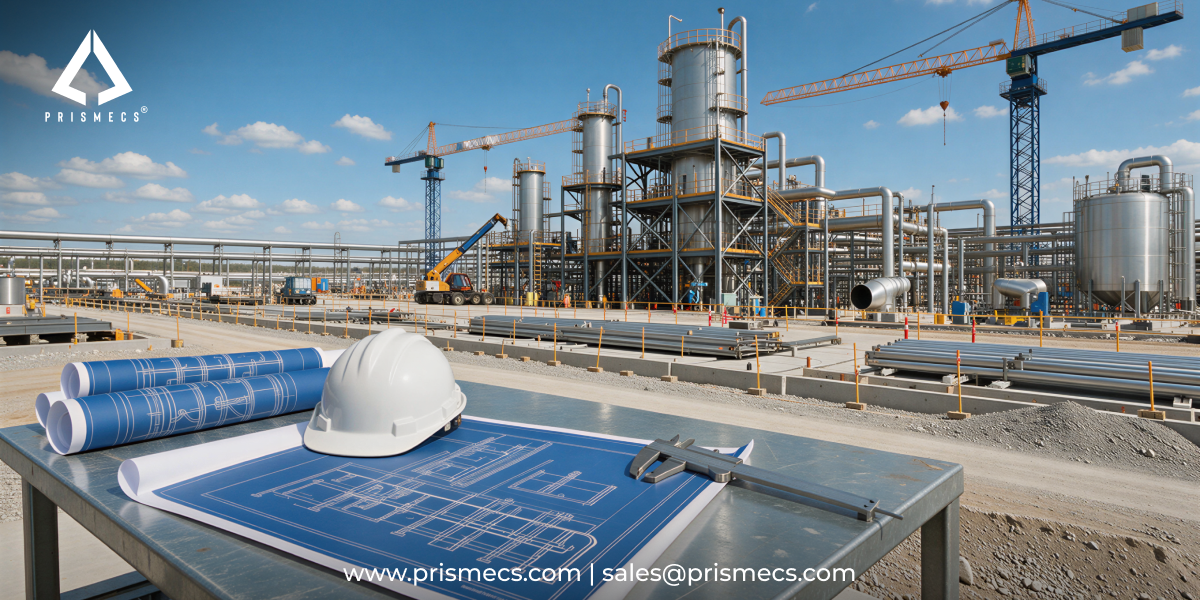
EPCM Services
19 minutes read
25 Questions to Ask a Power Plant EPC Contractor Before You Sign
Most lists of questions to ask an EPC contractor stop at the question. Get why each matters, the strong answer, the red-flag reply and a weighted bid...
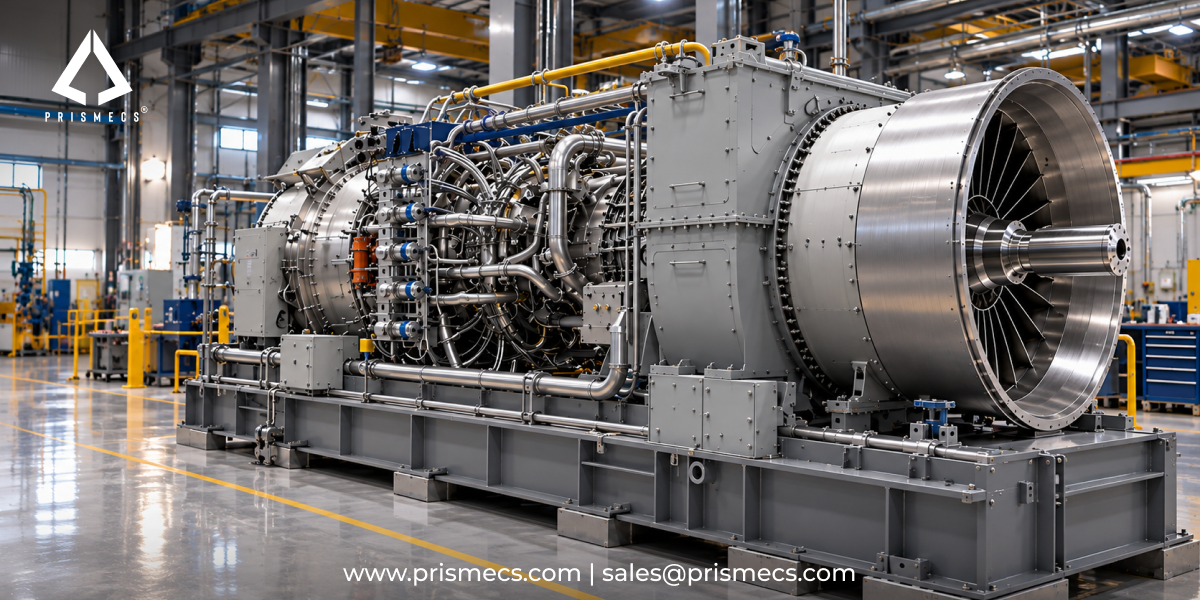
Gas Turbines
19 minutes read
Dual-Fuel Gas Turbines: How Gas-and-Liquid Fuel Flexibility Works
A dual-fuel gas turbine switches from natural gas to diesel at load, but most failures start in idle oil lines. Get transfer steps and coking fixes be...
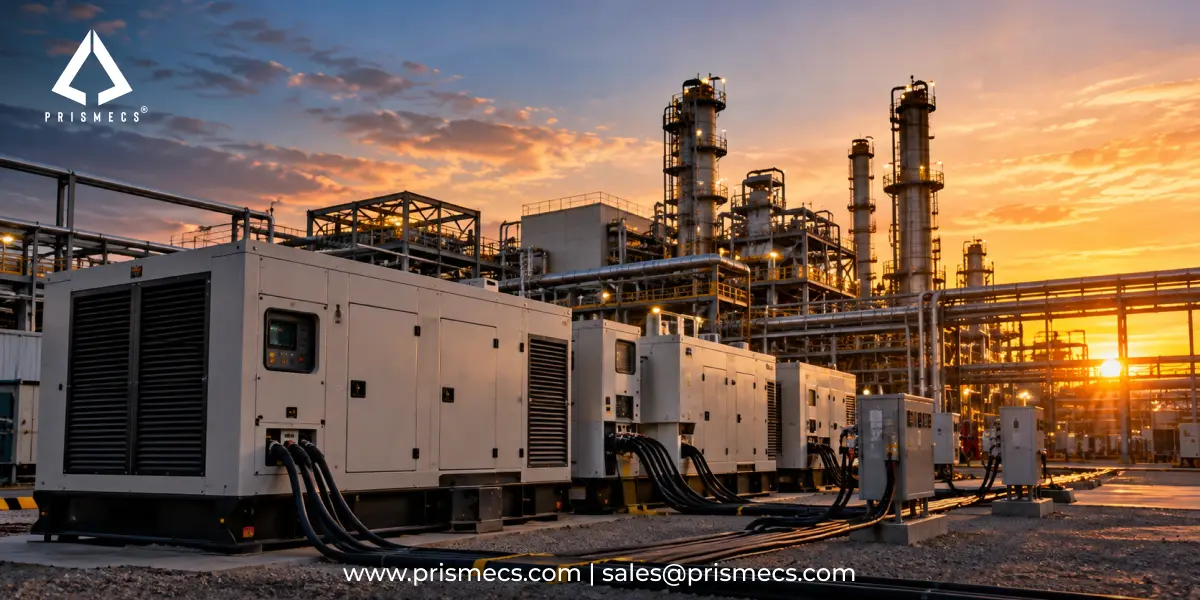
Power Utilities
18 minutes read
Temporary and Bridge Power for Industrial Facilities: When and How to Use It
Planning bridge power past 12 months? Under EPA rules your generators may be stationary from day one. Check Tier 4, NSPS KKKKa and SPCC triggers befor...
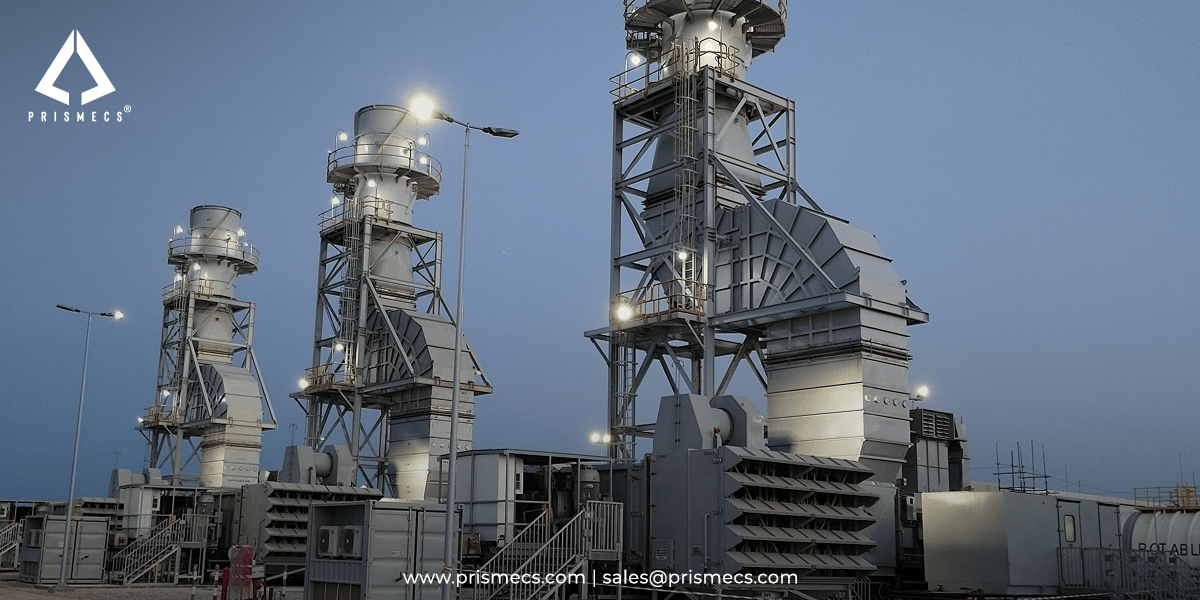
Gas Turbines
16 minutes read
What Is a Mobile Gas Turbine Power Plant? TM2500-Class Units Explained
A mobile gas turbine power plant is a transportable power generation system designed to add electrical capacity faster than a conventional permanent p...