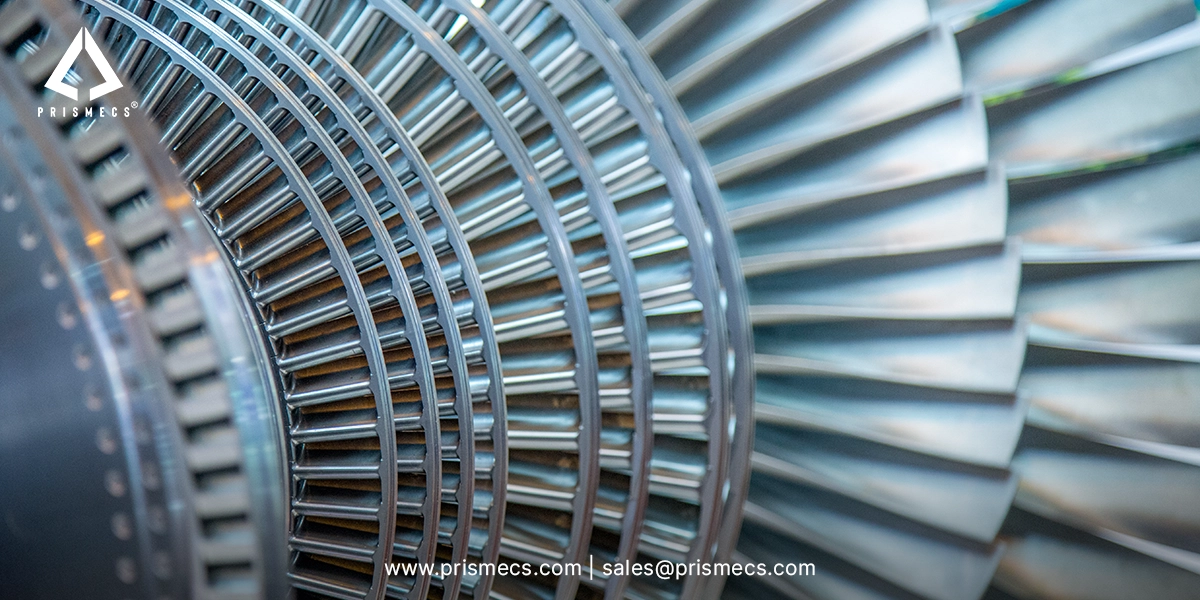
When a gas turbine trips unexpectedly, nobody in the control room is thinking about contract language. They are watching megawatts fall off the board, juggling restart attempts, and calling for support. In that moment, the quality of your gas turbine maintenance program and the strength of your O&M partner become very real.
Unplanned downtime on LM6000, TM2500, or frame units costs fuel and parts, strains customer relationships, breaches offtake obligations, and stresses an already thin operations team. The right gas turbine O&M model does not eliminate risk, but it makes downtime predictable, shorter, and far less chaotic.
This article explains what drives downtime, how to think about reliability and availability in simple terms, and how to choose turbine maintenance services and a gas turbine service provider that has the depth to support your fleet over many years. It is for decision makers who live with the day-to-day realities of industrial gas turbines and want concrete, technically sound guidance they can use.
Why Your Gas Turbine Maintenance Strategy Matters More Than the Logo
At a high level, every operator is trying to maximize the time turbines are available and minimize the time they are not. Availability depends on two simple things:
- How often units fail
- How long do they stay offline when they do
In reliability terms, that means increasing mean time between failures (MTBF) and reducing mean time to repair (MTTR) across your fleet.
A gas turbine maintenance strategy that stretches inspection intervals, defers to minor issues, or relies on reactive gas turbine repair will tend to reduce the time between failures and increase the time required to recover. By contrast, a disciplined, data-driven gas turbine O&M program that maximizes plant uptime gives you more failures you can plan for and fewer that surprise you in the middle of the night.
That is why the choice of turbine maintenance services is not just about OEM versus third parties or about day rates. It is about whether a provider can help you shift hours from forced outages into planned outages, where risk and cost are much easier to control.
The Building Blocks of Gas Turbine O&M That Actually Reduce Downtime
Get the Basics Right: Inspections, Intervals, and Standards
Every OEM publishes a maintenance philosophy for its machines, and LM6000, TM2500, and heavy-duty GE frames are no exception. These documents lay out combustion inspections, hot gas path inspections, and major overhauls by fired hours or starts, along with supporting borescope intervals. Field studies on gas turbine power plants show that units following these plans closely see better reliability than those that do not.
Effective gas turbine maintenance starts with knowing where your units stand relative to that baseline. Are hot-gas-path inspections being pushed out to protect short-term budgets? Are recommended borescope inspections skipped because the unit is "running fine"?
When you ignore OEM schedules, reliability metrics degrade, forced outage rates rise, and unplanned downtime hours increase. A competent gas turbine service provider will want to see your historical intervals, inspection reports, and trip data before promising any improvements.
Beyond the Calendar: Condition-Based and Predictive Maintenance
Modern turbine maintenance services for industrial gas turbines increasingly combine fixed intervals with condition-based and predictive tools. In practice, this looks like:
Continuous vibration monitoring to catch bearing and rotor issues early
Thermodynamic performance trends, such as heat rate, compressor efficiency, and exhaust spread, can flag fouling or combustion problems.
Regular borescope inspections, with findings used to refine the scope for upcoming outages
For LM6000 engines, OEM training materials highlight condition-based maintenance and the ease of internal inspections, enabling outages to be planned based on the actual condition of the hardware rather than rigid hour counts.
Research on field maintenance practices in rotating equipment shows that predictive strategies can reduce maintenance costs and improve availability compared with purely time-based approaches, because work is done closer to the point of need, not too early or too late.
When evaluating gas turbine O&M proposals, ask how condition data will be collected, who will interpret it, and how it will influence the timing and scope of gas turbine repair. Providers that cannot answer those questions clearly are unlikely to move your availability in the right direction.
Outage Planning: Where Turbine Maintenance Services Win or Lose
Planning the Major Outage 18–24 Months Ahead
Planned outages are where a large share of downtime is spent and where much of it can be recovered. Utilities and large industrials with strong outage performance often start planning major gas turbine maintenance 18 to 24 months before the first bolt is loosened. That planning window allows for thorough pre-outage inspections, risk-based work scoping, parts procurement, and alignment of internal and external resources.
Industry guidance on turbine outage management emphasizes a few recurring practices. Identify high-risk components early, secure long-lead parts, lock in critical path tasks, and assign clear roles to everyone involved.
Done well; outages tend to finish on or ahead of schedule, with fewer follow-on issues. Done poorly, delays cascade and forced outages creep between majors.
A gas turbine service provider that brings mature outage planning processes, not just technicians, is far more likely to reduce total downtime over the life of the unit.
Execution Discipline: From Disassembly to First Megawatt Back
Planning sets off the stage, but execution determines whether you get the megawatts back when promised. Good execution looks like clean disassembly, systematic inspection, clear repair-or-replace decisions, and rigorous reassembly and testing. It also looks like technicians who know LM6000 and TM2500 hardware intimately, understand common failure modes, and document what they see in a way your team can act later.
Post-outage testing and commissioning often get rushed because everyone is eager to return to service. Yet this is where latent issues can be caught before they turn into another trip. Providers with detailed checklists, commissioning procedures, and lessons-learned feedback loops usually experience fewer outage-related forced outages in the months that follow.
When comparing turbine maintenance services, pay attention to how providers discuss inspection reports, root cause analysis, and post-outage reviews, not just wrench time.
OEM vs Independent Gas Turbine Service Provider: What Really Matters
Where OEM-led Gas Turbine Maintenance Excels
An OEM-led gas turbine maintenance program often includes access to factory-approved upgrades, fleet-wide analytics, and standardized procedures refined across many units. For newer machines or units under warranty, staying with the OEM for core scopes may be the lowest risk path.
However, OEMs also operate under global pricing structures and standardized packages that may not perfectly align with every plant’s operating profile or budget. Lead times can be long, and tailoring scopes around unique duty cycles or local constraints may take sustained negotiation.
How Third-Party and Multi-OEM Providers Add Value
Independent providers usually compete on agility, flexibility, and multi-OEM expertise, including qualified non-OEM parts pathways.
Here's a simple comparison table that makes those points easier to see:
OEM vs Independent Gas Turbine Repair Providers
Aspect | OEM Provider | Independent / Third Party Provider |
Primary strengths | Proprietary design data, factory upgrades, standardized programs | Agility, flexibility, and multi-OEM expertise |
Typical cost level | Higher, standardized global pricing | Often lower, with more room to tailor cost to scope |
Service bundles | Fixed packages, less customization | More flexible service bundles aligned to the operating profile |
Lead times | Can be longer, tied to global queues and formal processes | Often shorter lead times, especially for repairs on mature fleets |
Parts approach | OEM parts only, strict configuration control | Mix of OEM, repaired, and qualified non-OEM parts where appropriate |
Repair methods | Standardized, OEM-approved repair routes | Alternative repair methods and life extension techniques for mature hardware |
Response to extended OEM lead times | May require waiting for OEM slots or parts | Can offer non-OEM parts pathways and interim repair options to keep units online |
Expert guidance on choosing a third-party turbine service partner stresses the need to look beyond sales claims to hard evidence. That includes the following:
- Detailed outage reports
- Clear engineering ownership
- Case studies on your frame type
- Quality system that stands up to audit
The choice is seldom purely OEM or independent. Many operators use a hybrid model in which OEMs handle certain upgrades, while a multi-OEM gas turbine service provider delivers day-to-day gas turbine O&M and field repairs. The key is to align each scope with the provider best positioned to reduce your downtime risk.
A Practical Checklist for Choosing a Gas Turbine Service Provider
Experience with your turbines
- Providers can show verifiable experience with LM6000, TM2500, and relevant GE frame units.
- The portfolio includes industrial gas turbines with duty cycles and environments similar to those in your plant.
- They provide specific project references and case studies, not just generic “gas turbine” claims.
- They have demonstrated exposure to LM aero engines and understand the common forced-outage drivers on those fleets.
Depth of engineering and on-site capability
- Field technicians are backed by in-house engineers (mechanical, controls, and performance).
- Teams can interpret vibration data, performance trends, and control system logs, not just follow checklists.
- Maintenance philosophy emphasizes maximizing on-site work and minimizing unnecessary engine changeouts.
- The provider can explain how they make on-condition decisions and when they recommend engine swaps.
- A clear process exists for escalation and engineering support during complex outages.
Multi-OEM and full plant coverage
- The provider can work across multiple OEMs, not just a single brand or model.
- They can also support generators, step-up transformers, and critical balance-of-plant equipment.
- They have experience coordinating outages across entire blocks (gas turbines, steam cycle, and BOP).
- Their approach reduces interface risk between different vendors during major outages.
- They can adapt if your fleet grows or diversifies over time.
Quality, safety, compliance, and documentation
- A documented quality management system (for example, ISO-style processes) is in place.
- Metrics or certifications evidence a strong safety culture and track record.
- The team is familiar with relevant local and international standards and regulations.
- They deliver detailed outage reports with findings, photos, and clear recommendations.
- Reports can be used internally to justify budgets and to track the impact of gas turbine maintenance over multiple years.
Responsiveness, flexibility, and long-term view
- Providers can mobilize quickly for emergency gas turbine repair.
- 24/7 support is available with clearly defined and realistic response times.
- Scopes can be tailored to your operating profile, not just sold as rigid packages.
- They are willing to integrate with your CMMS and monitoring tools.
- They can articulate a multi-year plan for your fleet, not just the next outage.
- Discussions cover five- to ten-year availability and risk, not just short-term work orders.
Different O&M Needs for Small, Medium, and Large Turbine Fleets

Small Sites and Mobile Units
- Many LM2500 and TM2500 packages operate as single or a few-unit plants, providing critical power in remote or grid-isolated locations. In these environments, a single forced outage can take an entire facility offline or strain a weak grid. O&M priorities include rapid response field teams, a robust spares strategy, and simple, repeatable operating procedures that keep restarts quick and safe.
- For these sites, the best gas turbine maintenance model often pairs local operators with a gas turbine service provider that can deliver remote monitoring support and fly in specialists as needed. Gas turbine O&M is as much about training and procedures as it is about blade metallurgy.
Medium Fleets Around 100–200 MW
- Multi-unit TM2500 or LM6000 fleets in the 100-200 MW range introduce coordination challenges. Outages must be staggered to maintain a minimum level of generation, and work processes must be standardized so crews can move smoothly between units. This is where turbine maintenance services that emphasize fleet-level planning, shared spare engines, and common work instructions can significantly reduce total downtime.
- A provider with proven experience running these kinds of modular fleets will think in terms of fleet availability rather than just unit availability, which is closer to how your customers and grid operators experience your performance.
Large Combined Cycle and Baseload Plants
- Large, combined cycle blocks built around GE frames operate under very different constraints. They are deeply integrated with heat recovery steam generators and steam turbines and often have contractual availability requirements. Here, gas turbine maintenance decisions ripple through the entire plant. Outage windows must align across the gas and steam cycles, and inspection scopes must account for how work on one component affects the others.
- In this context, a gas turbine service provider needs to demonstrate not only turbine expertise but also a clear understanding of combined cycle operation and the broader asset management strategy. Gas turbine repair is one piece of a larger reliability and availability puzzle, and the O&M partner must help you solve the whole puzzle, not just its own slice.
What a Discipline-First Gas Turbine O&M Partner Looks Like
A discipline-first partner operates as if it owns the downtime risk with you. Practically, that looks like 24/7 operational support, clear standard operating procedures, integrated CMMS use, and field crews that know your units by serial number, not just by model. They are your single point of accountability across gas turbines, generators, and key balance-of-plant, so that issues do not fall through the gaps between vendors.
Prismecs, for example, positions its O&M practice around full-scope accountability and experience across gas, hydro, wind, solar, and storage assets, with execution across five continents. Project references include TM2500 deployments in locations such as Duqm and Mexico, where O&M teams maintained dispatch readiness in challenging environments, integrated CMMS systems, and enforced site-specific HSE from commissioning through steady-state operations.
For an operator choosing turbine maintenance services, these practical, repeatable behaviors, not just certifications, are the signals of a capable gas turbine service provider.
Turning Downtime into a Managed Variable
In the end, gas turbine maintenance is not just about following a schedule or getting through the next outage. It is about turning downtime from a constant source of anxiety into a managed variable your team can plan for, budget for, and explain.
The right mix of OEM guidance, condition-based monitoring, disciplined outage planning, and a capable gas turbine service provider can move you in that direction over the next inspection cycle, not just on a distant ten-year horizon.
For operators of LM6000, TM2500, and GE frame fleets, the decision is less about choosing between OEM and independent providers and more about selecting gas turbine O&M partners who understand your operating reality, bring proven turbine maintenance services to the table, and are willing to own the details with you. A short conversation with an O&M specialist who can speak specifically to your units, duty cycles, and constraints is often the most efficient next step.
Tags: turbine O&M services LM6000 maintenance TM2500 service provider industrial gas turbine reliability power plant downtime management
recent posts
Power Utilities
16 minutes read
What Is a Mobile Gas Turbine Power Plant? TM2500-Class Units Explained
A mobile gas turbine power plant is a transportable power generation system designed to add electrical capacity faster than a conventional permanent p...

Power Utilities
20 minutes read
Fast-Track Power Plants Deployment: How to Reach Speed to Power in Under 12 Months
Fast-track power plant deployment can hit first power in weeks. See real TM2500 timelines from permitting to COD, proven in Oman and Taiwan. Plan your...

O&M Services
11 minutes read
Gas Turbine Outage Planning: Schedule, Scope Rules, and Checklist
Gas turbine outage planning starts 18 months out. Get the T-minus schedule, scope freeze rules, parts readiness gates and checklist. Talk to a Prismec...

O&M Services
15 minutes read
Predictive vs Preventive Maintenance: How to Choose Per Asset
Most plants apply predictive vs preventive maintenance facility wide and overspend. Match each asset by failure mode, criticality and P-F interval. Ta...