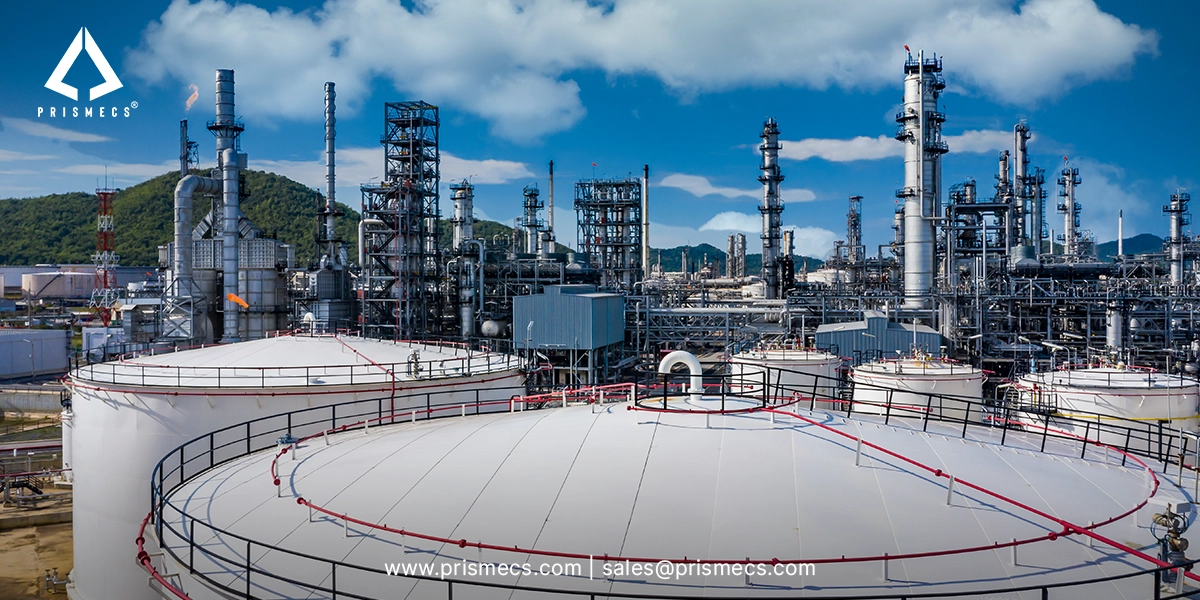
Petrochemical EPC projects fail on interfaces and compliance, not on engineering difficulty. The risks that decide outcomes are multi-unit integration, brownfield tie-ins into live plant, long-lead equipment, and the gaps between licensors, OEMs, and contractors.
This guide covers why these projects carry inherent risk, the process safety and hazardous area standards that govern them by designation, what full-scope EPC includes, how brownfield execution differs, the failure patterns that recur, and when to engage a partner.
It is written for petrochemical owners, project managers, and engineering leads evaluating delivery of new plants, expansions, and revamps.
What Petrochemical EPC Covers
Petrochemical EPC is a delivery model in which a single contractor holds responsibility for engineering, procurement, and construction of a process facility under one contract, transferring execution risk from the owner to that contractor.
The scope spans process units, utilities, offsites, storage, and export facilities. Offsites are the supporting systems outside the main process units, including tankage, flare, loading, and interconnecting pipe racks, and they are frequently underestimated in scope definition.
The reason EPC dominates petrochemical delivery is interface control. These projects involve licensors who own the process technology, OEMs supplying rotating and static equipment, construction contractors, and specialist vendors. Each interface is a potential gap in scope, responsibility, and data transfer.
For the comparison between EPC and EPCM delivery, including how risk and control shift between models, see our guide to EPC vs EPCM and which model fits your project.
Why These Projects Are High-Risk by Nature
Petrochemical EPC projects carry inherent risk before ground is broken, and the challenge does not come from size alone. It comes from the fact that many moving parts must work together without error.
Multi-unit process complexity
Most petrochemical plants operate as tightly integrated systems rather than standalone units. Process units, utilities, offsites, storage, and export facilities must function as a single system.
A misjudgment in heat balance, pressure control, or material flow in one unit can disrupt the entire plant. That interdependence is why a change in one unit's design has to be assessed across the whole facility rather than locally.
Strict safety and environmental regulation
Few industries operate under stricter safety and environmental rules. Petrochemical facilities must meet process safety requirements, emissions limits, hazardous area classifications, and environmental discharge standards.
EPC teams must design compliance into their work from the start. Fixing regulatory gaps late in the project costs time and money and often invites scrutiny.
Long procurement cycles
Critical equipment such as reactors, compressors, furnaces, and specialty valves often requires long lead times. Any delay in technical alignment or vendor coordination pushes the project schedule.
EPC teams must lock specifications early and actively manage suppliers throughout manufacturing and delivery.
Interface risk between vendors
Petrochemical projects involve licensors, OEMs, construction contractors, and specialist vendors. Each interface creates potential gaps in scope, responsibility, and data transfer.
Without strong EPC coordination, these gaps surface during construction or commissioning, when resolution becomes most expensive. This is why EPC works as a risk-transfer model: it centralizes accountability and forces coordination across every phase.
Process Safety Standards That Govern the Work
Petrochemical EPC compliance is anchored in process safety management, which is a legal requirement in the United States rather than a best practice. Designing to it from the outset is materially cheaper than retrofitting compliance.
OSHA's Process Safety Management standard, 29 CFR 1910.119, mandates identification of risks involved in the design, operation, and modification of processes handling highly hazardous chemicals. Its provisions cover process hazard analysis, mechanical integrity, management of change, and pre-startup safety review.
Process Hazard Analysis (PHA) is mandated by both OSHA and the EPA. In practice it is most often conducted as a HAZOP, a structured examination of a process design to identify deviations from intent and their consequences.
The EPA Risk Management Program under 40 CFR Part 68 runs parallel to OSHA PSM, covering the offsite consequences of accidental releases. Facilities handling threshold quantities of regulated substances must file an RMP and update it on a defined cycle.
Environmental discharge and emissions permits sit alongside these. Permitting timelines vary by jurisdiction, and the achievable limit can determine whether a process configuration is viable, which is why permitting should begin during front-end engineering rather than after it.
Hazardous Area Classification: What Applies and What Is Required
Hazardous area classification determines where electrical equipment can be installed and to what protection standard, and getting it wrong is one of the costliest late-stage discoveries in petrochemical construction.
The distinction between law and consensus standard
This distinction is frequently misunderstood and it matters commercially. According to an OSHA standard interpretation, OSHA does not provide, require, or enforce "area classification drawings" for petrochemical plants, and the illustrative drawings found in NFPA 497, API 500, and NEC Article 500 are not required by an OSHA standard.
What OSHA does require sits at 29 CFR 1910.307, covering hazardous classified locations, with definitions at 29 CFR 1910.399. Those requirements are similar in substance to the consensus standards but are the legally enforceable text.
The practical implication for a project is that the consensus standards are the engineering basis and the CFR is the compliance basis. A contract should name which standard the classification study will follow, because the standards differ in method.
Class and Division versus Zone
Two systems classify hazardous areas for electrical equipment. The Class and Division system is used predominantly in the United States. The Zone system, aligned with IEC and ATEX practice, is used internationally and increasingly in US projects with international scope.
Zone classification for gas and vapour areas is based on the frequency and duration of an explosive atmosphere. Indicative engineering guidance uses time bands of more than 1,000 hours per year for Zone 0, 10 to 1,000 hours per year for Zone 1, and less than 10 hours per year for Zone 2. These are guidance rather than automatic legal definitions, and classification should remain grounded in release likelihood, duration, ventilation, and the selected standard.
Which system applies is a project basis decision that should be settled before detailed design, since it determines equipment selection, certification, and cost.
Over-classification is not caution
Classifying an entire process unit as Zone 1 may look cautious, but it often hides weak engineering, increases equipment costs, and makes the drawing less useful. The fix is assessing each release source separately, applying the selected standard consistently, and documenting why each boundary exists.
Ignition risk also extends beyond electrical equipment to hot surfaces, static electricity, mechanical sparks, friction, vehicles, mobile equipment, and non-electrical rotating equipment. A classification study confined to electrical scope is incomplete.
Brownfield Execution: Where Classification Drifts
Brownfield petrochemical work carries a specific risk that greenfield does not: the plant as it exists today often differs from its original design package, so inherited documentation cannot be trusted as the basis for new work.
Why the drawings are wrong
Added skids, rerouted vents, temporary pumps, blocked louvres, new sample points, and unused but live connections can all change hazardous area classification. Each was probably a reasonable local decision, and collectively they mean the classification drawing no longer describes the plant.
A brownfield gap assessment is therefore the correct starting point for expansion work, checking field changes, blocked ventilation, undocumented drains, added skids, and temporary equipment against the documented classification.
The management of change link
Management of change (MOC) is the PSM element requiring that modifications to process chemistry, technology, equipment, or procedures are reviewed for safety impact before implementation. Where MOC has been applied inconsistently over a plant's life, the accumulated undocumented changes are precisely what a gap assessment finds.
Classification documentation should carry a revision history and an action register, linked to the equipment register, inspection plans, pre-startup safety review, MOC, and permit-to-work procedures. Without those links, a classification drawing becomes a static artifact rather than a live control.
Working around live operations
Brownfield work introduces real constraints: limited space, live operations, aging infrastructure, and limited shutdown windows. EPC execution must protect ongoing operations while delivering new capacity safely.
The scheduling consequence is that tie-in work concentrates into shutdown windows, which are fixed and expensive. Sequencing tie-ins against those windows during front-end engineering, rather than during construction, is what keeps a brownfield project on schedule.
What Full-Scope EPC Services Include
True EPC services go beyond managing construction activity. They combine technical leadership with commercial and execution control across the project.
Engineering and front-end planning
Strong execution starts long before construction. EPC teams support FEED development with a clear focus on constructability and operability.
FEED, front-end engineering design, is the phase that converts a selected concept into a defined technical and commercial basis for the EPC contract. Constructability means designing so the facility can actually be built efficiently in the field, and operability means designing so it can be run and maintained once built.
Engineers integrate process units, utilities, and offsites into a coordinated design that works on paper and in the field. They align layouts, materials, and systems with safety and environmental requirements early, not after issues appear. This front-end discipline controls change and protects schedules.
Procurement and vendor management
Procurement often decides whether a petrochemical project succeeds or struggles. EPC teams manage multiple OEMs under a unified procurement strategy, coordinating specifications, inspections, logistics, and documentation across suppliers.
By actively managing vendor performance, EPC teams reduce delays, quality issues, and interface conflicts. Without this control, owners face fragmented accountability and rising risk.
For the commercial terms that govern equipment purchase, including Incoterms, inspection rights, and delay remedies, see our guide to industrial equipment procurement contracts.
Construction, installation, and commissioning
Execution pressure peaks once construction begins. EPC teams control schedules through integrated planning and realistic sequencing, and enforce safety standards through method statements, permit systems, and site supervision.
A method statement is a documented description of how a specific task will be carried out safely, and a permit-to-work system controls who may perform hazardous work, where, and under what conditions.
Commissioning follows a documented step-by-step sequence rather than a rush to complete mechanical work. Pre-startup safety review (PSSR) is the PSM element confirming, before hazardous chemicals are introduced, that construction matches design, procedures are in place, training is complete, and PHA recommendations have been resolved.
Preparation rather than compression is what shortens startup and improves long-term plant performance.
Procurement and Long-Lead Equipment
Long-lead equipment determines the critical path on most petrochemical projects, so specification freeze and vendor management matter more than unit price.
The items that typically drive schedule are reactors, compressors, fired heaters and furnaces, large heat exchangers, specialty alloy valves, and electrical equipment including transformers and switchgear. Each requires technical alignment with the licensor's process basis before an order can be placed.
Two decisions protect the schedule. Releasing long-lead orders against preliminary ratings during FEED, rather than waiting for detailed design completion, compresses the critical path. Qualifying more than one manufacturer for critical items removes single-source exposure.
The failure mode is technical rather than commercial. Where licensor requirements, EPC specifications, and vendor standard offerings are not reconciled early, the resulting clarifications and revisions consume the float that made the early order worthwhile.
Standards Governing Design and Equipment
Beyond process safety, petrochemical facilities are designed to a defined set of equipment and piping codes, and naming them in the contract is how technical acceptance becomes enforceable.
Inspection codes govern the asset after handover rather than during construction, but they should inform design. For in-service inspection under API 510, API 570, and API 653, and how mechanical integrity connects to turnaround planning, see our guide to petrochemical plant reliability.
Market Context
The global petrochemicals market has grown steadily, and is projected to increase from $726.17 billion in 2025 to $912.39 billion in 2029, a compound annual growth rate of 5.9%.
Growth is supported by economic progress in emerging markets, rising demand from the packaging sector, and continued global population growth. Asia Pacific accounts for the largest regional share and is generally forecast to grow fastest, which is where much new capacity is being built.
For an owner, the relevance is capacity addition rather than commodity price. Sustained demand growth translates into new plant construction, brownfield expansions, and revamps, all of which are EPC-delivered.
Common Failure Points
Most petrochemical project failures follow familiar patterns, and they reflect execution weaknesses rather than unavoidable complexity.
- Poor front-end engineering triggers late design changes, when change is most expensive and most disruptive to procurement already in progress.
- Weak vendor coordination creates gaps in scope and conflicts in data between licensor, EPC, and OEM deliverables.
- Design changes during construction disrupt both procurement and field work, and cascade into commissioning.
- Inadequate commissioning planning delays startup, typically because commissioning was treated as a phase to begin after mechanical completion rather than planned from detailed engineering.
- Missing compliance documentation invites regulatory setbacks, since a PSM programme is assessed on records rather than intentions.
The cost asymmetry explains why front-end investment pays. A design change during FEED costs engineering hours. The same change during construction costs rework, equipment modification, and schedule, and during commissioning it costs all of that plus delayed production.
When to Engage an EPC Partner
Early EPC engagement improves outcomes because scope definition, procurement planning, and execution strategy are all set before the decisions that constrain them are made.
Owners typically benefit from EPC support during:
- New petrochemical plant developments
- Brownfield expansions and debottlenecking
- Capacity upgrades and revamps
- Compliance-driven retrofits
- Shutdown and turnaround projects
Debottlenecking means increasing plant throughput by removing the constraining step rather than adding a full new train, and it is a common brownfield driver.
Late engagement forces reactive decisions. A contractor joining after FEED inherits a design basis it did not shape, long-lead specifications it cannot revisit economically, and a schedule set without construction sequencing input.
Project size changes the emphasis rather than the approach. Smaller revamps concentrate risk in tie-ins and shutdown windows, while large greenfield builds concentrate it in interface management and long-lead procurement.
For criteria to evaluate and select a contractor, see our guide to choosing an EPC service provider.
How Prismecs Delivers Petrochemical EPC
Prismecs delivers full-scope EPC for petrochemical owners and developers, combining engineering, procurement, construction, and commissioning under single-point accountability.
The Prismecs scope for petrochemical projects:
- Front-end and detailed engineering, with constructability and operability assessed before design is fixed.
- Procurement and vendor management, including long-lead equipment sourcing, specification control, and inspection coordination.
- Construction and installation, executed under method statements and permit-to-work control, with sequencing built around shutdown windows on brownfield work.
- Commissioning and startup support, run as a documented sequence with operational readiness treated as a deliverable.
- Power and electrical infrastructure, covering the generation, distribution, and switchgear scope that petrochemical facilities depend on, detailed in our guide to industrial electrical infrastructure.
The differentiator is continuity from engineering through operation. Petrochemical projects lose most value at handoffs, and a partner that engineers, procures, builds, and then maintains the asset carries design intent across those boundaries rather than losing it at each one.
Frequently Asked Questions
What is petrochemical EPC?
Petrochemical EPC is a delivery model in which a single contractor holds responsibility for engineering, procurement, and construction of a process facility under one contract, transferring execution risk from the owner. Scope spans process units, utilities, offsites, storage, and export facilities. It dominates petrochemical delivery because it centralizes accountability across licensors, OEMs, and contractors, where interface gaps are the primary source of failure.
Why are petrochemical EPC projects considered high-risk?
Because petrochemical plants operate as tightly integrated systems rather than standalone units, so a misjudgment in heat balance, pressure control, or material flow in one unit can disrupt the entire plant. Risk is compounded by strict process safety and environmental regulation, long lead times on reactors and compressors, brownfield work around live operations, and interface gaps between licensors, OEMs, and specialist vendors.
Does OSHA require hazardous area classification drawings?
No. OSHA has stated that it does not provide, require, or enforce area classification drawings for petrochemical plants, and that the illustrative drawings in NFPA 497, API 500, and NEC Article 500 are not required by an OSHA standard. OSHA's enforceable requirements for electrical installation in hazardous classified locations sit at 29 CFR 1910.307, with definitions at 29 CFR 1910.399.
What is the difference between the Class/Division and Zone systems?
Both classify hazardous areas for electrical equipment. The Class and Division system is used predominantly in the United States, while the Zone system, aligned with IEC and ATEX practice, is used internationally. Zone classification is based on the frequency and duration of an explosive atmosphere, with indicative guidance of over 1,000 hours annually for Zone 0, 10 to 1,000 for Zone 1, and under 10 for Zone 2.
Why does hazardous area classification drift on brownfield sites?
Because the plant as it exists often differs from its original design package. Added skids, rerouted vents, temporary pumps, blocked louvres, new sample points, and unused but live connections all change classification. Where management of change has been applied inconsistently, these accumulated modifications mean the classification drawing no longer describes the plant, which is why a brownfield gap assessment should precede expansion work.
Which standards govern petrochemical plant design?
OSHA 29 CFR 1910.119 governs process safety management, and EPA 40 CFR Part 68 governs risk management for accidental releases. ASME B31.3 covers process piping, ASME BPVC Section VIII covers pressure vessels, and API 650 and API 620 cover atmospheric and low-pressure storage tanks respectively. Hazardous area classification follows 29 CFR 1910.307 with NEC Article 500, NFPA 497, or API 500 as the engineering basis.
Which equipment drives the schedule on a petrochemical project?
Reactors, compressors, fired heaters and furnaces, large heat exchangers, specialty alloy valves, and electrical equipment including transformers and switchgear typically drive the critical path. Each requires technical alignment with the licensor's process basis before ordering. Releasing long-lead orders against preliminary ratings during FEED, and qualifying more than one manufacturer for critical items, are the two decisions that protect schedule.
When should an owner engage an EPC partner?
As early as possible, ideally before or during FEED. Early engagement improves scope definition, procurement planning, and execution strategy, because those decisions constrain everything that follows. A contractor joining after FEED inherits a design basis it did not shape, long-lead specifications it cannot economically revisit, and a schedule set without construction sequencing input.
Why Execution Discipline Defines Petrochemical Outcomes
Petrochemical projects demand more than technical expertise. They require coordination, accountability, and execution discipline across licensors, vendors, contractors, and regulators.
EPC provides a delivery model that brings order to that complexity. For owners navigating high-stakes plant projects, EPC does not eliminate challenges; it manages them. And in petrochemicals, that difference defines success.
To discuss a petrochemical plant project, a brownfield expansion, or a compliance-driven retrofit, call +1 (888) 774-7632 or email sales@prismecs.com.
Tags: petrochemical EPC hazardous area classification OSHA PSM 1910.119 brownfield plant expansion process plant construction
recent posts
Power Utilities
16 minutes read
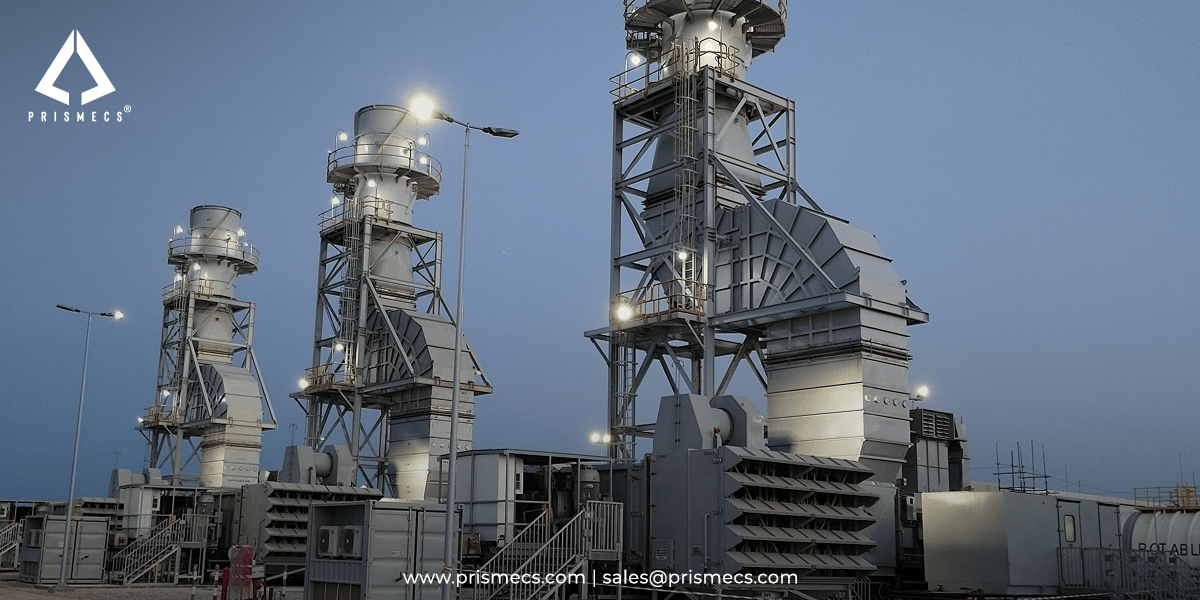
What Is a Mobile Gas Turbine Power Plant? TM2500-Class Units Explained
A mobile gas turbine power plant is a transportable power generation system designed to add electrical capacity faster than a conventional permanent p...
Power Utilities
20 minutes read
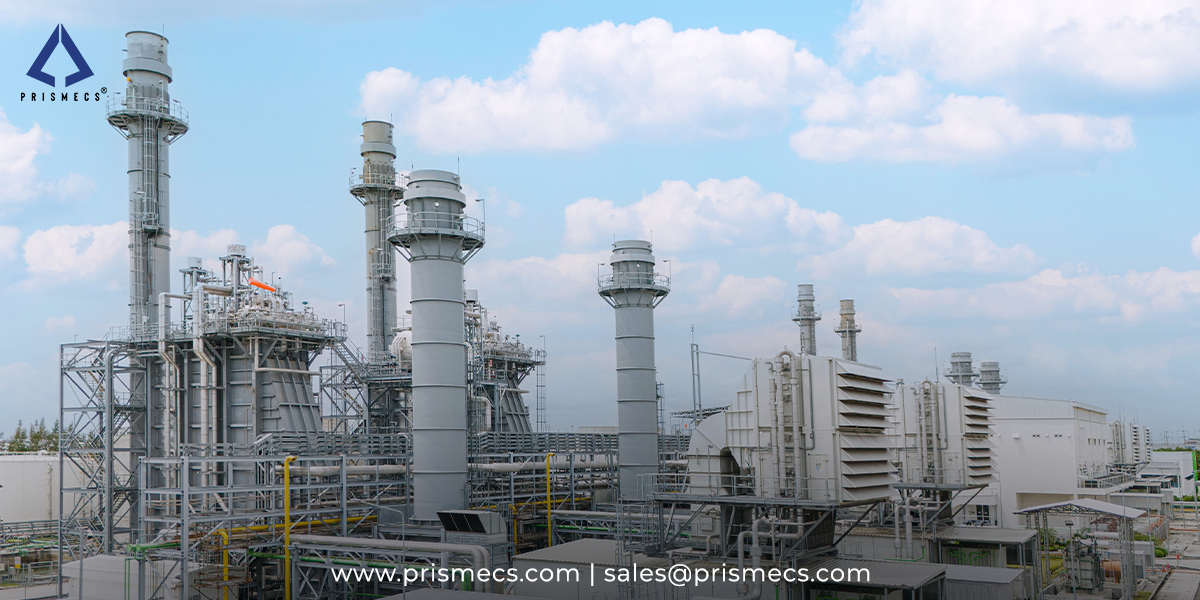
Fast-Track Power Plants Deployment: How to Reach Speed to Power in Under 12 Months
Fast-track power plant deployment can hit first power in weeks. See real TM2500 timelines from permitting to COD, proven in Oman and Taiwan. Plan your...

O&M Services
11 minutes read
Gas Turbine Outage Planning: Schedule, Scope Rules, and Checklist
Gas turbine outage planning starts 18 months out. Get the T-minus schedule, scope freeze rules, parts readiness gates and checklist. Talk to a Prismec...

O&M Services
15 minutes read
Predictive vs Preventive Maintenance: How to Choose Per Asset
Most plants apply predictive vs preventive maintenance facility wide and overspend. Match each asset by failure mode, criticality and P-F interval. Ta...