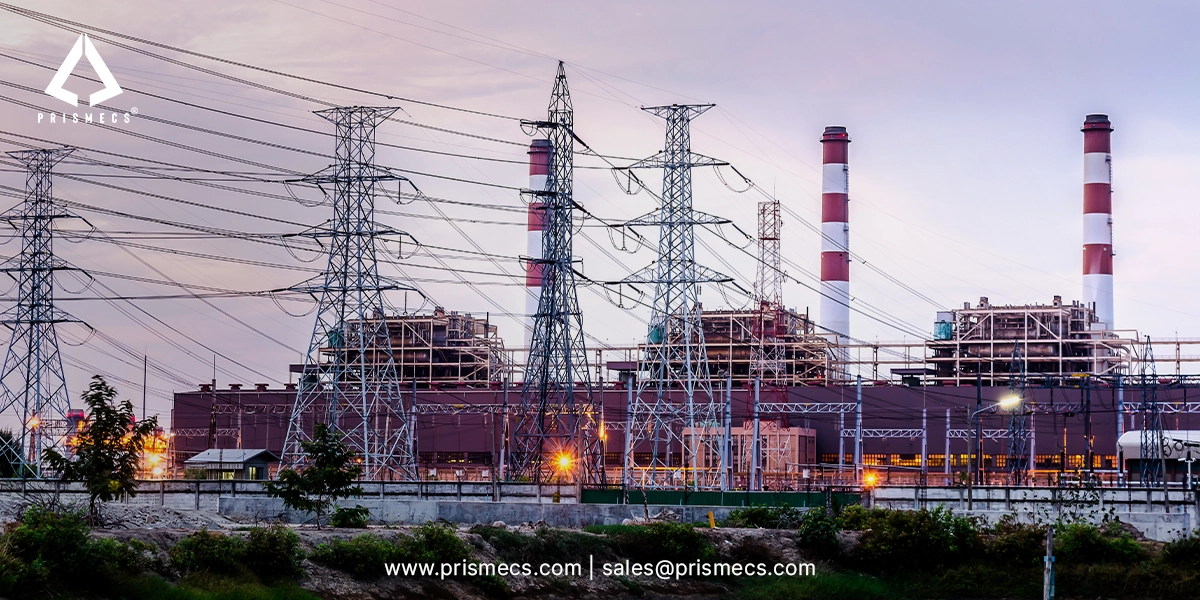
The consulting question that matters in 2026 is not which technology to build. It is what to do with the plant you already own.
New heavy-duty gas turbine slots are effectively gone through 2030, so replacement is not available inside a normal planning horizon. That makes life extension the default answer. It is also the answer most likely to reclassify your unit as a new source under 40 CFR 60.15, which can force emissions capital nobody budgeted.
This guide covers the five options, how remaining life is actually assessed, the fifty percent reconstruction test and the arithmetic behind it, what 40 CFR Part 60 Subpart KKKKa then requires, and how to evaluate an OEM upgrade proposal without taking the OEM's word for it.
The Decision You Actually Face
An owner of existing generating plant has five options, and power generation consulting for a brownfield asset means choosing between them with evidence rather than defaulting to whichever vendor called first.
Brownfield means an existing site with existing assets, permits and an existing grid connection. Greenfield means starting from nothing. The distinction matters because a brownfield project inherits constraints, and it inherits regulatory status that a capital project can accidentally change.
Doing nothing is a real option, and sometimes the right one
If the asset meets its duty, availability is holding and no regulatory driver is forcing a decision, deferral preserves optionality at zero capital. The risk is that deferral is usually unconscious rather than chosen. Put a date on the decision and a trigger against it, such as a defined availability threshold, a parts obsolescence notice or a permit renewal.
The cost of deferring badly
Deferral becomes expensive in three specific ways. Parts support ends and the residual value of the asset falls with it. A forced outage arrives before the planned one and the scope grows under time pressure. Or a regulatory change lands mid-project and reclassifies work you had already started.
Why This Became the Capital Decision
Replacement is not available on a normal schedule, which is why the brownfield decision now carries the weight it does.
GE Vernova reported combined gas power equipment backlog and slot reservation agreements of 116 GW at the end of Q2 2026, up from 100 GW a quarter earlier, with roughly 10 GW of production capacity remaining across 2029 and 2030 combined and reservations now being taken for 2031 delivery. Siemens Energy closed its fiscal third quarter on 30 June 2026 with a 69 GW gas turbine backlog and lead times of three years or more.
Only three manufacturers build utility-scale heavy-duty gas turbines and all three are capacity-constrained rather than demand-constrained. New turbines and large reciprocating engines carry 18 to 24 month manufacturing lead times even where slots exist.
Equipment pricing has moved with it. Gas Turbine World reported combined cycle plant prices rising roughly 2.5 percent for 2024 over 2023, then noted equipment prices rising by as much as 10 percent in 2025 as OEMs reached capacity output.
The practical consequence for an owner is simple. If a unit comes off line permanently, you cannot replace it inside the planning horizon, so the decision is not whether to invest in the existing asset but how much and in what form.
Remaining Life Assessment: What It Actually Tells You
A remaining life assessment establishes how much operating life is left in the components that cannot be routinely replaced, which for a frame gas turbine means the rotor and the casings rather than the hot gas path.
Hot gas path components such as combustion liners, transition pieces, nozzles and turbine airfoils are consumables on a defined interval. They are expected to be replaced. Life assessment focuses on the durable components that owners often assume will last indefinitely.
Rotors are the critical case. They operate under extreme thermal and mechanical stress, they are expensive, and lead times for replacement are long. Casings for industrial gas turbines are large cast carbon or low-alloy steel components, unique to a machine model and often to a serial number, with welded-on nozzles and flanges added during manufacture.
What an assessment can buy you
Published rotor life extension programmes typically yield one to three additional major inspection intervals, and up to roughly 3,300 to 4,900 additional factored fired starts depending on turbine type.
Factored fired starts are actual starts adjusted by a factor reflecting the severity of each start cycle. Fast starts and trips consume more life than slow, controlled starts, so two machines with identical start counts can have materially different remaining life.
Frame versus aeroderivative
Life extension is far less relevant for aeroderivative machines than for frame machines. Aeroderivative modular construction permits routine replacement of critical engine sections across the life of the unit, so the engine is progressively renewed rather than aged. Frame engines are repaired in place and their rotors and casings accumulate life continuously.
If your fleet is aeroderivative, the brownfield question is usually about duty, emissions and siting rather than about metallurgy.
What changes the answer
Cycling operations differ materially from baseload and require adjusted life assessment methods, because thermal cycling drives crack initiation and growth in a way steady running does not. If your unit was specified for baseload in 2005 and has been cycling since 2018, its remaining life is not what the original design assumed.
Environmental exposure matters too. Corrosive atmospheres, dust and moisture accelerate component deterioration, which is why coastal, desert and heavy industrial sites need site-specific assessment rather than fleet averages.
The obsolescence problem nobody plans for
Replacement casings for legacy machines may no longer exist, because the original fabricator has gone out of business and the casting patterns have been destroyed. Establish parts availability for the durable components before you commit to a life extension, not after a borescope finds a crack.
The data the assessment needs
IEEE Std 762, Definitions for Reporting Electric Generating Unit Reliability, Availability, and Productivity, is the standard that makes availability figures comparable. Where an owner cannot produce EFOR or EAF under a named definition, the first deliverable of any assessment is establishing that baseline.
The Reconstruction Test: When a Life Extension Creates a New Source
Under 40 CFR 60.15, reconstruction means replacing components of an existing facility such that the fixed capital cost of the new components exceeds 50 percent of the fixed capital cost that would be required to construct a comparable entirely new facility, and it is technologically and economically feasible to meet the applicable standards.
The consequence is stated directly in the regulation: 40 CFR 60.15(a) provides that an existing facility, upon reconstruction, becomes an affected facility irrespective of any change in emission rate.
That is the sentence that catches owners. You can spend capital on a life extension, emit not one pound more than before, and still find the unit reclassified as a new source subject to a standard written in 2026.
Modification is a separate and different trigger
Modification turns on emissions, not cost. Changes to an existing facility that do not result in an increase in emissions are not considered modifications. An uprate that increases output and therefore increases emissions can be a modification even where the cost is modest.
So there are two independent doors into the new standard. Cost opens the reconstruction door. Emissions increase opens the modification door. A project can walk through either.
How the arithmetic works
Fixed capital cost means the capital needed to provide all the depreciable components. The 1975 preamble to the reconstruction regulations defines it to include engineering, purchase and installation of major process equipment, contractor fees, instrumentation, auxiliary facilities, buildings and structures.
The denominator is a comparable entirely new facility, and for Subpart KKKK purposes the affected facility is each stationary combustion turbine, defined as all equipment including the turbine, the fuel, air, lubrication and exhaust gas systems, control systems other than emissions control equipment, the heat recovery system, and ancillary components.
EPA has rejected attempts to inflate that denominator. In one applicability determination the agency excluded monitoring equipment, warranties, startup commissioning and overtime from the fixed capital cost calculation, on the basis that those items sit outside the affected facility.
Worked example
A frame gas turbine with a comparable new facility cost of $40 million. A planned life extension replacing the rotor, compressor blading, combustion system and control system, with engineering and installation, prices at $23 million.
$23 million divided by $40 million is 57.5 percent. That exceeds the 50 percent threshold, so the work constitutes reconstruction, and the unit becomes an affected facility under the current NSPS subpart even though its emission rate has not changed.
Move the control system replacement to a separate later outage and the same scope might price at $18 million, which is 45 percent and below the threshold. The engineering work is identical. The regulatory outcome is not.
The notification you must not miss
40 CFR 60.15(d) requires an owner or operator proposing replacements whose fixed capital cost exceeds the 50 percent threshold to notify the Administrator, postmarked 60 days or as soon as practicable before construction of the replacements commences. The notice must include a description of the existing air pollution control equipment and the proposed air pollution control equipment.
That obligation lands before the outage, not after. Run the reconstruction analysis at scope definition, which is typically 12 to 18 months ahead of a major outage, not when the parts arrive.
What to do if the test comes out above 50 percent
Four workable responses, in rough order of preference. Rescope the work so the cost falls below the threshold, splitting scope across outages where that is technically sound. Accept reconstruction and budget the resulting emissions control. Reconsider replacement, if a slot can be secured. Or reconsider relocation or retirement, where the regulatory cost changes the comparison.
Whichever you choose, document the calculation. The threshold is arithmetic, and an auditable calculation is what defends the position later.
What Subpart KKKKa Costs If You Trigger It
The EPA finalized 40 CFR Part 60 Subpart KKKKa on 9 January 2026 and published it in the Federal Register on 15 January 2026, applying to stationary combustion turbines constructed, modified or reconstructed after 13 December 2024.
The final rule establishes subcategories by size, design efficiency and utilisation, and sets NOx standards of performance reflecting the best system of emissions reduction for each subcategory. The EPA retained in Subpart KKKKa the general size-based subcategories from Subpart KKKK.
The threshold that drives cost
The EPA determined that for large new combustion turbines above 850 MMBtu/hr base load rating operating at a twelve-calendar-month capacity factor greater than 45 percent, the best system of emissions reduction is combustion controls plus post-combustion selective catalytic reduction.
Selective catalytic reduction, or SCR, injects ammonia or urea into the exhaust across a catalyst to reduce NOx. It carries capital cost, adds exhaust backpressure that slightly reduces output, and introduces a reagent consumable and a catalyst replacement cycle into operating cost.
Capacity factor is therefore a design input with three simultaneous consequences on a brownfield project: it drives fuel economics, it consumes maintenance intervals, and it now determines emissions capital. A conversion or uprate that raises your capacity factor above 45 percent can trigger the SCR requirement on its own.
The subparts, by correct designation
New Source Review sits alongside, not instead
NSPS applicability is separate from New Source Review under the Clean Air Act. A major modification can trigger Prevention of Significant Deterioration review in attainment areas, requiring Best Available Control Technology, or Nonattainment NSR requiring the Lowest Achievable Emission Rate plus emission offsets.
The two frameworks use different tests and can produce different answers on the same project. Run both analyses at scope definition. An NSPS reconstruction finding does not by itself mean PSD applies, and a PSD finding does not depend on the 50 percent cost test.
Emissions and ESG reporting
A life extension or uprate changes your reported Scope 1 emissions in proportion to output and efficiency. Improving heat rate reduces CO2 per MWh proportionally: a unit moving from 10,000 to 7,000 Btu/kWh emits roughly 30 percent less CO2 per MWh on the same fuel. Confirm the accounting basis your reporting framework requires before claiming a reduction.
Life Extend, Uprate or Convert
These three options sit on a spectrum of capital and outage duration, and the right one depends on whether your constraint is condition, capacity or fuel cost.
Life extension
Life extension replaces life-limited components so the asset continues at its existing duty. Scope typically covers rotor inspection or replacement, compressor and turbine blading, combustion system components, and often controls if the existing platform is obsolete.
Choose it when the machine meets its duty, the assessment shows sound durable components, parts remain supported, and the reconstruction test comes back below 50 percent.
Uprate
An uprate increases output, efficiency or both through component upgrades, typically raising firing temperature, improving compressor aerodynamics or upgrading the hot gas path to a later design standard.
Choose it when demand has grown and the machine has thermal and mechanical headroom. Watch two things: an output increase can constitute a modification under NSPS if emissions rise, and a higher firing temperature consumes hot gas path life faster, which changes your maintenance interval economics.
Conversion
Conversion changes the plant's fundamental configuration, most commonly by adding a heat recovery steam generator and steam turbine to a simple cycle plant, or by changing fuel or duty.
Converting simple cycle to combined cycle lifts net efficiency from roughly 43 percent to as much as 64 percent. It is worth doing only if your capacity factor justifies it, because the bottoming cycle capital is recovered through fuel savings that only materialise at sustained running. It also roughly doubles construction time and adds water treatment, cooling and steam plant operation to your scope.
Controls modernisation as a standalone option
Replacing an obsolete control platform is frequently the highest-return, lowest-risk brownfield project available. It improves start reliability, enables better part-load operation, restores remote monitoring, and removes an obsolescence risk that can strand the whole asset. It also usually sits well below the reconstruction threshold on its own, which is precisely why sequencing it separately can matter.
Indicative capital reference points
For comparison against any brownfield option, Gas Turbine World benchmark pricing puts simple cycle equipment-only cost between roughly $1,150 per kW at 1 MW and $171 per kW for the largest high-efficiency units near 600 MW, with simple cycle gensets under 100 MW running from about $1,400 per kW for a 200 kW microturbine down to about $325 per kW for a 90 MW utility unit. Combined cycle plants including EPC installation scope run from roughly $1,579 per kW at 34 MW output down to about $670 per kW at 1,680 MW.
Dual fuel capability, where it is added as part of a brownfield scope, typically adds in the region of $150 to $250 per kW and buys protection against supply disruption and price volatility.
Any brownfield option that costs materially less than the relevant new-build figure and delivers the required duty is worth analysing. Any option approaching it should be tested against the reconstruction threshold immediately, because cost proximity to a new facility is precisely what the 50 percent test measures.
Outage duration and bridging
A major life extension outage on a frame machine typically runs weeks rather than days, and a combined cycle conversion runs many months. Where the outage exceeds what your operation can absorb, temporary capacity bridges it. See our guide to temporary and mobile power for deployment timelines and contract structures.
Pressure part repairs
Where the scope touches boilers, HRSGs or pressure piping, repairs and alterations to pressure-retaining items are governed by the National Board Inspection Code, NBIC NB-23, with construction under the ASME Boiler and Pressure Vessel Code and power piping under ASME B31.1. Establish which code edition your jurisdiction has adopted before the scope is fixed.
Relocate, Retire or Replace
Three options remove the asset from its current site, and each wins under different conditions.
Relocate
Relocation moves an asset to a site where it is worth more, and it is an engineering project rather than a haulage job. Scope covers decommissioning, preservation, heavy haul transport under oversize permits, reassembly, and recommissioning.
Relocation has a useful regulatory property. In an EPA applicability determination concerning a combustion turbine subject to Subpart KKKK that was moved to a new site, the agency concluded that relocation in and of itself does not trigger applicability. The work done alongside the relocation may still constitute reconstruction or modification, so the analysis still applies to the scope, but the move itself does not.
Choose relocation when you own a second site with a comparable need, when the asset is sound, and when transport is feasible for the machine class.
Prismecs has executed this, decommissioning LM6000 packages at Kvaerner and Houston in Norway, managing the heavy transport, and preparing reassembly and recommissioning at the receiving site, coordinating civil, mechanical, electrical and controls work to safety, environmental and schedule targets without incident.
Retire and recover value
Retirement makes sense when the duty has gone, when parts support has ended, or when the regulatory cost of continuing exceeds the asset's contribution.
Residual value decays with parts availability and with fleet population. A machine from a widely deployed family holds value far longer than an orphan. Where a decision is trending toward retirement, moving earlier usually recovers more. Prismecs supports asset recovery and resale through equipment marketing solutions.
Replace
Replacement is the cleanest answer and currently the least available. Confirm slot availability before it enters the comparison, because a replacement option that cannot be delivered before 2031 is not an option for a 2027 decision.
If replacement is genuinely available, the technology selection question is separate and substantial. See our guide to power generation systems compared for heat rate, capacity factor and configuration.
Adding storage instead
Where the constraint is peak capacity rather than energy, battery storage can defer a generation decision entirely by flattening the peak the existing plant must serve. It does not add energy, so it cannot substitute for sustained capacity, but it can change the sizing question. See our guide to battery energy storage systems.
Evaluating an OEM Upgrade Proposal Independently
Request the OEM's performance claims with the test code named, the life assumptions stated, and the reconstruction cost breakdown itemised, because all three determine whether the proposal is worth what it costs.
An OEM upgrade proposal is a sales document written by the party that also holds the technical data you would need to check it. That is not a criticism, it is the structure of the market, and it is the specific reason owner's engineering exists.
The six questions that expose a weak proposal
What test code proves the performance guarantee, and at what reference conditions? ASME PTC 22, Performance Test Code on Gas Turbines, covers gas turbine output and heat rate. ASME PTC 46, Performance Test Code on Overall Plant Performance, covers whole plant net output and heat rate. ASME PTC 4.4 covers gas turbine heat recovery steam generators. A guarantee without a named code is unenforceable.
What does the upgrade do to maintenance intervals? A higher firing temperature buys output and consumes hot gas path life. Ask for the revised maintenance factor, not just the performance gain.
What is the itemised fixed capital cost, and what is the comparable new facility cost? You need both to run the reconstruction test, and the OEM has the second figure.
What happens to the existing LTSA or warranty? An upgrade can reset, extend or void coverage. Establish this before award. For how service agreements handle scope changes, see our guide to choosing a power plant O&M provider.
What is the non-OEM alternative, and why is it unsuitable? Independent service providers and aftermarket component suppliers cover many upgrade scopes on mature platforms. A proposal that does not acknowledge alternatives has not been benchmarked.
What life data supports the remaining life claim, and will you release it? If the OEM will not release the underlying assessment, the guarantee is the only thing you are buying, so the guarantee terms become the whole negotiation.
Verifying afterwards
Write the post-upgrade performance test into the contract before award, with the ASME code named, the correction curves attached, the measurement uncertainty agreed, and the remedy for shortfall stated as a liquidated amount. A performance guarantee tested by a method agreed after the work is complete is a negotiation, not a guarantee.
What an Owner's Engineering Scope Should Contain
Owner's engineering is technical advisory work performed for the asset owner, independent of the contractor and the equipment supplier, and independence is the product rather than a feature of it.
Prismecs operates on both sides of this table on different projects, as an owner's engineer on some and as an EPCM or EPC organisation on others. On any single project it is one or the other, never both, because an advisor who also bids the resulting work cannot give the advice the role exists to provide. Ask any prospective advisor, including us, to state which role they are taking and to confirm in writing that they are not bidding the execution scope.
Deliverables to specify
Qualification criteria a bidder can fail
Require ISO 9001:2015 and ISO 45001:2018 with field service in scope. Require named individuals with CVs, not a company profile. Require unit-hours or project references on your specific equipment class within five years. Require a written conflict of interest declaration. Require that you own the study, the models and the underlying data in an exportable format, with no restriction on using them in a subsequent tender.
ISO 55001:2024, Asset management, Asset management systems, Requirements, is the relevant management system standard where the decision sits inside a wider asset management framework. ISO 14224 governs the collection and exchange of reliability and maintenance data, and API 616, Gas Turbines for the Petroleum, Chemical and Gas Industry Services, applies where turbines serve process duty.
How to avoid a conflicted advisor
Three tests. Does the advisor sell the equipment they may recommend? Do they bid the construction scope that follows from their study? Do they earn a percentage of project value rather than a fee for the work? Any yes is not disqualifying, but it must be disclosed and priced into how you read the recommendation.
Common Challenges and What Resolves Them
Brownfield projects fail in recognisable ways, and each has a response that has to be designed in rather than added later.
The Engagement: Stages, Durations and Deliverables
A brownfield options study runs 8 to 20 weeks from kickoff to recommendation, and the reconstruction and NSR analysis should sit in the first half, not the last.
Second-order consequences to raise early
Insurance underwriters price machinery breakdown on condition, maintenance regime and protection systems, so a documented life assessment can affect both premium and deductible. Engage your broker during the study, not after the outage.
Lenders and refinancing parties underwrite on documented remaining life and a credible maintenance plan. A complete, exportable condition and life assessment supports valuation in any technical due diligence, and a gap in it is priced as risk.
Capital expenditure on a life extension may change the depreciation basis and the remaining useful life recorded for the asset. Confirm the accounting treatment with your finance team before the capital request, because it affects the return calculation.
Staffing changes with the option chosen. A conversion adds steam plant operation and water treatment to a site that may never have run either, and that is a recruitment and training programme with a lead time of its own.
How the Decision Changes by Sector
The framework is constant. What changes is which constraint binds first.
Power utilities and IPPs
Dispatch economics and emissions compliance dominate, and the capacity factor threshold in Subpart KKKKa interacts directly with dispatch position. Weight the regulatory analysis heavily, because a unit that dispatches more after an uprate can cross 45 percent and trigger SCR.
Oil, gas and petrochemicals
Process continuity outranks generation economics, so availability and outage duration drive the decision more than heat rate. Hazardous area classification constrains what can be added and where. API 616 applies to turbines in process service.
Data centers
Load is growing and interconnection is the constraint, so brownfield capacity uprates on existing connections are disproportionately valuable. Weight speed and permitting certainty above lifetime efficiency.
Metals and mining
Remote siting, high ambient temperature, dust and altitude derate all accelerate component deterioration and reduce output against nameplate. Weight site-specific condition assessment above fleet averages, and weight parts logistics heavily.
Commercial and industrial
Smaller units, often below the NSPS size thresholds that drive the largest compliance costs, and frequently cogeneration duty. The decision usually turns on thermal load and on whether the existing permit can accommodate the change.
Assets below 25 MW
The regulatory analysis is lighter but not absent, and the fixed cost of a full options study is harder to justify. A focused condition assessment plus a reconstruction screen is usually the right scope rather than a full five-option comparison.
Outside the United States
The 40 CFR framework is US-specific. Equivalent triggers exist in most jurisdictions under different names, commonly tied to substantial refurbishment or capacity increase, and they are frequently found in the operating permit rather than in national regulation. Read the permit first.
What Prismecs Has Executed
Prismecs provides independent owner's engineering alongside EPCM, installation and commissioning, and multi-year O&M, which means brownfield recommendations are informed by operating the class of asset rather than only by modelling it.
Verified project scope includes four TM2500 units at Duqm, Oman totalling 110 MW with O&M teams, CMMS and parts support; eight TM2500 dual-fuel units at Birr, Switzerland totalling 260 MW, delivered as a fast-track reserve plant online in six months on a compact site with a new 220 kV interconnection and engineered noise controls; an LM2500XPRESS plant at Miaoli, Taiwan delivered in ten months; a TM2500 brought online under strict security and logistics constraints; three LM6000PC units installed and commissioned adding 150 MW of fast-start reserve; and an LM6000 fleet decommissioned in Norway, transported, then reassembled and recommissioned at a new site.
Prismecs also delivers owner's engineering on projects where independence from the contractor is the requirement, including installation oversight and on-time grid synchronisation, and supports asset recovery where retirement is the right answer.
Apply this article's criteria to any advisor, including us. Ask for the named individuals who will do the work, the conflict of interest declaration, the reconstruction calculation methodology, the ASME code that will govern performance verification, and references from plant managers rather than commercial contacts.
To request a brownfield options assessment, send your unit model and commissioning year, operating hours and starts, availability history, current duty and expected future capacity factor to sales@prismecs.com or call +1 (888) 774-7632. We return a condition data gap list, a reconstruction screen and an options shortlist.
Frequently Asked Questions
What is power generation consulting for an existing plant?
It is technical advisory work that helps an owner choose between five options for an asset they already have: life extend, uprate, convert, relocate, or retire and recover value. Unlike greenfield consulting, a brownfield engagement inherits existing permits, an existing grid connection and existing regulatory status, and the central risk is that capital work can unintentionally change that status.
What is reconstruction under 40 CFR 60.15?
Reconstruction means replacing components of an existing facility such that the fixed capital cost of the new components exceeds 50 percent of the fixed capital cost required to construct a comparable entirely new facility, and it is technologically and economically feasible to meet the applicable standards. Critically, 40 CFR 60.15(a) provides that an existing facility upon reconstruction becomes an affected facility irrespective of any change in emission rate.
Can a life extension make my turbine a new source even if emissions do not increase?
Yes. Reconstruction under 40 CFR 60.15 is a cost test, not an emissions test, and the regulation states explicitly that reconstruction creates an affected facility irrespective of any change in emission rate. A separate trigger, modification, does turn on emissions: changes that do not increase emissions are not modifications. A project can cross either threshold independently of the other.
What counts as fixed capital cost in the reconstruction calculation?
Fixed capital cost means the capital needed to provide all the depreciable components, including engineering, purchase and installation of major process equipment, contractor fees, instrumentation, auxiliary facilities, buildings and structures. EPA has excluded items sitting outside the affected facility, such as monitoring equipment, warranties, startup commissioning and overtime, from the comparable new facility figure in applicability determinations.
When must I notify the EPA about a reconstruction?
40 CFR 60.15(d) requires an owner or operator proposing component replacements whose fixed capital cost exceeds the 50 percent threshold to notify the Administrator, postmarked 60 days or as soon as practicable before construction of the replacements commences. The notice must describe the existing air pollution control equipment and the proposed air pollution control equipment. Run the analysis at scope definition, typically 12 to 18 months before a major outage.
What is Subpart KKKKa and when does it apply to an existing unit?
40 CFR Part 60 Subpart KKKKa is the EPA new source performance standard for stationary combustion turbines finalized on 9 January 2026 and published on 15 January 2026. It applies to turbines constructed, modified or reconstructed after 13 December 2024, which is how an existing unit enters it. It establishes subcategories by size, design efficiency and utilisation, and sets NOx standards reflecting the best system of emissions reduction.
When does Subpart KKKKa require SCR?
The EPA determined that for large combustion turbines above 850 MMBtu/hr base load rating operating at a twelve-calendar-month capacity factor greater than 45 percent, the best system of emissions reduction is combustion controls plus post-combustion selective catalytic reduction. Below that threshold, combustion controls alone remain the determination for most subcategories. A conversion or uprate that raises capacity factor past 45 percent can trigger the requirement on its own.
How much additional life does a rotor life assessment typically buy?
Published rotor life extension programmes typically yield one to three additional major inspection intervals and up to roughly 3,300 to 4,900 additional factored fired starts, depending on turbine type. Factored fired starts are actual starts adjusted for the severity of each cycle, so fast starts and trips consume more life than slow controlled starts. Two machines with identical start counts can have materially different remaining life.
Does life extension matter as much for aeroderivative turbines?
No. Aeroderivative machines have modular construction that permits routine replacement of critical engine sections across the life of the unit, so the engine is progressively renewed rather than aged. Frame engines are repaired in place and their rotors and casings accumulate life continuously, which is why life assessment focuses on frames. For aeroderivative fleets the brownfield question usually concerns duty, emissions and siting instead.
Is converting simple cycle to combined cycle worth it?
Only at sustained high capacity factor. Conversion lifts net efficiency from roughly 43 percent simple cycle to as much as 64 percent combined cycle, but the bottoming cycle capital is recovered through fuel savings that only materialise with running hours. It also roughly doubles construction time and adds water treatment, cooling and steam plant operations to your scope and staffing. Model it against your actual expected capacity factor.
Does relocating a turbine trigger new source requirements?
Relocation in and of itself does not trigger applicability, per an EPA applicability determination concerning a combustion turbine subject to Subpart KKKK that was moved to a new site. However, work performed alongside the relocation is still assessed on its own merits, so an overhaul or uprate carried out during the move can still constitute reconstruction or modification. Run the analysis on the scope, not the move.
How do I evaluate an OEM upgrade proposal independently?
Request six things: the test code governing the performance guarantee, the revised maintenance interval or maintenance factor after the upgrade, the itemised fixed capital cost and the comparable new facility cost, the effect on your existing LTSA or warranty, the non-OEM alternatives and why they were excluded, and the underlying life data supporting the remaining life claim. If the life data is withheld, the guarantee terms become the entire negotiation.
Which test codes prove performance after an upgrade?
ASME PTC 22, Performance Test Code on Gas Turbines, covers gas turbine output and heat rate. ASME PTC 46, Performance Test Code on Overall Plant Performance, covers whole plant net output and heat rate. ASME PTC 4.4 covers gas turbine heat recovery steam generators. Name the code, the reference conditions and the correction methodology in the contract before award, because a test method agreed afterwards is a negotiation rather than a guarantee.
How long does a brownfield options study take?
Typically 8 to 20 weeks from kickoff to recommendation. Data gathering and baseline takes 2 to 4 weeks, condition and remaining life assessment 4 to 8 weeks depending on outage access, regulatory applicability analysis 2 to 3 weeks in parallel, and options development and costing 3 to 5 weeks. The regulatory analysis should sit in the first half of the study, because it can change which options remain viable.
How do I avoid a conflicted advisor?
Ask three questions. Does the advisor sell equipment they may recommend? Do they intend to bid the execution scope that follows from their study? Are they paid a percentage of project value rather than a fee for the work? Any yes is not automatically disqualifying, but it must be disclosed in writing and priced into how you read the recommendation. Require a written conflict of interest declaration before award.
Tags: Power Generation Consulting Owner's Engineering Gas Turbine Life Extension NSPS Reconstruction Brownfield Asset Strategy
recent posts

O&M Services
15 minutes read
Writing a Power Plant O&M RFP That Gets Comparable Bids
Write a power plant O&M RFP every bidder must price the same way. Get the pricing template, data room checklist and weighted scorecard that expose eve...

EPCM Services
19 minutes read
25 Questions to Ask a Power Plant EPC Contractor Before You Sign
Most lists of questions to ask an EPC contractor stop at the question. Get why each matters, the strong answer, the red-flag reply and a weighted bid...
Gas Turbines
19 minutes read
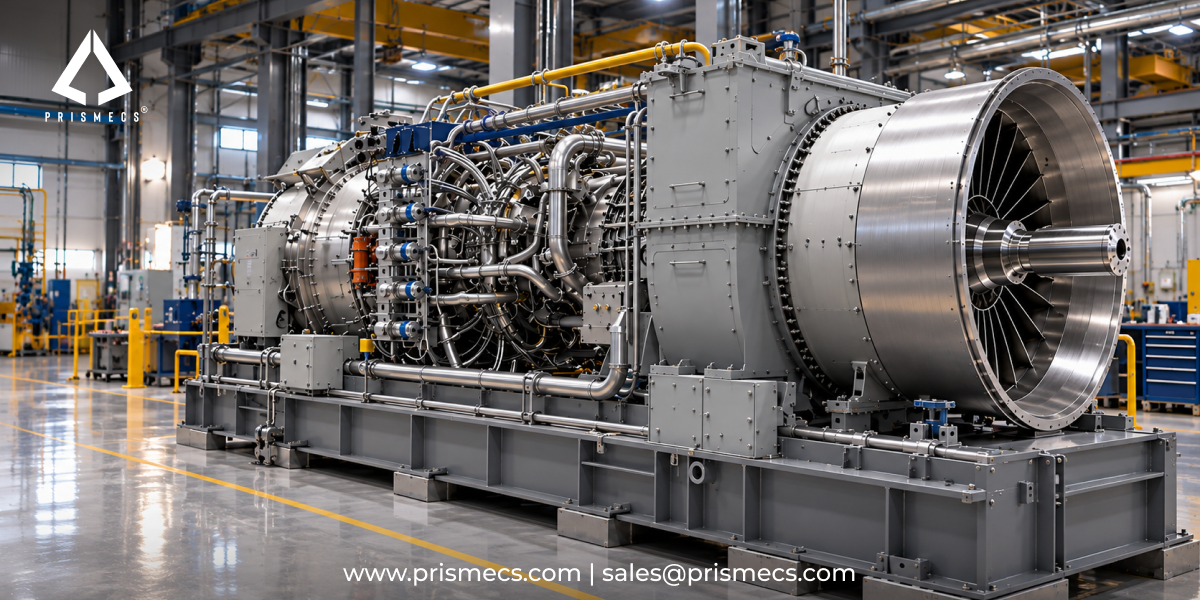
Dual-Fuel Gas Turbines: How Gas-and-Liquid Fuel Flexibility Works
A dual-fuel gas turbine switches from natural gas to diesel at load, but most failures start in idle oil lines. Get transfer steps and coking fixes be...
Power Utilities
18 minutes read
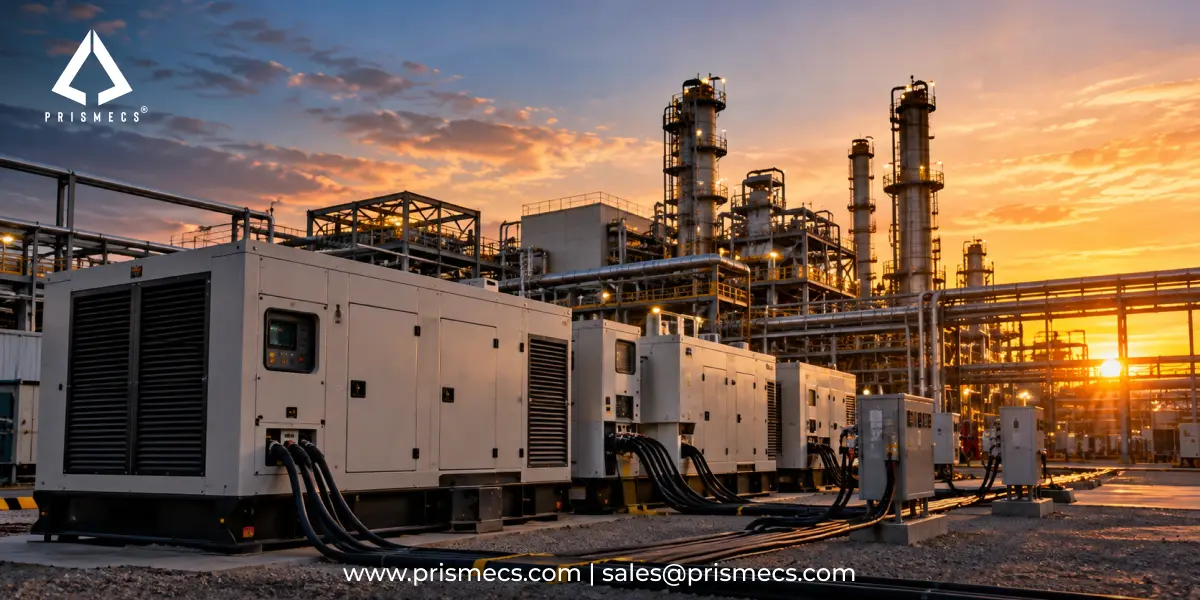
Temporary and Bridge Power for Industrial Facilities: When and How to Use It
Planning bridge power past 12 months? Under EPA rules your generators may be stationary from day one. Check Tier 4, NSPS KKKKa and SPCC triggers befor...