Power plant efficiency is measured as heat rate, the fuel energy in Btu required to produce one kilowatt-hour of electricity, and lower is better. It matters because heat rate converts directly into fuel cost and emissions, and because every operating plant degrades away from its design value in ways that are partly recoverable.
This guide covers what heat rate measures and how it converts to efficiency, why plants lose performance in service, how efficiency is verified under ASME performance test codes, what recovery is worth in fuel terms, and which interventions restore it.
It is written for plant managers, performance and reliability engineers, and utility and IPP operators responsible for fuel cost, output, and emissions compliance.
Prismecs supports power producers through engineering, equipment supply, and operations and maintenance across gas turbines, steam turbines, balance of plant, solar, and storage assets.
What Heat Rate Measures
Heat rate is the amount of fuel energy required to generate one kilowatt-hour of electricity, expressed in Btu/kWh, and it is the standard measure of thermal efficiency in power generation. A lower heat rate means less fuel burned for the same output.
The conversion between heat rate and efficiency
The relationship is fixed and simple. In theory 3,412 Btu of thermal energy equals one kilowatt-hour of electrical energy, so dividing 3,412 by the heat rate gives thermal efficiency as a fraction.
That single equation is why heat rate is the operative number rather than a percentage. It is measurable at the plant fence, it maps directly to fuel purchased, and it can be tracked continuously rather than estimated.
Benchmarks by plant type
Heat rate varies with design, operating conditions, and output level, so benchmarks are only meaningful within a technology class. According to POWER Magazine, existing coal-fired plants typically run between 9,000 and 11,000 Btu/kWh, with an industry average around 10,300 corresponding to roughly 33% overall efficiency.
Gas-fired combined cycle plants perform substantially better. Existing combined cycle units typically fall between 7,000 and 8,000 Btu/kWh, with an average near 7,400 corresponding to about 46% efficiency.
The comparison explains the dispatch order. A combined cycle plant converts nearly half its fuel energy to electricity while a typical coal unit converts about a third, which is why gas combined cycle carries much of the dispatchable load in most fleets.
Why Plant Efficiency Degrades
Every operating plant loses efficiency over time, and the practical distinction is between degradation that can be recovered through maintenance and degradation that requires component replacement. Knowing which is which determines whether an intervention is a wash or an overhaul.
Recoverable degradation
Recoverable losses come from deposits and fouling that can be cleaned away, and they typically account for the larger share of short-term performance loss.
- Compressor fouling from airborne contaminants reduces air mass flow and compressor efficiency, and is addressed through online and offline water washing.
- Heat exchanger and condenser fouling raises back pressure and reduces steam cycle output.
- HRSG tube fouling reduces heat recovery from turbine exhaust in combined cycle plants.
- Filter loading increases inlet pressure drop, which directly costs output.
Non-recoverable degradation
Non-recoverable losses come from physical wear to components and are restored only by repair or replacement, typically at a scheduled outage.
- Hot gas path deterioration including blade and nozzle erosion, oxidation, and coating loss.
- Seal and clearance wear, which increases leakage past stages and reduces stage efficiency.
- Blade surface roughening, which raises aerodynamic losses.
The operational implication is that performance monitoring must separate the two. A plant that responds to a heat rate drift with a compressor wash when the cause is hot gas path deterioration will see the number recover briefly and then fall back, having spent effort on the wrong problem.
Measuring Performance Under ASME Test Codes
Plant efficiency claims are substantiated through ASME performance test codes, which prescribe measurement methods, instrumentation, and correction procedures so results are repeatable and contractually defensible. Without a code basis, an efficiency figure is an assertion.
The division of scope matters when specifying a test. PTC 46 measures the plant as a whole in normal operating condition with equipment clean and fully functional, and it explicitly does not cover component testing, which falls to PTC 22 for gas turbines and PTC 6 for steam turbines.
Correction to reference conditions is what makes results comparable. Ambient temperature, humidity, and pressure all affect measured output and heat rate, so codes require correction curves that normalize a test result to defined conditions, which is how performance is tracked across seasons rather than confounded by them.
Incremental heat rate deserves separate attention in monitoring. It expresses the heat input required for a step change in net output, and it is what supports economical dispatch scheduling rather than simply describing average performance.
What Efficiency Recovery Is Worth
Heat rate improvement converts directly into fuel savings, and at utility scale even small improvements produce substantial annual value. This is why performance programs are justified on fuel cost rather than on emissions alone.
The magnitudes available are documented. According to EPA technical analysis, steam cycle improvements of 100 to 300 Btu/kWh, roughly 1 to 3 percent, are achievable, and proper O&M practices alone can reduce heat rate by approximately 30 to 70 Btu/kWh for a cost of around $30,000 annually.
The arithmetic scales quickly. A 500 MW combined cycle plant running at a 60% capacity factor generates roughly 2.6 billion kWh annually, so a 100 Btu/kWh improvement saves in the order of 260,000 MMBtu of fuel per year. At $4 per MMBtu that is approximately $1 million annually, from an improvement of little more than one percent. Actual values depend on capacity factor, fuel price, and dispatch profile.
The O&M finding is the most commercially significant. An intervention costing tens of thousands annually that delivers 30 to 70 Btu/kWh is among the highest-return actions available to a plant operator, and it requires discipline rather than capital.
Interventions That Recover Heat Rate
Heat rate recovery works through a sequence from operating practice through maintenance to capital upgrade, and the sequence matters because the cheapest interventions should be exhausted first.
Operating and maintenance practices come first: compressor washing on a condition-based schedule, air inlet filtration management, condenser cleanliness, steam cycle chemistry, and correcting cycle isolation losses such as passing valves that vent energy without producing output.
Controls and tuning follow: combustion tuning to hold emissions compliance without sacrificing efficiency, load allocation across multiple units, and inlet conditioning where ambient conditions permit output gains.
Component restoration addresses non-recoverable losses: hot gas path component replacement at scheduled inspection intervals, seal and clearance restoration, and blade repair or replacement where surface condition has degraded.
Capital upgrades come last: advanced component upgrades, HRSG modifications, and control system replacement, each justified against the recoverable margin the earlier steps have already captured.
Sequencing prevents wasted capital. A plant that installs an upgrade while carrying uncorrected cycle isolation losses or a fouled condenser will not realize the projected gain, because the upgrade is competing against losses that cost far less to eliminate.
Combined Cycle Conversion and Capacity Upgrades
Converting a simple cycle plant to combined cycle is the largest single efficiency gain available to a gas-fired asset, because it recovers exhaust energy that is otherwise vented. The same fuel input produces substantially more electricity.
The mechanism is heat recovery. Exhaust from the gas turbine passes through a heat recovery steam generator producing steam that drives a steam turbine, adding output without adding fuel. This is what moves a plant from simple cycle efficiency into the 46% range typical of existing combined cycle units.
Conversion is an engineering project with significant scope: HRSG installation, steam turbine and generator, condenser and cooling, water treatment, and electrical and control integration. It suits assets with sufficient remaining life and a dispatch profile that justifies the capital.
For plants where full conversion is not viable, output and efficiency gains are available through inlet air conditioning, turbine component upgrades, and control system modernization, each smaller in effect but far lower in capital cost.
Utility-Scale Solar and Storage Integration
At utility scale, solar efficiency is determined by system design, grid integration, and long-term operational performance rather than by panel selection alone. The generation asset is only as productive as the system delivering its output to the grid.
Integration is where losses accumulate or are avoided. Grid-tied inverter selection and configuration, collection system design, and advanced controls determine how much generated energy actually reaches the point of interconnection and how predictably it arrives.
Energy storage changes the value profile rather than the efficiency. Pairing storage with solar allows output to be shifted to higher-value periods and smoothed against variability, converting an intermittent resource into a more dispatchable one, which is what makes it useful to a portfolio carrying firm obligations.
Lifecycle maintenance sustains the result. Soiling, inverter faults, and tracker issues degrade output continuously, and monitoring paired with corrective maintenance is what keeps a solar asset near its design production over a multi-decade life.
How Prismecs Improves Plant Performance
Prismecs supports power producers through engineering, equipment supply, and operations and maintenance across thermal, solar, and storage assets, focused on recovering and sustaining measured performance. The work spans the interventions that restore heat rate and the outage execution that makes them possible.
The Prismecs capability set for power generation performance:
- Gas and steam turbine O&M: maintenance across mixed-vendor fleets, including inspection support and the outage execution that restores hot gas path condition.
- Combustion tuning: DLN tuning to hold emissions compliance while managing dynamics and combustion hardware stress.
- Hot gas path and component supply: OEM-agnostic sourcing of blades, nozzles, liners, and transition pieces through eINDUSTRIFY, staged to inspection windows.
- Capacity and conversion projects: EPC execution for combined cycle conversion, plant upgrades, and modernization.
- Solar and storage integration: engineering, installation, commissioning, and lifecycle maintenance for utility-scale renewable and hybrid assets.
The differentiator is closing the loop between finding and fixing. Performance testing firms measure and diagnose, and analytical programs quantify the opportunity, but neither sources the replacement hardware nor executes the outage. Prismecs supplies the parts and performs the work that converts a diagnosis into recovered heat rate.
Frequently Asked Questions
What is heat rate in a power plant?
Heat rate is the fuel energy required to generate one kilowatt-hour of electricity, expressed in Btu/kWh, and it is the standard measure of thermal efficiency. Lower is better. Since 3,412 Btu equals one kilowatt-hour in theory, dividing 3,412 by the heat rate gives thermal efficiency. It is measurable at the plant fence and maps directly to fuel purchased.
What is a good heat rate for a power plant?
Benchmarks depend on technology. Existing coal-fired plants typically run 9,000 to 11,000 Btu/kWh, with an industry average near 10,300 corresponding to roughly 33% efficiency. Existing gas-fired combined cycle plants typically run 7,000 to 8,000 Btu/kWh, with an average near 7,400 corresponding to about 46% efficiency. Comparison is only meaningful within a technology class.
What causes power plant efficiency to degrade?
Degradation divides into recoverable and non-recoverable losses. Recoverable losses come from compressor fouling, condenser and HRSG fouling, and filter loading, all addressable through cleaning and maintenance. Non-recoverable losses come from hot gas path deterioration, seal and clearance wear, and blade surface roughening, which require repair or replacement. Diagnosing which is present determines whether a wash or an overhaul is needed.
Which standards govern power plant performance testing?
ASME PTC 46 covers overall plant performance for combined cycle and most Rankine cycle plants, measuring the plant as a whole in normal operating condition. Component testing falls to ASME PTC 22 for gas turbines and ASME PTC 6 for steam turbines. ASME PTC-PM provides performance monitoring guidelines including incremental heat rate, and IEEE 762 defines reliability and availability reporting terms.
How much is a heat rate improvement worth?
Improvements convert directly to fuel savings. EPA analysis indicates steam cycle improvements of 100 to 300 Btu/kWh are achievable, with proper O&M practices alone delivering 30 to 70 Btu/kWh for around $30,000 annually. For a 500 MW combined cycle plant at 60% capacity factor, a 100 Btu/kWh improvement saves roughly 260,000 MMBtu of fuel per year, worth approximately $1 million at $4 per MMBtu.
Is converting to combined cycle worth it?
Combined cycle conversion is the largest single efficiency gain available to a gas-fired asset, recovering exhaust energy through a heat recovery steam generator and steam turbine to produce more output from the same fuel. It moves plants toward the 46% efficiency typical of existing combined cycle units. It requires significant capital and suits assets with sufficient remaining life and a supporting dispatch profile.
Why Plant Efficiency Is a Measured Discipline
Power plant efficiency is a measured quantity governed by test codes, not a general aspiration, and it degrades continuously in ways that are partly recoverable through disciplined maintenance. The benchmarks are published, the measurement methods are standardized, and the value of a recovered heat rate point is calculable from fuel price and capacity factor.
Operators pursuing efficiency need a partner who can diagnose where performance is being lost, supply the components that restore it, and execute the outage work that installs them. That is the Prismecs model: engineering, parts, and O&M carried together.
To assess plant performance, plan an efficiency recovery program, or evaluate a capacity upgrade, call +1 (888) 774-7632 or email sales@prismecs.com.
Tags: power plant heat rate thermal efficiency Btu/kWh ASME PTC 46 combined cycle efficiency plant performance degradation
recent posts
Power Utilities
18 minutes read
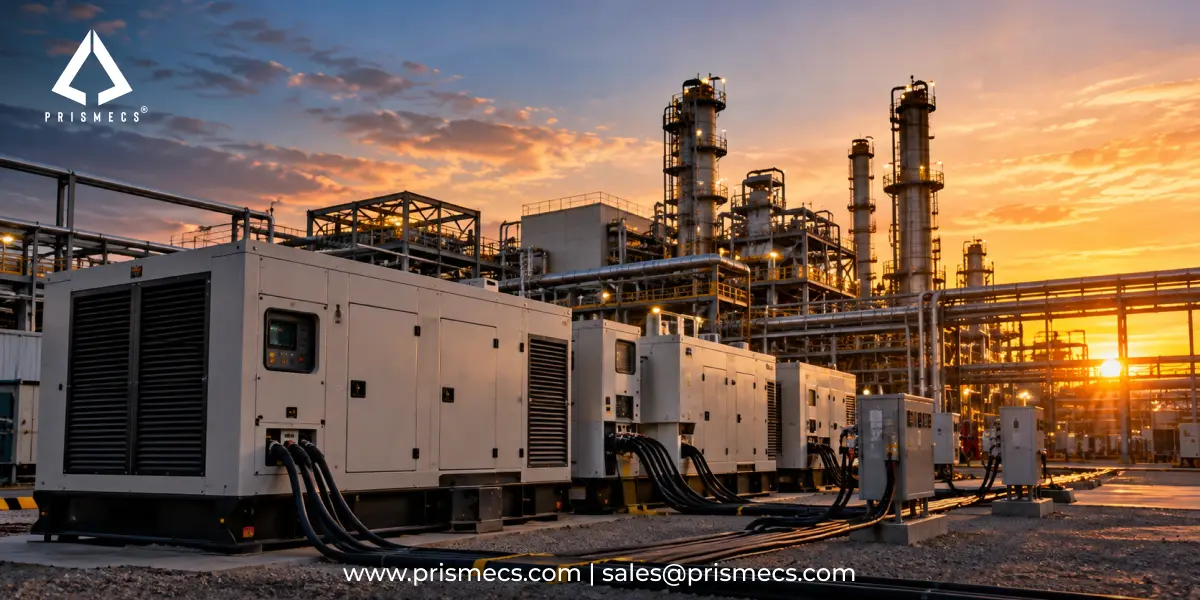
Temporary and Bridge Power for Industrial Facilities: When and How to Use It
Planning bridge power past 12 months? Under EPA rules your generators may be stationary from day one. Check Tier 4, NSPS KKKKa and SPCC triggers befor...
Power Utilities
16 minutes read
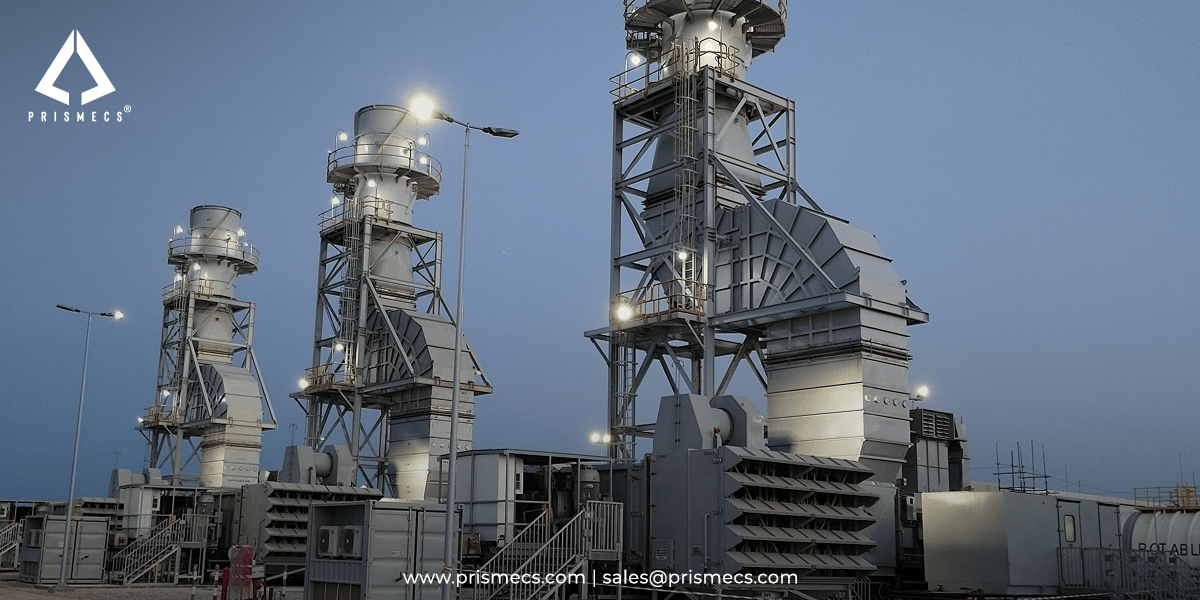
What Is a Mobile Gas Turbine Power Plant? TM2500-Class Units Explained
A mobile gas turbine power plant is a transportable power generation system designed to add electrical capacity faster than a conventional permanent p...
Power Utilities
20 minutes read
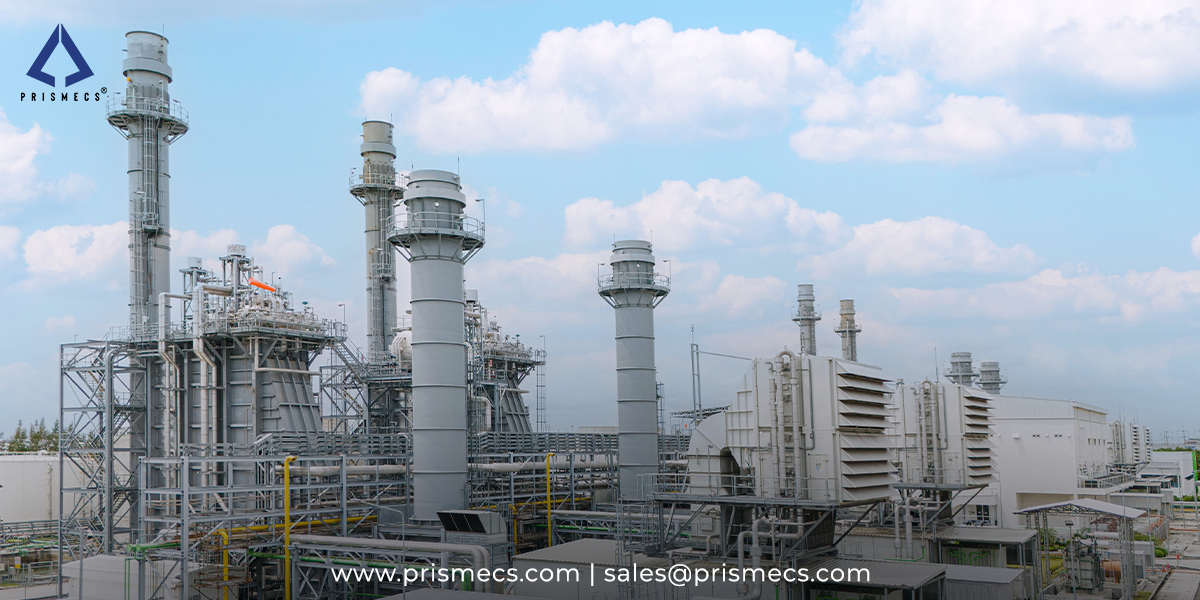
Fast-Track Power Plants Deployment: How to Reach Speed to Power in Under 12 Months
Fast-track power plant deployment can hit first power in weeks. See real TM2500 timelines from permitting to COD, proven in Oman and Taiwan. Plan your...

O&M Services
11 minutes read
Gas Turbine Outage Planning: Schedule, Scope Rules, and Checklist
Gas turbine outage planning starts 18 months out. Get the T-minus schedule, scope freeze rules, parts readiness gates and checklist. Talk to a Prismec...