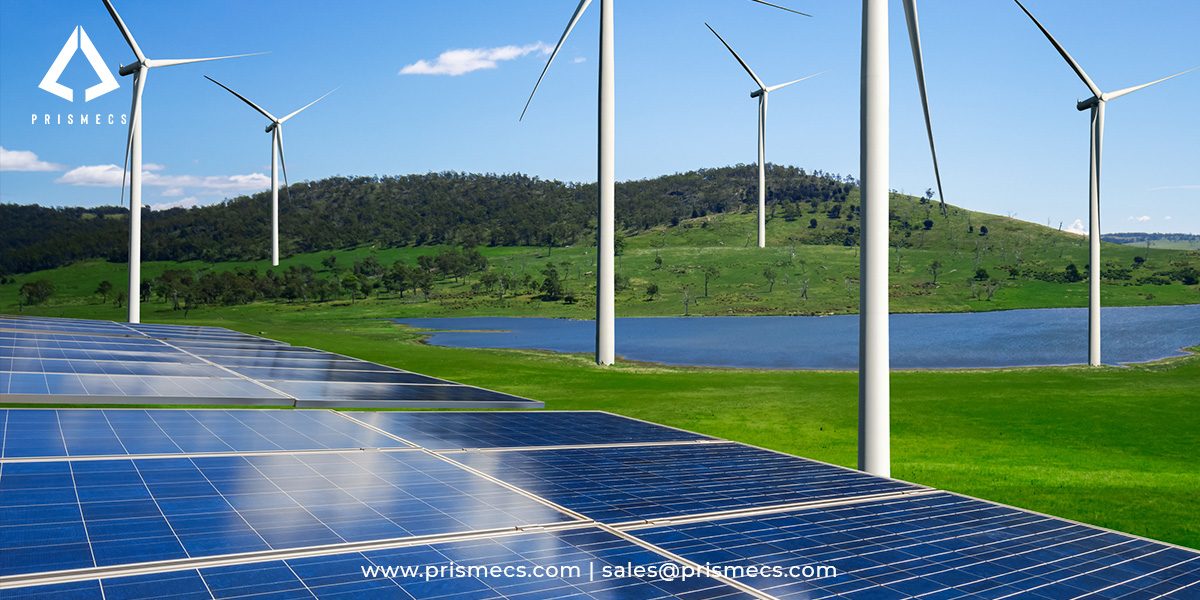
Lower-emission power generation is the engineered approach to cutting the carbon and pollutant output of on-site power using cleaner fuels, fuel-flexible generators, and hybrid systems, without sacrificing reliability. It matters because most industrial operations cannot remove their gensets; they need those same assets to run cleaner and stay compliant.
This guide covers how to reduce generator emissions on an existing fleet, how diesel, natural gas, dual-fuel, and renewable diesel compare, the standards that govern the equipment, the economics of each path, and how a turnkey partner engineers and maintains lower-emission power. It is written for plant managers, facilities and reliability engineers, and procurement leaders who own both uptime and sustainability targets.
Prismecs builds and maintains the power systems that run on cleaner fuel. Prismecs does not produce or refine fuel; it engineers, supplies, and services the generation and hybrid assets that let operators lower emissions while protecting reliability.
What Fuel-Flexible Power Generation Means
Fuel-flexible power generation is the use of generators and system designs that can run on more than one fuel, or on cleaner drop-in fuels, so operators can cut emissions without replacing equipment. The three practical levers are switching fuel, switching generator type, and adding storage to reduce runtime.
The appeal is that it protects existing investment. A diesel fleet can often run cleaner immediately by switching to renewable diesel, a dual-fuel engine can displace diesel with natural gas, and a microgrid with battery storage can cut how many hours any generator runs at all. None requires abandoning the reliable asset base an operation already depends on.
This is an engineering decision, not a fuel-purchase decision. The right path depends on load profile, fuel availability, emissions regulation, and runtime hours at each site. Matching the solution to those variables is what separates a real emissions reduction from a marketing claim.
How to Lower Emissions on an Existing Generator Fleet
The fastest way to lower emissions on an existing generator fleet is to switch from fossil diesel to renewable diesel (HVO), which most modern diesel engines accept as a drop-in fuel with no modification. This delivers a large lifecycle-carbon reduction without new hardware or downtime.
The practical levers, in order of deployment speed:
- Drop-in renewable diesel (HVO): replaces fossil diesel in existing engines, cutting net lifecycle CO2 by up to 90% with no equipment change.
- Dual-fuel conversion: a compression-ignition engine runs mostly on natural gas with a diesel pilot, reducing fuel cost and emissions while keeping diesel load response.
- Natural gas gensets: lower combustion emissions than older diesel, well suited to steady baseload where a gas supply exists.
- Hybrid microgrid with BESS: battery storage carries base load and starts the generator only when needed, cutting runtime hours and fuel burn.
- Tier 4 hardware upgrade: replacing older Tier 2 diesel with EPA Tier 4 Final sets dramatically reduces NOx and particulate matter.
The highest-leverage move depends on the site. HVO is fastest where fuel is available, dual-fuel and gas win on steady sites near a pipeline, and hybrid storage delivers the biggest cut where generators currently idle at low load. An engineered assessment, not a single default, decides which.
Renewable Diesel (HVO) as a Drop-In Fuel
Renewable diesel, also called HVO (hydrotreated vegetable oil), is a drop-in replacement for fossil diesel that can cut net lifecycle CO2 emissions by up to 90% with no engine modification. It is produced by hydrotreating waste oils and fats, and it meets the same performance grade as conventional diesel.
The carbon reduction is substantial and measurable. Fossil diesel produces roughly 0.75 kg of CO2 per kWh of electricity generated, while an HVO-powered generator emits about 0.08 kg per kWh, according to power-engineering analysis. Because HVO is chemically similar to petroleum diesel, transient response and reliability are effectively unchanged.
The trade-off is cost and supply. HVO typically costs more than fossil diesel today, and availability varies by region, though prices are expected to fall as production scales. For operators facing emissions targets without a capital budget for new equipment, it remains the fastest lever available.
Diesel vs Natural Gas vs Dual-Fuel: A Comparison
The choice between diesel, natural gas, and dual-fuel generation is a trade-off between load response, emissions, and fuel logistics, and the right answer depends on the site's load profile. There is no single winner; each fits a different operating pattern.
Load response is the deciding technical factor. Diesel engines recover faster under sudden load, which is why they dominate applications with abrupt demand spikes, while natural gas runs efficiently in steady state. Dual-fuel engines exist precisely to capture gas economics while retaining diesel's response for critical loads.
Cutting Runtime With Hybrid Microgrids and Storage
The most effective way to reduce generator emissions is often to run the generator less, using a hybrid microgrid where battery energy storage (BESS) carries base load and the generator starts only when required. This cuts fuel burn, emissions, and engine wear at the same time.
The reductions are significant in real deployments. Field examples show a natural gas generator paired with solar and intelligent controls cutting generator runtime by around 60%, and a generator paired with storage cutting fuel use by roughly 40%. Fewer runtime hours means proportionally lower emissions and less maintenance.
The design principle is that the generator becomes a backstop, not the constant source. Storage and renewables handle predictable load, controls trigger the generator only for peaks or gaps, and the whole system is engineered to a site's specific load curve. That integration is where the emissions and cost savings actually come from.
Standards Governing Generator Emissions and Fuel
Generator emissions and fuel quality are governed by EPA engine-emissions rules and recognized fuel specifications, not by general sustainability guidelines. Citing the correct designations is how operators and suppliers confirm that a lower-emission solution is genuinely compliant.
The standards that apply to lower-emission power generation:
Fuel-carbon programs are customer compliance context, not equipment standards. Regulations such as the California Low Carbon Fuel Standard, administered by CARB, and the federal Renewable Fuel Standard set carbon-intensity targets that fuel buyers navigate. Operators meet those obligations partly through the cleaner-running power systems that an engineering partner designs and maintains.
Why Lower-Emission Power Is an Engineering and O&M Decision
Lower-emission power generation succeeds or fails on engineering and maintenance, not on the fuel label, because the reduction only materializes when the system is sized, integrated, and serviced correctly. A cleaner fuel in a poorly maintained or wrongly sized fleet delivers far less than its potential.
The advantage of a turnkey approach is integration across the levers. Selecting the fuel, choosing or converting the generator, adding storage to cut runtime, ensuring emissions compliance, and maintaining it all are usually separate purchases. When they sit with different vendors, the gaps between them are where emissions targets and reliability both slip.
This is the gap the equipment-only market leaves open. Genset sellers quote a unit and a fuel type, but they do not engineer the hybrid system, own the emissions compliance, or maintain the fleet for the life of the site. Real, sustained emissions reduction is an outcome of execution, not a spec sheet.
How Prismecs Delivers Lower-Emission Power
Prismecs delivers lower-emission power as a turnkey, OEM-agnostic partner across engineering, equipment supply, and lifecycle operations and maintenance, so operators cut emissions while protecting uptime. Prismecs builds and maintains the generation and hybrid systems; it does not produce or refine the fuel, which keeps the focus on the power assets an operator actually runs.
The Prismecs capability set for cleaner power:
- Fuel-flexible generation: diesel, natural gas, and dual-fuel gensets sized to the site load, including HVO-capable diesel for drop-in emissions cuts.
- Hybrid and distributed energy: microgrid and battery storage integration that reduces generator runtime hours and fuel burn.
- Emissions-compliant engineering: systems designed to EPA Tier 4 and NSPS Subpart JJJJ so the solution is compliant, not just cleaner on paper.
- OEM-agnostic O&M: operations and maintenance across mixed-fleet power equipment that keeps efficiency and emissions performance sustained.
- Procurement and supply chain support: sourcing and delivery of generators, storage, and balance-of-plant through eIndustrify.
The differentiator is that Prismecs carries the whole decision, from fuel and equipment selection through hybrid integration, emissions compliance, and long-term O&M. That is what turns a cleaner-fuel intention into a measured, sustained emissions reduction, and it is precisely the layer that equipment sellers do not provide.
Frequently Asked Questions
Can a diesel generator run on renewable diesel?
Yes. Renewable diesel, or HVO (hydrotreated vegetable oil), is a drop-in replacement that most modern diesel engines accept with no modification. It can cut net lifecycle CO2 emissions by up to 90% versus fossil diesel, because fossil diesel emits roughly 0.75 kg CO2 per kWh while HVO emits about 0.08 kg per kWh, with effectively unchanged reliability and load response.
Which is cleaner, a diesel or natural gas generator?
Natural gas generators produce lower combustion emissions than older diesel units, emitting on average about 30% less NOx, CO2, and SOx and far less particulate matter. However, modern EPA Tier 4 Final diesel sharply cuts NOx and PM, and running renewable diesel (HVO) in that diesel can lower lifecycle CO2 up to 90%, narrowing the gap considerably.
What is a dual-fuel generator?
A dual-fuel generator is a compression-ignition engine that runs primarily on natural gas while injecting a small diesel pilot for ignition. It is designed to displace most diesel with cheaper, cleaner gas while retaining diesel's fast load response. Dual-fuel engines reduce both fuel cost and emissions compared with conventional diesel-only operation.
How can I reduce my generator fleet's emissions without buying new equipment?
The fastest route is switching existing diesel engines to drop-in renewable diesel (HVO), which needs no modification and cuts lifecycle CO2 up to 90%. Adding battery storage to create a hybrid microgrid reduces runtime hours and fuel burn, in some deployments by 40% to 60%. Both lower emissions while preserving the current asset base.
What emissions standards apply to industrial generators?
Non-road diesel generators must meet EPA Tier 4 Final limits under 40 CFR Part 1039. Stationary natural gas engines fall under EPA NSPS 40 CFR Part 60 Subpart JJJJ, and reciprocating engines under NESHAP Subpart ZZZZ. Renewable diesel fuel is specified under EN 15940, while conventional diesel and biodiesel follow ASTM D975 and ASTM D6751.
Does Prismecs supply renewable fuel?
No. Prismecs builds and maintains the power systems that run on cleaner fuel; it does not produce, refine, or distribute fuel. Prismecs engineers and services fuel-flexible generators, HVO-capable diesel sets, dual-fuel systems, and hybrid microgrids, and helps operators select and integrate the right lower-emission solution for their load and compliance needs.
Why Cleaner Power Is a Partner Decision
Lower-emission power generation is ultimately an execution decision, not a fuel label, because the reduction is produced by correct sizing, integration, compliance, and maintenance working together. The fuels and technologies exist, the standards are established, and the savings are real when the system is engineered to the site.
Operators weighing how to cut emissions without risking uptime need a partner who can select the fuel and equipment, integrate storage, ensure compliance, and maintain it for the life of the asset. That is the Prismecs model: turnkey, OEM-agnostic, and built around reliability and emissions performance together.
To discuss a lower-emission or fuel-flexible power solution for your operation, call +1 (888) 774-7632 or email sales@prismecs.com.
Tags: lower-emission power generation renewable diesel HVO generators dual-fuel genset solutions hybrid microgrid power Tier 4 emissions compliant generators
recent posts

O&M Services
15 minutes read
Writing a Power Plant O&M RFP That Gets Comparable Bids
Write a power plant O&M RFP every bidder must price the same way. Get the pricing template, data room checklist and weighted scorecard that expose eve...

EPCM Services
19 minutes read
25 Questions to Ask a Power Plant EPC Contractor Before You Sign
Most lists of questions to ask an EPC contractor stop at the question. Get why each matters, the strong answer, the red-flag reply and a weighted bid...
Gas Turbines
19 minutes read
Dual-Fuel Gas Turbines: How Gas-and-Liquid Fuel Flexibility Works
A dual-fuel gas turbine switches from natural gas to diesel at load, but most failures start in idle oil lines. Get transfer steps and coking fixes be...
Power Utilities
18 minutes read
Temporary and Bridge Power for Industrial Facilities: When and How to Use It
Planning bridge power past 12 months? Under EPA rules your generators may be stationary from day one. Check Tier 4, NSPS KKKKa and SPCC triggers befor...