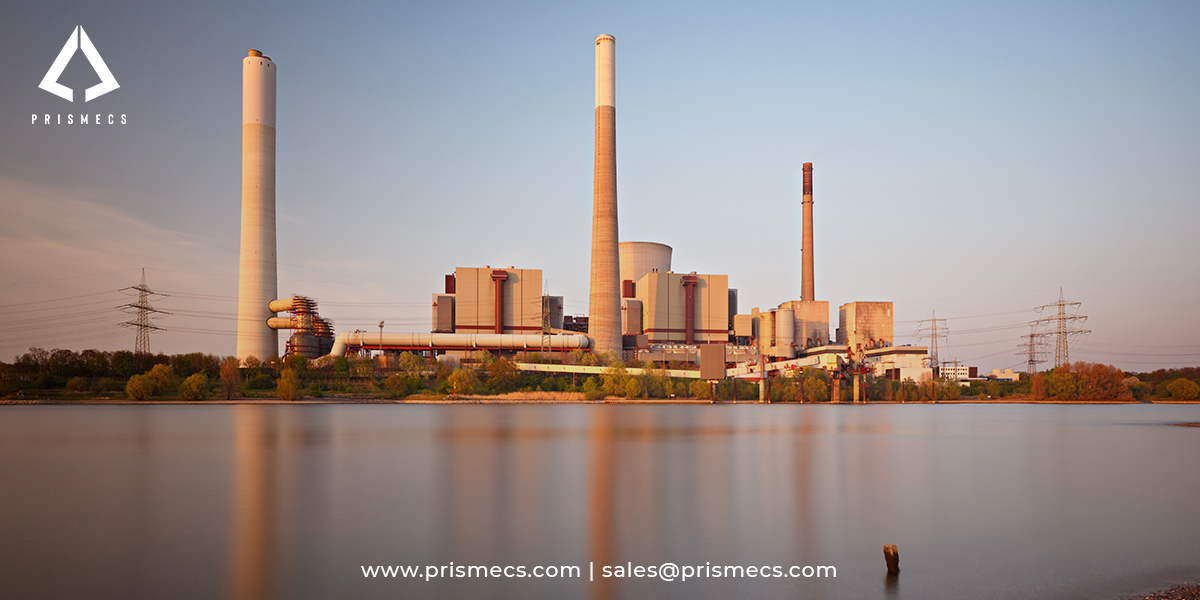
Generation technology is chosen on six axes, and most comparisons publish two of them.
Capacity range rules options out before anything else. Efficiency sets your fuel bill for thirty years. Start time separates peaking duty from base load. Capacity factor decides whether the capital is ever recovered. Capital cost per kW varies by a factor of nine across the field. And right now, lead time decides more projects than any of the other five.
The single most useful fact in this category: below roughly 50 MW a modern reciprocating engine beats a simple-cycle gas turbine on efficiency, and above 80 MW the turbine wins on both efficiency and cost per megawatt-hour. The band between them is genuinely contested.
This guide puts all six axes in one table, then explains what each technology is actually good at.
The Selection Matrix
Nine technologies compete for industrial and utility generation duty, and this table compares them on the axes that decide the choice.
Capital cost and heat rate figures are overnight capital cost from the US Energy Information Administration capital cost study. Overnight cost excludes interest during construction, financing fees and owner's costs.
Nuclear and large hydroelectric are excluded from this comparison. Both are real and significant technologies, and both sit outside the scope of industrial and commercial generation selection that this guide addresses.
What the global mix looks like
In 2025, fossil fuels supplied roughly 55 percent of global electricity, renewables reached about 34 percent and overtook coal for the first time in over a century, and nuclear supplied around 9 percent. That mix is shifting, and it does not change what a specific site should install.
How to Read the Matrix
Six terms carry the comparison, and mixing their definitions is the most common way an equipment evaluation goes wrong.
Heat rate is the fuel energy required per unit of electrical output, in Btu/kWh. Lower is better. It is the number that converts fuel price into cost per MWh, and it is what engineers use.
Thermal efficiency is the same information expressed as a percentage. At 100 percent efficiency a plant would consume 3,412 Btu/kWh, so efficiency equals 3,412 divided by heat rate. A plant at 6,226 Btu/kWh is 54.8 percent efficient.
The LHV and HHV trap
Efficiency is quoted on either a higher heating value or lower heating value basis, and the difference on natural gas is roughly 10 percent.
A combined cycle plant at 54.8 percent HHV is approximately 60 percent LHV. Both numbers describe the same machine. A comparison that puts an LHV figure next to an HHV figure creates a 10 percent gap that does not exist, which is larger than most of the real differences it is trying to show.
Always ask which basis a quoted efficiency uses. European and OEM literature commonly uses LHV; US utility and EIA data commonly uses HHV.
Capacity factor is actual generation divided by generation at continuous full output over the same period. It determines how far fixed costs are spread, and a plant modelled at 87 percent that runs at 40 percent has roughly double the delivered cost per MWh.
Ramp rate is how quickly output can change once running, expressed in MW per minute. It is distinct from start time and matters on grids with high renewable penetration.
Overnight capital cost is what the plant would cost if built instantly, excluding interest during construction, financing fees, owner's costs and regional multipliers.
Proving the numbers contractually
ASME PTC 46, Performance Test Code on Overall Plant Performance, governs whole-plant net output and heat rate testing. ASME PTC 22, Performance Test Code on Gas Turbines, covers gas turbine output and heat rate.
Name the code, the reference conditions and the correction methodology before award. Heat rate drives fuel cost for the life of the asset, which makes an unenforceable heat rate guarantee among the most expensive contractual gaps available.
For the maintenance regimes each technology requires, see our rotating equipment field guide. For full plant economics including LCOE and the value-cost ratio, see our guide to thermal power plant cost.
Gas Turbines: Simple Cycle
A gas turbine operates on the Brayton cycle, compressing air, mixing it with fuel, igniting the mixture, and expanding the hot gas through a turbine that drives a generator.
Simple cycle means the exhaust heat is released rather than recovered, which is why simple cycle efficiency sits around 36 to 40 percent while combined cycle reaches the mid fifties.
Frame and aeroderivative are different machines
Frame, or heavy-duty industrial, turbines are built for the ground up. They are larger, heavier, cheaper per kW at scale and slower to start. An H-class frame machine at 419 MW carries an overnight capital cost of $836/kW at a heat rate of 9,142 Btu/kWh, approximately 37 percent HHV.
Aeroderivative turbines are derived from aircraft engines. They are lighter, more compact, start faster and cost considerably more per kW. A four-unit aeroderivative plant totalling 211 MW carries an overnight capital cost of $1,606/kW at 9,447 Btu/kWh, approximately 36 percent HHV.
That is 92 percent more capital per kW for the same cycle type, and it buys start speed, mobility and a footprint that fits sites a frame machine cannot.
What gas turbines are good at
Fewer auxiliary systems than an equivalent engine plant, fewer exhaust treatment devices, and substantially lower equipment weight for a given output. On constrained sites and where single-unit capacity matters, those advantages decide the choice before efficiency does.
For how gas turbine stations are configured and operated, see our guide to gas turbine power stations for industry.
Combined Cycle
A combined cycle plant adds a heat recovery steam generator and a steam turbine behind a gas turbine, converting exhaust heat into additional electricity and reaching the highest efficiency of any thermal technology.
The heat recovery steam generator, or HRSG, is the heat exchanger that raises steam from gas turbine exhaust. Without it there is no combined cycle.
The efficiency gain, quantified
A 627 MW single-shaft combined cycle plant operates at 6,226 Btu/kWh, approximately 54.8 percent HHV or around 60 percent LHV, against 9,142 Btu/kWh for a simple cycle H-class machine.
That is a 32 percent reduction in fuel consumed per unit of output, for an increase in overnight capital cost from $836/kW to $921/kW, roughly 10 percent.
A 1,227 MW two-on-one configuration operates at 6,266 Btu/kWh and $868/kW.
The trade-off
Start time. A combined cycle plant typically takes around 45 minutes to two hours to reach full output, because the steam cycle must be brought up behind the gas turbine. A simple cycle machine is at full load long before the HRSG is producing useful steam.
That single difference is why combined cycle serves base load and intermediate duty, and why simple cycle serves peaking.
Cogeneration
Combined heat and power, or CHP, recovers exhaust heat as useful thermal energy rather than as additional electricity. Total system efficiency reaches 75 to 85 percent where a genuine year-round thermal load exists.
CHP is not a competing technology; it is a configuration available on both gas turbines and reciprocating engines. For the economics and sizing rules, see our guide to captive power for industrial facilities.
Reciprocating Engines
Below roughly 50 MW, a modern reciprocating gas engine is more efficient than a simple-cycle gas turbine, achieving 42 to 48 percent electrical efficiency against 30 to 40 percent for the turbine.
A reciprocating engine genset is a large piston engine driving a generator through a crankshaft, mechanically similar in principle to a very large diesel engine. Units range from under 1 MW in food and beverage applications to 20 MW and above per unit, with multi-unit plants reaching 100 MW and beyond. A 190 MW combined heat and power plant at Stadtwerke Kiel in Germany runs on Jenbacher J920 FleXtra units.
Three advantages that decide projects
Start speed. Standard startup for modern gas engines is five minutes from initiation to full output, and some units reach full output in under two minutes. From warm standby, engines reach 100 percent output in under five minutes against approximately 30 minutes for a turbine under the same conditions.
Part-load efficiency. Engines hold efficiency far better at reduced load, and operation at 25 percent load or lower is achievable. A gas turbine's efficiency falls away sharply below about 50 percent load.
Modularity. A ten-unit engine plant runs six units at full load rather than one turbine at 60 percent, which is why engine plants suit variable load better than their nameplate efficiency alone suggests.
Where engines lose
Above roughly 80 MW, turbines outperform reciprocating engines on both efficiency and cost per megawatt-hour. Engines also require more auxiliary systems, more exhaust treatment and substantially more equipment weight and footprint per MW.
ISO 3046 governs reciprocating internal combustion engine performance ratings, and it is the correct reference when comparing quoted engine output between suppliers.
Steam Turbines and Thermal Plant
A steam turbine operates on the Rankine cycle, in which fuel heats water to produce high-pressure steam that expands through a turbine, is condensed, and is returned to the boiler.
This is the technology behind coal, oil-fired, biomass, geothermal, concentrated solar and nuclear generation, and behind the bottoming cycle of every combined cycle plant. The heat source differs; the cycle does not.
Steam turbines scale further than any other technology, reaching 1,500 MW in a single machine, with cycle efficiencies exceeding 45 percent LHV on the best configurations.
Coal thermal, quantified
An ultra-supercritical coal plant at 650 MW operates at 8,638 Btu/kWh, approximately 39.5 percent HHV, at an overnight capital cost of $4,103/kW.
That is 4.7 times the capital cost per kW of a comparable combined cycle plant at a worse heat rate. Coal's historical advantage was fuel price rather than capital or efficiency.
Adding 95 percent carbon capture raises the cost to $7,355/kW and worsens heat rate to 12,293 Btu/kWh, approximately 27.8 percent HHV, meaning 42 percent more fuel per unit of output.
Start time
Steam plant is the slowest technology in the comparison. A cold start on a large coal unit runs to many hours or days, which is why steam plant is a base-load technology and why its capacity factor assumption matters more than its heat rate.
Solar, Wind and Geothermal
Renewable technologies produce on a shape set by the resource rather than by dispatch, which changes how they are compared rather than making them better or worse.
Solar photovoltaic
PV panels use semiconductor materials to convert sunlight directly into electricity. Output is instantaneous and daytime-weighted, with no fuel cost and minimal moving parts.
PV is not compared on heat rate, because there is no fuel and no thermal cycle. It is compared on capacity factor, typically 15 to 30 percent depending on latitude, tracking and shading, and on capital cost per kW installed, which varies by an order of magnitude between rooftop and utility scale.
For system design and how PV plants are built, see our guide to solar power plants and how solar panels work.
Concentrated solar power
CSP focuses sunlight using mirrors onto a receiver, producing heat that raises steam and drives a turbine. It is a Rankine cycle plant with the sun as the heat source, which means it can incorporate thermal storage and dispatch after sunset. That storage capability, not efficiency, is its differentiator, and it requires high direct normal irradiance to be viable.
Wind
Wind turbines convert kinetic energy in moving air into electricity. Modern utility machines range from 2 to 15 MW per unit, typically grouped in farms. Capacity factor varies widely by site and by onshore versus offshore, and it is the only meaningful comparison metric.
Geothermal
Geothermal plants access steam or hot water reservoirs to drive turbines. Conversion efficiency is low, typically 10 to 20 percent, because the resource temperature is far below combustion temperatures. That does not matter, because the fuel is free and continuous, which gives geothermal one of the highest capacity factors of any technology.
It is geographically limited to regions with high geothermal gradient, including Iceland and parts of the western United States. See our analysis of whether geothermal energy is renewable.
Biomass
Biomass burns organic material to raise steam, using the same Rankine cycle as coal at generally lower efficiency and smaller scale. Its case rests on waste diversion and fuel sourcing economics rather than on thermal performance.
Battery Energy Storage
- Battery energy storage now competes directly with peaking generation, and it responds in milliseconds rather than minutes.
- A battery energy storage system stores electrical energy for later discharge. Its defining metrics differ from those of a generator: power rating in MW, energy capacity in MWh, duration in hours, and round-trip efficiency, the proportion of stored energy returned on discharge.
- Lithium iron phosphate, or LFP, chemistry achieves approximately 95 percent round-trip efficiency and accounts for the large majority of recent utility-scale awards.
- Turnkey system cost has reached $110 to $117 per kWh in competitive markets, against a US benchmark of around $334/kWh in NREL's published cost data, which gives a sense of both the achievable figure and the spread.
Where it replaces a Peaker, and where it does not
Storage beats a peaking turbine on response time, emissions and part-load behavior. It loses on duration: a four-hour battery cannot cover a multi-day event, and a turbine with fuel supply can run indefinitely.
The practical outcome is frequently both, with storage taking the fast, short-duration duty and thermal capacity providing sustained output.
For sizing, chemistry selection and NFPA 855 compliance, see our guide to battery energy storage systems.
Standby and Portable Generation
Standby and portable generators are rated under ISO 8528, and the rating class determines how many hours the unit may legally and warrantable run.
ISO 8528-1 defines four rating classes for reciprocating internal combustion engine generating sets:
Running an ESP-rated set in prime service reduces engine life substantially, commonly by 50 to 70 percent, and voids the warranty basis on which it was sold. This is the most common and most expensive specification error in standby generation.
NFPA 110, Standard for Emergency and Standby Power Systems, classifies systems by Type (time to accept load), Class (minimum operating duration at rated load) and Level (Level 1 where failure could cause loss of life or serious injury). Healthcare and life-safety applications are Level 1.
Diesel and gasoline portable units serve backup, construction and off-grid duty. They are not economic for sustained generation because of fuel cost and emissions limits.
For bridging and temporary capacity, see our guide to temporary and mobile power solutions.
Choosing by Size and Duty
Two thresholds settle most gas-fired selections, and the band between them requires genuine analysis.
Below roughly 50 MW, a modern reciprocating engine is typically more efficient than a simple-cycle gas turbine, at 42 to 48 percent against 30 to 40 percent.
Above roughly 80 MW, turbines outperform engines on both efficiency and cost per megawatt-hour.
Between 50 and 80 MW the answer is genuinely nuanced, and depends on site constraints, load profile, economic objectives and operating preference.
The other selection factors
Load profile. Steady base load favors combined cycle. Variable load with frequent starts favors engines. Infrequent peak duty favours simple cycle or storage.
Site constraints. Gas turbines require fewer auxiliary systems, fewer exhaust devices and far lower equipment weight per MW. On weight-restricted, space-restricted or offshore sites this outranks efficiency.
Fuel price exposure. Fuel is typically the largest lifetime cost of a thermal plant, which means a turbine plant's profitability is more sensitive to fuel price swings than an engine plant's. Model the comparison across a fuel price range, not at a single point.
Staffing. An engine plant with ten units has more maintenance events than a single turbine of equivalent output. A turbine plant has fewer, larger, more specialized events. Both are real costs and they fall differently.
Hybrid configurations. Deploying both is legitimate and increasingly common, with engines providing high-efficiency peak shaving and part-load flexibility while a turbine carries steady base load.
By application
- Utility scale. Combined cycle for base load, simple cycle or storage for peaking, with capacity factor the deciding assumption.
- Industrial captive. Compared against avoided retail cost rather than wholesale price, which changes the economics substantially. See our guide to captive power for industrial facilities.
- Data centres. Time to power outranks cost per MWh, which frequently selects simple cycle or reciprocating capacity over more efficient combined cycle purely on schedule.
- Oil and gas sites. Fuel availability and hazardous area classification constrain the field. See our guide to oil and gas field electrification and site power.
- Remote and island systems. Delivered fuel cost dominates, which raises the value of efficiency and makes hybrid configurations with solar and storage economic at scales that would not work on-grid.
For configuration selection by duty cycle in more depth, see our guide to power generation systems compared.
Lead Times and Availability
Equipment availability currently decides more projects than efficiency does, and lead times on new gas turbines and large reciprocating engines run to 18 to 24 months or more.
The driver is demand rather than manufacturing capacity alone. Data centre and AI compute growth in North America is absorbing 60Hz gas turbines at record pace, tightening global availability across both technologies.
What that changes
Slot reservation may precede final design. Where the in-service date is fixed, securing a manufacturing slot before the configuration is frozen is a legitimate and increasingly common sequence.
Surplus and low-hour assets become decisive. Relocated and refurbished units can mobilize far faster than new-build equipment, which matters where a power deficit is immediate rather than planned.
The technology decision and the availability decision interact. An efficiency advantage that arrives eighteen months late is worth less than a slightly worse machine available now, and that trade-off should be made explicitly rather than by default.
For the procurement process and expediting discipline this requires, see our guide to the industrial procurement process.
Insurance and asset condition
Relocated and refurbished equipment carries different underwriting treatment from new. Establish condition assessment, remaining life and warranty position before commitment, because an insurer will ask and the answers affect both premium and coverage.
Emissions and Permitting
Emissions regulation constrains which technologies can be built and how many hours they may run, and in the United States it now differs by technology and capacity factor.
40 CFR Part 60 Subpart KKKKa is the EPA new source performance standard for stationary combustion turbines constructed, modified or reconstructed after 13 December 2024. It sets NOx limits by turbine category and, for units above 850 MMBtu/hr heat input operating above a 45 percent capacity factor, requires selective catalytic reduction.
Selective catalytic reduction, or SCR, injects ammonia or urea across a catalyst to convert NOx into nitrogen and water. It carries capital cost, a small efficiency penalty and a continuing reagent cost.
Reciprocating engines are regulated under separate standards, and the applicable rule depends on engine type, size, fuel and whether the unit is new or existing.
The practical consequence is that permitting affects the selection decision, not just the design. A configuration that avoids a control technology threshold is sometimes worth choosing even at a modest efficiency penalty.
Outside the United States
The engineering is unchanged. Emissions frameworks are not. EU Industrial Emissions Directive requirements, national permitting regimes and grid codes all vary, and in several markets the grid code's frequency response and ramping requirements influence technology choice more than emissions limits do.
What Prismecs Does
Prismecs delivers, installs, commissions, operates and supplies power generation equipment, and is OEM-agnostic across gas turbines, reciprocating engines and storage.
Delivered project scope includes eight TM2500 dual-fuel units totalling 260 MW at Birr, Switzerland, delivered as a fast-track reserve plant online in six months with a new 220 kV interconnection; four TM2500 units totaling 110 MW at Duqm, Oman, kept grid-ready with resident O&M crews, CMMS and parts support; an LM2500XPRESS plant at Miaoli, Taiwan delivered in ten months; three LM6000PC units adding 150 MW of fast-start reserve; an LM6000 fleet decommissioned in Norway, transported and recommissioned at a new site; and DC-coupled battery energy storage for solar and hybrid projects.
Capability spans power generation asset services for the equipment itself, ready-to-ship equipment inventory including turbines, transformers and generators with sale, rental and rent-to-own options, EPCM services for project delivery, I&C services for installation and commissioning, O&M services for the operating phase, distributed energy solutions, and technology and consulting for options analysis.
OEM-agnostic matters on a selection decision specifically, because the party recommending a technology is not the party selling one manufacturer's machines.
Apply this article's criteria to any supplier, including us. Ask whether a quoted efficiency is LHV or HHV. Ask what capacity factor the economics assume. Ask which ASME code the heat rate guarantee will be tested under. Ask what the current manufacturing lead time actually is.
To discuss equipment selection or availability, send your required capacity, load profile, fuel position, site constraints and target in-service date to sales@prismecs.com or call +1 (888) 774-7632.
Frequently Asked Questions
What are the main types of power generation equipment?
Nine technologies compete for industrial and utility duty: reciprocating gas engines, simple-cycle gas turbines in aeroderivative and frame variants, combined cycle plants, steam turbines, solar photovoltaic, concentrated solar power, wind turbines, geothermal and battery energy storage. Each is compared on capacity range, efficiency, heat rate, start time, capacity factor and capital cost per kW, and the right answer changes with all six.
Should I choose a gas turbine or a reciprocating engine?
Capacity decides most cases. Below roughly 50 MW in simple cycle, a modern reciprocating engine achieves 42 to 48 percent electrical efficiency against 30 to 40 percent for a simple-cycle gas turbine. Above roughly 80 MW, turbines outperform engines on both efficiency and cost per megawatt-hour. Between 50 and 80 MW the answer depends on load profile, site constraints and fuel price exposure.
How fast does each technology reach full output?
Battery storage responds in milliseconds. Modern reciprocating gas engines reach full output in five minutes as standard, with some units under two minutes, and under five minutes from warm standby against approximately 30 minutes for a turbine in the same condition. Simple-cycle turbines take 5 to 30 minutes depending on type. Combined cycle takes around 45 minutes to two hours because the steam cycle must follow.
What is heat rate and how does it relate to efficiency?
Heat rate is the fuel energy required per unit of electrical output, in Btu/kWh, and lower is better. Efficiency is the same information as a percentage: at 100 percent a plant would consume 3,412 Btu/kWh, so efficiency equals 3,412 divided by heat rate. A combined cycle plant at 6,226 Btu/kWh is 54.8 percent efficient on a higher heating value basis.
What is the difference between LHV and HHV efficiency?
They are two bases for quoting the same performance, and on natural gas they differ by roughly 10 percent. A combined cycle plant at 54.8 percent HHV is approximately 60 percent LHV. Placing an LHV figure next to an HHV figure creates a 10 percent gap that does not exist, which is larger than most real differences between machines. Always ask which basis applies.
How much more efficient is combined cycle than simple cycle?
Substantially. A 627 MW combined cycle plant operates at 6,226 Btu/kWh against 9,142 Btu/kWh for a simple-cycle H-class machine, a 32 percent reduction in fuel per unit of output. The capital cost difference is far smaller, rising from $836 to $921 per kW, around 10 percent. The trade-off is start time, which extends from minutes to roughly 45 minutes or more.
What does power generation equipment cost per kW?
Overnight capital cost varies by nearly a factor of five across gas-fired options. EIA figures put an H-class simple cycle turbine at $836/kW, a combined cycle plant at $868 to $921/kW, a four-unit aeroderivative plant at $1,606/kW, and ultra-supercritical coal at $4,103/kW. Overnight cost excludes interest during construction, financing fees, owner's costs and regional multipliers.
What is the difference between frame and aeroderivative gas turbines?
Frame turbines are heavy-duty industrial machines built from the ground up, larger and cheaper per kW at scale but slower to start. Aeroderivative turbines derive from aircraft engines, are lighter, more compact and faster starting, and cost considerably more per kW. EIA figures show $836/kW for an H-class frame plant against $1,606/kW for an aeroderivative plant, 92 percent more for the same cycle type.
Why do reciprocating engines suit variable load better?
Three reasons. They hold efficiency at reduced load where a gas turbine's efficiency falls sharply below about 50 percent, and operation at 25 percent load or lower is achievable. They start in under five minutes. And multi-unit plants run fewer machines at full load rather than one machine at part load, which preserves efficiency across a varying demand profile.
What is ISO 8528 and why does the rating class matter?
ISO 8528-1 defines four rating classes for engine generating sets. ESP is emergency standby with limited annual hours and no overload capability. LTP is limited time running power at constant load. PRP is prime power at variable load with unlimited hours. COP is continuous power at constant load. Running an ESP-rated set in prime service commonly reduces engine life by 50 to 70 percent and voids the warranty basis.
What is NFPA 110 and when does it apply?
NFPA 110, Standard for Emergency and Standby Power Systems, classifies systems by Type, meaning time to accept load, Class, meaning minimum operating duration at rated load, and Level, where Level 1 applies where failure could cause loss of life or serious injury. Healthcare and life-safety applications are Level 1, and the classification drives testing, fuel storage and maintenance requirements.
Can battery storage replace a peaking gas turbine?
For fast, short-duration duty, frequently yes. LFP battery systems achieve around 95 percent round-trip efficiency, respond in milliseconds and produce no on-site emissions. They lose on duration: a four-hour system cannot cover a multi-day event while a turbine with fuel supply can run indefinitely. Many projects deploy both, with storage taking fast duty and thermal capacity providing sustained output.
What lead times apply to new generation equipment?
New gas turbines and large reciprocating engines currently carry manufacturing lead times of 18 to 24 months or more. Data centre and AI compute demand in North America is absorbing 60Hz gas turbines at record pace, tightening availability across both technologies. Where the in-service date is fixed, slot reservation before design freeze and surplus or low-hour assets both become legitimate routes.
What emissions rules apply to new gas turbines in the US?
40 CFR Part 60 Subpart KKKKa applies to stationary combustion turbines constructed, modified or reconstructed after 13 December 2024. It sets NOx limits by category and requires selective catalytic reduction for units above 850 MMBtu/hr heat input operating above a 45 percent capacity factor. Reciprocating engines fall under separate standards depending on type, size, fuel and whether the unit is new or existing.
Tags: Power Generation Equipment Gas Turbines Reciprocating Engines Combined Cycle Equipment Selection
recent posts
Power Utilities
16 minutes read
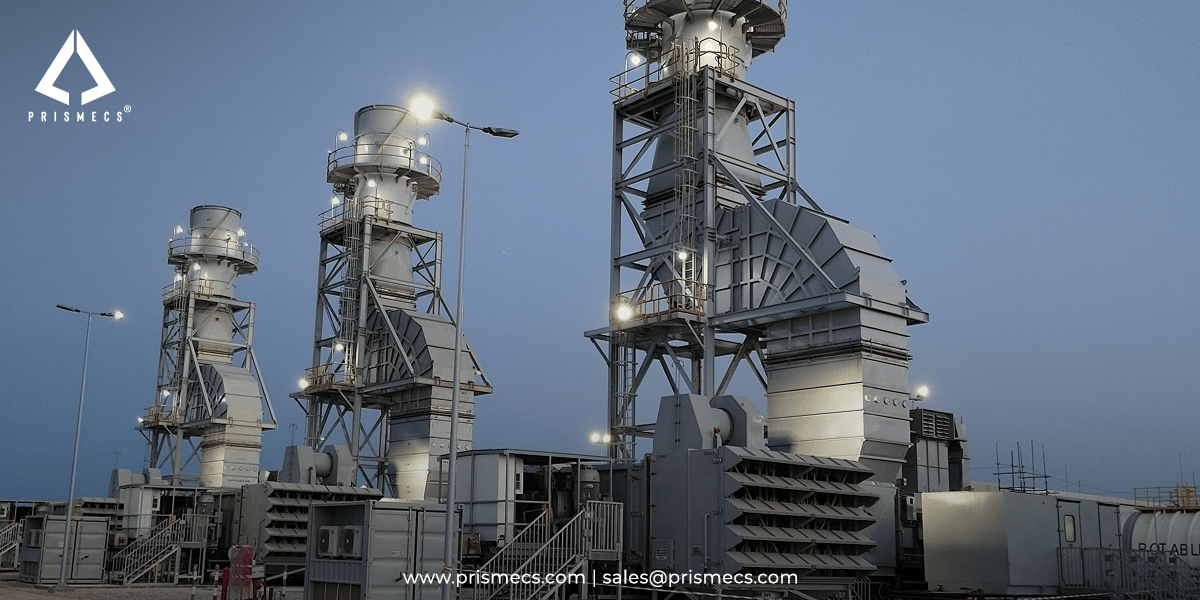
What Is a Mobile Gas Turbine Power Plant? TM2500-Class Units Explained
A mobile gas turbine power plant is a transportable power generation system designed to add electrical capacity faster than a conventional permanent p...
Power Utilities
20 minutes read
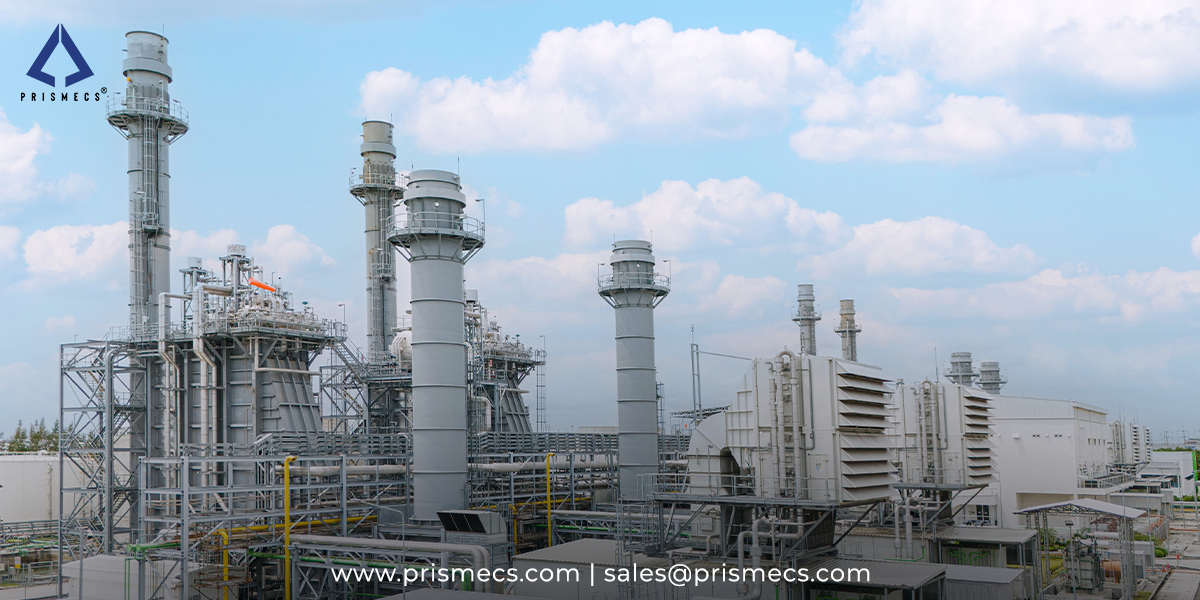
Fast-Track Power Plants Deployment: How to Reach Speed to Power in Under 12 Months
Fast-track power plant deployment can hit first power in weeks. See real TM2500 timelines from permitting to COD, proven in Oman and Taiwan. Plan your...
O&M Services
11 minutes read
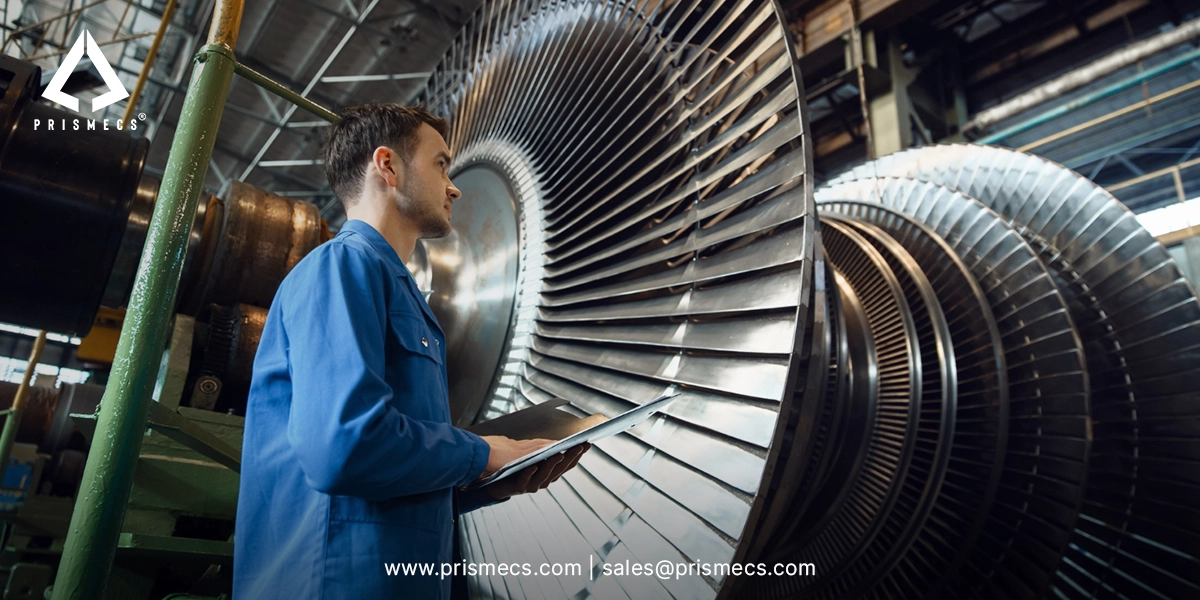
Gas Turbine Outage Planning: Schedule, Scope Rules, and Checklist
Gas turbine outage planning starts 18 months out. Get the T-minus schedule, scope freeze rules, parts readiness gates and checklist. Talk to a Prismec...
O&M Services
15 minutes read
Predictive vs Preventive Maintenance: How to Choose Per Asset
Most plants apply predictive vs preventive maintenance facility wide and overspend. Match each asset by failure mode, criticality and P-F interval. Ta...